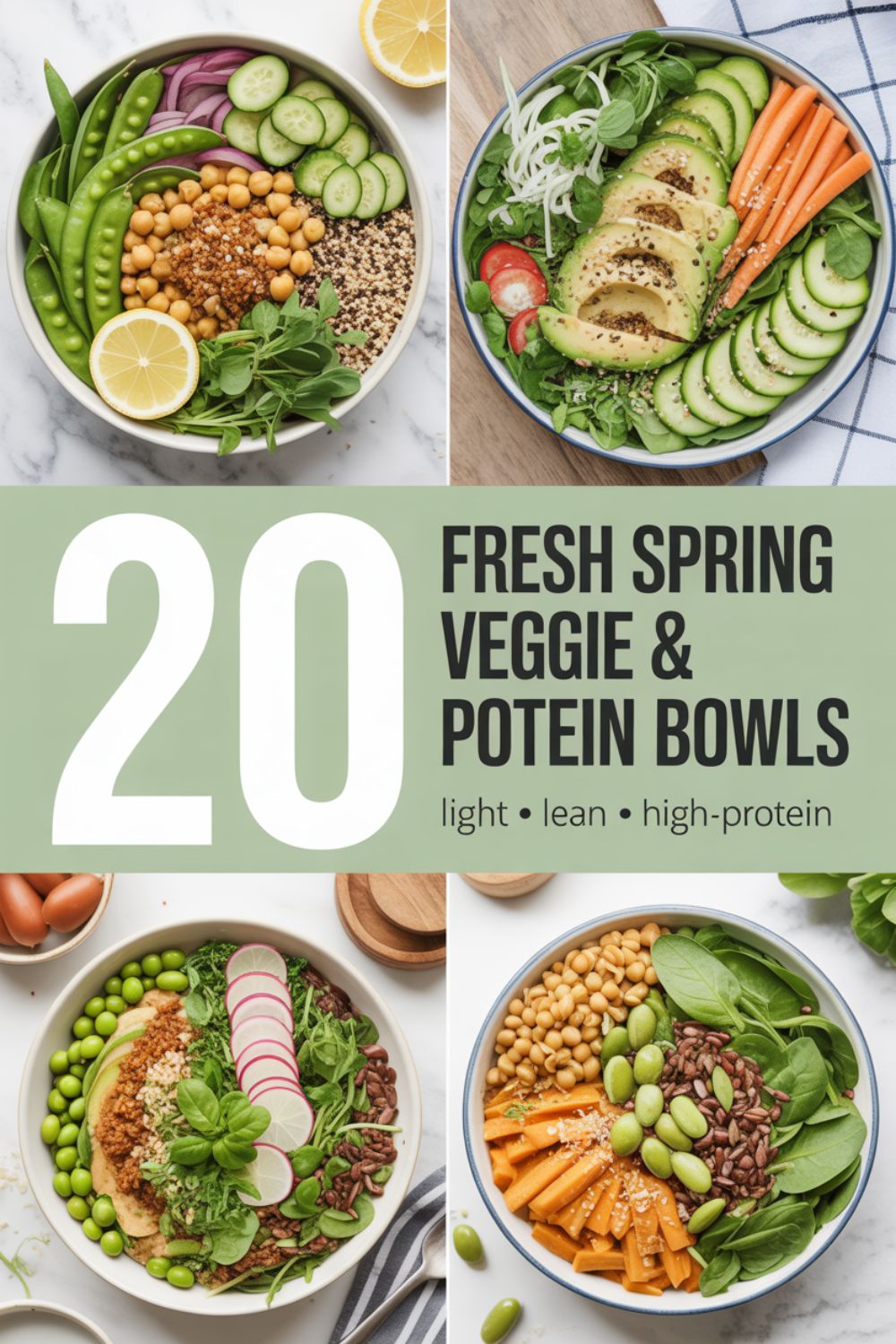
20 Fresh Spring Veggie Protein Bowls
Colorful, filling, and done before you’ve even finished your second coffee.
Spring rolls around and suddenly your appetite shifts. You stop wanting the heavy stews and anything that calls for three hours in the oven. You want something bright, something that doesn’t make you feel like you need a nap immediately after eating it. That’s where these spring veggie protein bowls come in. They’re the kind of meals that actually look as good as they taste, pack enough protein to keep you full for hours, and come together fast enough to work on a Tuesday night.
I’ve been making veggie protein bowls for years, and honestly, spring is the best season for them. Asparagus, snap peas, radishes, new-crop spinach, peas — everything is sweet, tender, and practically begging to be thrown into a bowl with a good sauce and something with serious staying power. Whether you eat meat or not, there’s a bowl here for you. These 20 recipes cover everything from chickpea-loaded grain bowls to edamame-topped noodle situations, and every single one hits at least 20g of protein per serving.
Why Spring Is the Perfect Season for Protein Bowls
Here’s the thing about spring produce: it doesn’t need much to taste incredible. A quick blanch, a flash-roast, or just a squeeze of lemon and some flaky salt, and you have something genuinely delicious. That kind of ingredient quality means your protein bowls don’t need complicated sauces or long cook times to shine. The vegetables do the heavy lifting on flavor, and your protein source just needs to show up.
From a nutrition standpoint, spring vegetables are also doing a lot of work. Asparagus is high in folate and vitamin K. Peas deliver a surprisingly respectable amount of protein on their own — about 5g per half cup. Spinach packs iron, calcium, and antioxidants. Combine these with a proper protein source like grilled chicken, tempeh, chickpeas, or a good piece of salmon, and you’ve got a bowl that covers most of your nutritional bases in one shot. Healthline’s breakdown of high-protein vegetables makes a solid case for leaning harder on spring legumes and greens if you want to hit your protein targets without always defaulting to meat.
And let’s be real: eating the same grilled chicken salad three days in a row is a fast track to losing all motivation to eat well. Bowl meals solve that because they’re endlessly modular. Change the grain, swap the protein, try a different sauce — you’ve got a new meal without any extra mental effort. That’s genuinely useful when life gets busy.
Prep your grains and roast your chickpeas on Sunday night — you’ll thank yourself every single day from Monday to Thursday without even thinking about it.
Building a Great Spring Veggie Protein Bowl
Before getting into the actual recipes, it helps to understand the formula. A great protein bowl isn’t random. It follows a structure that balances texture, macros, and flavor without making you feel like you’re eating a plate from a health retreat in 2009. The formula is simple: a sturdy base, a protein anchor, at least two spring vegetables, a fat element, and a sauce that ties everything together.
The Base
Quinoa is the obvious choice here and for good reason. It’s one of the few plant foods that qualifies as a complete protein, meaning it contains all nine essential amino acids — something most grains can’t claim. Research on quinoa’s nutritional profile consistently highlights this, along with its impressive fiber content and micronutrient density. Brown rice, farro, and millet all work well too. If you want something lighter, cauliflower rice or a bed of mixed greens cuts the carbs without sacrificing volume.
The Protein
You’ve got more options than you think. For plant-based eaters, chickpeas, edamame, white beans, tempeh, and marinated tofu all work brilliantly in spring bowls. For meat-eaters, grilled chicken thighs, canned wild salmon, and sliced turkey breast are quick and reliable. Hard-boiled or soft-boiled eggs remain one of the most underrated protein sources in bowl-building — they add creaminess, visual drama, and a clean 6–7g of protein per egg.
The Spring Vegetables
This is where you get to have fun. Snap peas, asparagus, fresh or frozen peas, baby spinach, radishes, shaved fennel, spring onions, arugula, broccolini, and artichoke hearts are all in peak form right now. Mix textures — some raw for crunch, some quickly roasted or blanched for depth. A bowl with only raw vegetables can feel a bit too salad-like. A bowl with only cooked veg misses that brightness. Split the difference and you’re in good shape.
The Recipes: Part One (Bowls 1–6)
This is the bowl that converted my most skeptical friends. Fluffy quinoa sits under a pile of roasted asparagus and crispy oven-roasted chickpeas, finished with a lemon tahini dressing that honestly tastes like it came from a restaurant. The chickpeas get coated in smoked paprika and a little cumin before roasting, which gives them a depth that plain chickpeas never achieve. Toss in some thinly sliced radishes for pop and you’re done.
Key ingredients: cooked quinoa, canned chickpeas, fresh asparagus, radishes, tahini, lemon, smoked paprika, cumin, garlic.
Get Full RecipeSimple, clean, satisfying. Grilled chicken thighs go on top of brown rice with fresh spring peas, baby spinach, and a miso-ginger dressing that punches way above its weight. The key here is using chicken thighs instead of breast — they stay juicy even if your timing is slightly off, which happens to all of us. Miso and ginger together create an umami-forward sauce that makes the whole bowl sing.
Key ingredients: chicken thighs, brown rice, fresh or frozen peas, baby spinach, white miso, fresh ginger, sesame oil, rice vinegar.
Get Full RecipeEdamame delivers about 11g of protein per half cup, which makes it one of the best plant-based protein adds you can throw in a bowl. Pair it with hearty farro, creamy avocado, shaved fennel, snap peas, and a simple citrus vinaigrette, and you have a bowl that looks like it took way more effort than it did. The farro adds a pleasantly chewy, nutty texture that brown rice just doesn’t replicate.
Key ingredients: farro, shelled edamame, avocado, snap peas, shaved fennel, orange juice, Dijon mustard, olive oil.
Get Full RecipeThis one is laughably fast for how good it is. Smoked salmon over a base of mixed grains and peppery arugula, with pickled radishes, cucumber, capers, and a dill crème fraîche. No cooking required beyond warming the grain base. It’s the bowl you make when you’ve been out all day and have nothing left in the tank but still want to eat something that feels considered. IMO, smoked salmon is the most underused protein in weeknight cooking.
Key ingredients: smoked salmon, arugula, mixed grains, radishes, capers, cucumber, crème fraîche, fresh dill, lemon zest.
Get Full RecipeThis one leans into the brothy bowl trend, and it works beautifully in spring when you want something warming but not heavy. Extra-firm tofu gets pressed and pan-fried in a small amount of oil until genuinely golden — not pale and sad. It goes into a light miso broth with snap peas, sliced spring onions, and rice noodles. Top with chili flakes and a soft-boiled egg if you eat eggs. Press your tofu properly with a good tofu press and you’ll skip the sad, watery results entirely.
Key ingredients: extra-firm tofu, white miso, snap peas, rice noodles, spring onions, sesame oil, chili flakes, kombu broth.
Get Full RecipeWhite beans (cannellini or Great Northern) are wildly underrated as a protein source. They’re creamy, mild, and absorb whatever seasoning you throw at them. Here they get warmed through with a ton of fresh herbs — think parsley, basil, and chives — and sit alongside roasted broccolini with lemon zest and garlic. A drizzle of good olive oil finishes it. This is the bowl that proves you don’t need anything complicated to eat well.
Key ingredients: canned white beans, broccolini, fresh parsley, basil, chives, garlic, lemon, coarse sea salt, extra-virgin olive oil.
Get Full RecipeThe Recipes: Part Two (Bowls 7–12)
There’s something about a properly soft-boiled egg split open over a grain bowl that makes the whole thing look like it belongs on a food magazine cover. Asparagus roasted with olive oil and sea salt, farro cooked with a bay leaf, a smear of hummus at the base, and two perfectly jammy eggs. A good egg cooker makes the 6-minute soft-boil completely foolproof — no more under-set whites or chalky yolks.
Key ingredients: farro, fresh asparagus, eggs, store-bought or homemade hummus, lemon, Aleppo pepper, good olive oil.
Get Full RecipeGround turkey cooked with garlic, fennel seeds, and a splash of white wine sits over fluffy millet with baby spinach, peas, and shaved spring onions. Millet gets overlooked constantly — it’s gluten-free, cooks quickly, and has a lovely mild corn-like flavor that pairs especially well with lighter proteins. Finish with a spoon of Greek yogurt and some chopped dill for a bowl that feels almost Mediterranean.
Key ingredients: ground turkey, millet, baby spinach, peas, spring onions, fennel seeds, white wine, Greek yogurt, fresh dill.
Get Full Recipe“I meal-prepped bowls 7 and 11 together last Sunday and it genuinely changed my entire week. I ate well every single day without thinking about it, and I actually had energy in the afternoons for the first time in months.”— Priya R., community member from our weekly meal prep guide
Lentils are the kind of protein source that nutritionists consistently rave about — high in protein, rich in iron and fiber, and shown to support healthy blood sugar levels. Here they’re cooked simply with thyme and a bay leaf, then piled into a bowl with earthy roasted golden and red beets, peppery arugula, walnuts, and soft goat cheese. A balsamic reduction drizzle ties it all together. Roast your beets in a sealed foil packet in the oven and the cleanup is practically zero.
Key ingredients: green or black lentils, mixed beets, arugula, walnuts, fresh goat cheese, balsamic vinegar, thyme, honey.
Get Full RecipeFast, filling, and deeply satisfying. Quickly marinated chicken strips hit a screaming-hot pan and caramelize in under 10 minutes. They go over shredded purple and green cabbage, julienned carrots, snap peas, and a sesame-ginger dressing. Toasted sesame seeds and fresh cilantro finish it. The crunch from the raw cabbage against the warm chicken is genuinely one of the best textural combinations you can get from a 20-minute dinner.
Key ingredients: chicken breast, shredded cabbage, snap peas, carrots, sesame oil, soy sauce, fresh ginger, garlic, rice vinegar, toasted sesame seeds.
Get Full RecipeCauliflower roasted with cumin, coriander, and turmeric takes on this gorgeous golden color and a depth of flavor that makes it genuinely exciting as a main event. Black beans bring the protein, and a quick mango-avocado salsa adds brightness that cuts through the richness of the spiced veg. Serve over a base of cauliflower rice if you want to keep it light, or go wild and use regular rice if it’s been a long day. No judgment here.
Key ingredients: cauliflower, canned black beans, mango, avocado, cumin, coriander, turmeric, fresh lime, cilantro.
Get Full RecipeSeared salmon over quinoa is a classic for a reason — it’s delicious, comes together fast, and the macros are outstanding. What lifts this version above the standard is the quick-pickled cucumber and radish, which you can make the night before and they keep all week in the fridge. A miso butter sauce goes on the salmon right at the end, creating this glossy, umami-rich coating that makes the whole bowl taste considerably more sophisticated than the effort involved warrants.
Key ingredients: salmon fillet, quinoa, cucumber, radishes, rice vinegar, white miso, butter, fresh dill, spring onions, sesame oil.
Get Full RecipeMake a double batch of dressing every time. Store it in a small mason jar in the fridge and you’ll have ready-to-go flavor all week without even thinking about it.
The Recipes: Part Three (Bowls 13–20)
Tempeh gets marinated in soy sauce, garlic, and a little maple syrup, then pan-seared until caramelized and nutty. It goes over a green-on-green base of farro, kale, cucumber, and peas, drowned in an avocado-herb “green goddess” dressing. This is the bowl for people who think they don’t like tempeh. The marinade and the sear change everything. Use a good cast iron skillet for that crust — nothing else gets tempeh properly caramelized.
Key ingredients: tempeh, farro, kale, cucumber, peas, avocado, fresh basil, tarragon, lemon, garlic, olive oil.
Get Full RecipeShrimp cooks in under 4 minutes, which makes it genuinely the fastest protein you can put in a bowl. Season them simply with garlic, lime, and a pinch of cayenne, sear them hot and fast, and pile them over jasmine rice with fresh mango chunks, arugula, snap peas, and avocado. A coconut-lime dressing finishes it. The sweet mango against the savory shrimp is a combination that sounds tropical but actually works incredibly well for spring when mangoes are coming into season.
Key ingredients: raw shrimp, jasmine rice, mango, arugula, snap peas, avocado, coconut milk, lime, garlic, cayenne.
Get Full RecipeCanned tuna gets a bad reputation that it frankly doesn’t deserve. Good-quality olive-oil packed tuna is genuinely excellent, and it pairs beautifully with white beans, fresh spring herbs, capers, and a lemon vinaigrette. This bowl comes together in about 10 minutes, covers your protein for the whole afternoon, and costs practically nothing per serving. It’s the bowl you make when you’re trying to eat well but also your wallet needs a break. FYI, the difference between water-packed and olive-oil-packed tuna in this recipe is significant — go oil-packed.
Key ingredients: olive-oil packed tuna, white beans, fresh parsley, chives, capers, cherry tomatoes, arugula, lemon, Dijon, red wine vinegar.
Get Full RecipeBlack lentils (beluga lentils) hold their shape beautifully after cooking, which makes them ideal for bowls — no mushy texture, just firm little bites with an earthy flavor. They pair exceptionally well with sweet roasted carrots and a spoonful of harissa, which adds that smoky, spicy depth without much effort. Top with a dollop of yogurt (coconut yogurt for vegan), some fresh mint, and toasted pumpkin seeds for crunch. This one’s a keeper all spring long.
Key ingredients: black beluga lentils, fresh carrots, harissa paste, coconut or Greek yogurt, fresh mint, pumpkin seeds, olive oil, cumin.
Get Full RecipePesto chicken is one of those combinations that works every single time without fail. Coat chicken thighs in a generous layer of basil pesto and roast until golden, then slice over a base of farro or quinoa with quartered artichoke hearts, cherry tomatoes, fresh basil, and pine nuts. Canned or jarred artichoke hearts work perfectly here — no shame, no fuss. Artichokes are one of the more unexpected spring vegetables but they’re absolutely worth using more.
Key ingredients: chicken thighs, basil pesto, farro, jarred artichoke hearts, cherry tomatoes, pine nuts, fresh basil, Parmesan or nutritional yeast.
Get Full RecipeShawarma spice mix on chickpeas is a genuinely brilliant idea. Cumin, smoked paprika, cinnamon, cardamom, and a bit of cayenne go on the chickpeas before roasting, and the result tastes so much more complex than you’d expect from a can of beans. Serve over turmeric rice with baby spinach, sliced radishes, cucumber, and a generous drizzle of tahini. This one has converted more people to plant-based eating than probably anything else I cook.
Key ingredients: canned chickpeas, turmeric rice, baby spinach, radishes, cucumber, tahini, lemon, shawarma spice blend (cumin, paprika, cinnamon, cardamom, cayenne).
Get Full RecipeThis one is technically less of a “recipe” and more of an assembly, which is exactly why it shows up so often in weeknight rotations. A thick base of whole-milk Greek yogurt stands in as both protein source and sauce — it contains about 17g protein per cup. Pile on warm roasted or raw spring vegetables: sliced cucumber, cherry tomatoes, radishes, fresh dill, olives, a handful of chickpeas, and a drizzle of olive oil with za’atar. It’s refreshing, filling, and requires almost zero effort.
Key ingredients: whole-milk Greek yogurt, cucumber, cherry tomatoes, radishes, kalamata olives, chickpeas, fresh dill, za’atar, olive oil.
Get Full RecipeFresh peas mashed slightly with ricotta, fresh mint, and lemon zest make one of the most genuinely springtime flavor combinations you can put in a bowl. Crispy prosciutto on top adds the salt and crunch that makes the whole thing feel indulgent despite being genuinely nutritious. Serve over warm farro or just on toasted sourdough if you’re having one of those days where you don’t want a grain base. Both work. Neither will disappoint you.
Key ingredients: fresh or frozen peas, whole-milk ricotta, fresh mint, lemon zest, prosciutto, farro or sourdough, extra-virgin olive oil, fresh cracked pepper.
Get Full RecipeKitchen Tools & Resources That Make These Bowls Better
Things I actually use in my own kitchen — listed because they genuinely make a difference, not because they look good in a flatlay.
-
Lodge Cast Iron Skillet (10-inch) This is the pan that gets tempeh actually golden instead of pale and sad. Holds heat evenly, goes stovetop-to-oven, and gets better with every use. Mine is over five years old and it looks brand new.
-
EZ Tofu Press Pressing tofu for 15–20 minutes before cooking genuinely changes the texture and how well it absorbs marinades. This one takes up zero drawer space and requires zero effort — you just set it and go do something else.
-
Dash Rapid Egg Cooker Six-minute soft-boiled eggs every time, no babysitting the pot. For bowl meals that use jammy eggs regularly, this is the tool that makes it genuinely repeatable without any stress.
-
Weekly High-Protein Low-Calorie Meal Prep Guide A structured, printable meal prep system built around bowls and high-protein meals. Takes the decision-making out of Sunday cooking so you can just execute.
-
14-Day High-Protein Meal Prep Bowls Plan Two full weeks of bowl-focused meal prep laid out day by day. Great for people who want structure and variety without having to plan anything themselves.
-
Cronometer (nutrition tracking app) Free nutrition tracking tool that’s far more accurate and detailed than most competitors. When building protein bowls, it helps to see the actual breakdown so you can make small adjustments that add up over time.
Roast a whole sheet pan of your favorite spring vegetables on Sunday. They keep in the fridge for four to five days and drop straight into any bowl, salad, or wrap you build during the week.
Making These Bowls Work for Meal Prep
The single biggest shift that makes protein bowl eating sustainable is separating the components during storage. If you build your bowls fully assembled and refrigerate them, you end up with soggy grains, wilted greens, and sad vegetables after about 24 hours. Instead, store your grains, proteins, vegetables, and sauces in separate containers and assemble fresh right before eating. You get better texture, better flavor, and the whole thing feels less like eating leftovers.
A set of glass meal prep containers with separate compartments changes this completely. The kind with dividers mean your tahini doesn’t seep into your quinoa overnight, which sounds minor until it’s the difference between looking forward to lunch and tolerating it.
For weeklong prep, here’s a practical system: cook one or two grain bases on Sunday (quinoa and farro store well for five days), roast a sheet pan of vegetables, prepare two different protein options, and make two or three sauces. From those components, you can build completely different bowls every day of the week by rotating what goes together. If you want a full structure built around this approach, check out this beginner-friendly high-protein meal plan that breaks down exactly how to combine components without getting bored.
“I started using the component-based prep system from this site about two months ago. I’ve lost nearly 12 pounds and I genuinely look forward to eating every day. The bowls actually taste good — that’s what keeps me on track.”— Marcus T., community member via email
Protein Swaps and Dietary Adaptations
One of the smartest things about this collection is how easily every recipe adapts. Trying to hit higher protein targets? Swap chickpeas for a double portion of grilled chicken or add a scoop of unflavored collagen to a sauce or dressing. Eating fully plant-based? Every chicken or fish recipe in this list has a natural plant-based swap. Tempeh and baked tofu replace chicken almost perfectly in terms of texture, and chickpeas or white beans cover salmon and tuna in terms of protein volume.
Worth knowing: when you compare plant-based proteins head-to-head, some clear patterns emerge. Edamame and tempeh are significantly higher in protein per serving than most other plant sources. Chickpeas and lentils are excellent for fiber and sustained energy, but you need a larger volume to hit the same protein numbers as, say, grilled chicken or salmon. Neither is better in an absolute sense — they just serve different needs. The research on plant-based protein adequacy, particularly from sources like the Mayo Clinic’s guidance on plant-based diets, confirms that you can absolutely hit all your protein requirements through plant sources with a bit of intention.
For people managing calorie targets alongside protein goals, these bowls are also very forgiving. Reducing oil in the dressing, using a smaller grain base, or increasing the proportion of non-starchy spring vegetables are all small adjustments that bring the calorie count down without touching the protein numbers meaningfully. The 20 recipes designed for muscle recovery here follow exactly that principle if you need a more targeted version.
Frequently Asked Questions
How much protein do I actually need per meal for these bowls to work for weight loss?
Most nutrition research suggests aiming for 25–40g of protein per meal for satiety and muscle maintenance, though this varies by body weight and activity level. Most bowls in this collection sit in that range, and the recipe notes tell you exactly what you’re getting. Hitting that range per meal — rather than obsessing over daily totals — is generally the more sustainable approach.
Can I prep all 20 bowls for the week at once?
You wouldn’t want to prep all 20 at once — but you absolutely can prep components for 5–6 different bowl variations and rotate them all week. Store grains, proteins, and vegetables separately, assemble fresh, and your bowls will taste like they were just made. The sauces and dressings keep well for five to seven days refrigerated in a sealed jar.
What’s the best grain base for spring veggie protein bowls?
Quinoa is the most practical choice because it’s a complete protein itself, cooks in 15 minutes, and keeps well in the fridge. Farro adds a heartier, nuttier bite and works especially well with Mediterranean flavors. Brown rice is the most neutral option and the easiest to find. For lighter bowls, mixed greens or cauliflower rice cut the carbs significantly without sacrificing volume.
Are these spring veggie protein bowls good for building muscle, not just weight loss?
Yes, provided you’re hitting your protein targets per meal and eating enough total calories to support training. The bowls with higher protein (30g+) like the sesame chicken bowl, pesto chicken bowl, and salmon quinoa bowl are particularly well-suited for muscle building goals. You’d just need to scale the grain portion up slightly depending on your calorie needs.
How long do these protein bowls keep in the fridge?
Most components keep three to five days properly stored. Grain bases and roasted vegetables hold up the longest. Leafy greens and avocado should only be added fresh at serving time. The biggest thing to avoid is storing everything assembled together — keep components separate and you’ll have genuinely good food all week, not just on day one.
Build Your Bowl, Eat Better All Spring
Twenty bowls might sound like a lot to take in at once, but the beauty of this format is that you don’t need all twenty recipes to get started. Pick three or four that genuinely sound good to you, build your shopping list around them, and prep the components on Sunday. That single action changes your entire week.
Spring produce genuinely makes this easier. When your asparagus is fresh, your snap peas are sweet, and your herbs smell like they were cut five minutes ago, you don’t need to do much to make something worth eating. The bowls in this collection respect that. They’re designed to highlight the vegetables rather than bury them under heavy sauces or over-complicated techniques.
Whether you’re focused on losing weight, building muscle, eating more plants, or just trying to stop ordering takeout five days a week — these bowls work for all of it. Start with one. See how it goes. Then come back for the rest.