25 Macro-Friendly Low-Calorie Recipes That Don’t Taste Like Punishment
High protein, seriously satisfying, and built for people who want results without giving up food they actually enjoy.
Let’s be real for a second. The phrase “low-calorie recipe” has earned itself a pretty terrible reputation. It conjures images of sad salads with no dressing, chicken breast cooked until it tastes like rubber, and smoothies that somehow manage to look both green and depressing at the same time. You’ve been there. I’ve been there. And we’ve both pretended we enjoyed it.
The thing is, eating in a calorie deficit doesn’t have to feel like a grim endurance sport. When you pay attention to your macros — specifically loading up on protein while keeping calories in check — you end up with meals that keep you full, fuel your workouts, and taste like food an actual human being would voluntarily eat again. That’s the whole point of this collection.
These 25 macro-friendly low-calorie recipes are the kind of meals you’ll genuinely look forward to. They hit the macros you need, they work with a meal prep schedule, and most of them come together fast enough that you won’t be staring into a pan at 8pm wondering why you didn’t just order takeout. Let’s get into it.
Why Macro-Friendly Low-Calorie Recipes Actually Work
Before we jump into the recipes, it’s worth taking thirty seconds to understand why tracking macros — and prioritizing protein in particular — makes such a big difference in a low-calorie eating approach. Because it’s not just about eating less. It’s about eating smarter.
Protein has a significantly higher thermic effect than carbohydrates or fat, which means your body burns more calories just digesting it. On top of that, it keeps you fuller for longer by influencing satiety hormones. Research covered by Healthline consistently shows that higher protein intakes help preserve lean muscle mass during a calorie deficit — which is exactly what you want if your goal is fat loss without losing the muscle underneath.
And here’s the part most people miss: when you eat enough protein, you’re less likely to feel ravenously hungry two hours after dinner and end up eating half the pantry. That alone is worth paying attention to.
Aim for at least 30g of protein per meal. That single habit keeps hunger in check, protects muscle, and makes every low-calorie eating day feel significantly more manageable.
The 25 Macro-Friendly Low-Calorie Recipes
These recipes are organized loosely by meal type — breakfast, lunch, dinner, snacks — so you can slot them into your week without overthinking it. Every single one comes in under 400 calories per serving, packs at least 25g of protein, and works beautifully for meal prep.
Breakfast Recipes
1. Greek Yogurt Protein Bowls with Berries and Hemp Seeds. This is the breakfast that doesn’t require cooking, doesn’t create dirty dishes, and still keeps you full until noon. Use full-fat plain Greek yogurt for the richest texture, top with a handful of frozen mixed berries (thawed overnight), two tablespoons of hemp seeds, and a drizzle of raw honey. You’re looking at roughly 340 calories and 28g of protein before you’ve even touched a spatula. Get Full Recipe
2. Egg White and Spinach Scramble with Feta. Four egg whites, a massive handful of baby spinach, sun-dried tomatoes, and a crumble of feta. It sounds simple, and it is — but the flavor combination punches well above its calorie count. The feta does all the heavy lifting in the taste department while keeping the fat content reasonable. Around 220 calories, 26g of protein.
3. High-Protein Overnight Oats. The classic, but done properly. Use rolled oats, unsweetened almond milk, a scoop of vanilla protein powder, chia seeds, and a tablespoon of natural almond butter. Stir it all together the night before, refrigerate, and wake up to a ready-made breakfast that tastes suspiciously like dessert. These overnight oats are genuinely one of the best meal-prep breakfasts out there. Get Full Recipe
4. Cottage Cheese and Banana Protein Pancakes. Blend one banana, half a cup of low-fat cottage cheese, two eggs, and a quarter cup of oats until smooth, then cook in a nonstick pan. They’re thicker than you’d expect and weirdly satisfying. Top with a spoonful of Greek yogurt instead of syrup to keep the macros clean. About 310 calories, 29g of protein for three pancakes.
5. Turkey and Egg Breakfast Burritos (Meal Prep Edition). Scrambled eggs, lean ground turkey seasoned with smoked paprika and garlic, diced peppers, and salsa wrapped in a low-carb tortilla. Make eight at once, wrap them individually, freeze them, and microwave one every morning. This one is the definition of working smarter, not harder. About 380 calories, 34g of protein. If you want more ideas in this lane, check out these protein-packed breakfasts for busy mornings for extra inspiration.
Lunch Recipes
6. Shredded Chicken and Avocado Lettuce Wraps. Poached and shredded chicken breast, half an avocado, diced cucumber, a squeeze of lime, and fresh cilantro piled into butter lettuce cups. No cooking drama, no complicated technique. These take about ten minutes if your chicken is already prepped. About 290 calories, 31g of protein.
7. Tuna and White Bean Salad. Canned tuna is wildly underrated as a protein source. Flake it into a bowl with rinsed white beans, diced red onion, cherry tomatoes, capers, olive oil, and a hit of red wine vinegar. This salad holds up well in the fridge, which makes it a reliable lunch-prep option for midweek. About 350 calories, 38g of protein.
8. Zucchini Noodle Bowls with Ground Turkey Bolognese. A proper meat sauce — garlic, diced tomatoes, lean ground turkey, Italian herbs — poured over spiralized zucchini noodles. This is the version of Bolognese that doesn’t leave you needing a nap afterward. About 310 calories, 33g of protein. Get Full Recipe
9. Smoked Salmon and Cucumber Protein Wraps. Smoked salmon, reduced-fat cream cheese, capers, thin cucumber slices, and a handful of arugula in a whole-grain wrap. It feels fancy for a Tuesday. It isn’t. About 320 calories, 27g of protein.
10. Chicken and Quinoa Power Bowls. Grilled chicken thigh (not breast — it’s more forgiving and tastier), cooked quinoa, roasted sweet potato cubes, a handful of kale massaged with lemon juice, and a tahini dressing. This is the recipe that made a lot of people in our community realize meal prep doesn’t have to be boring. For more bowl ideas that keep well through the week, the high-protein low-calorie bowls for meal prep collection is genuinely excellent.
11. Turkey and Hummus Whole-Grain Wraps. Lean turkey breast slices, two generous tablespoons of hummus, shredded romaine, roasted red peppers, and a thin layer of Dijon mustard. Roll tight, slice diagonally. You can make four of these in under five minutes flat. About 340 calories, 30g of protein.
12. Lentil and Spinach Soup. One of the best macro-per-calorie trades you can make. Red lentils cook down into a thick, creamy soup with just garlic, onion, cumin, turmeric, and a squeeze of lemon. A bowl packs about 280 calories and 18g of plant-based protein. This is also a great option if you’re exploring plant-based protein sources — lentils vs. chickpeas is an interesting comparison, since lentils generally have a higher protein-to-calorie ratio and cook significantly faster without soaking.
Dinner Recipes
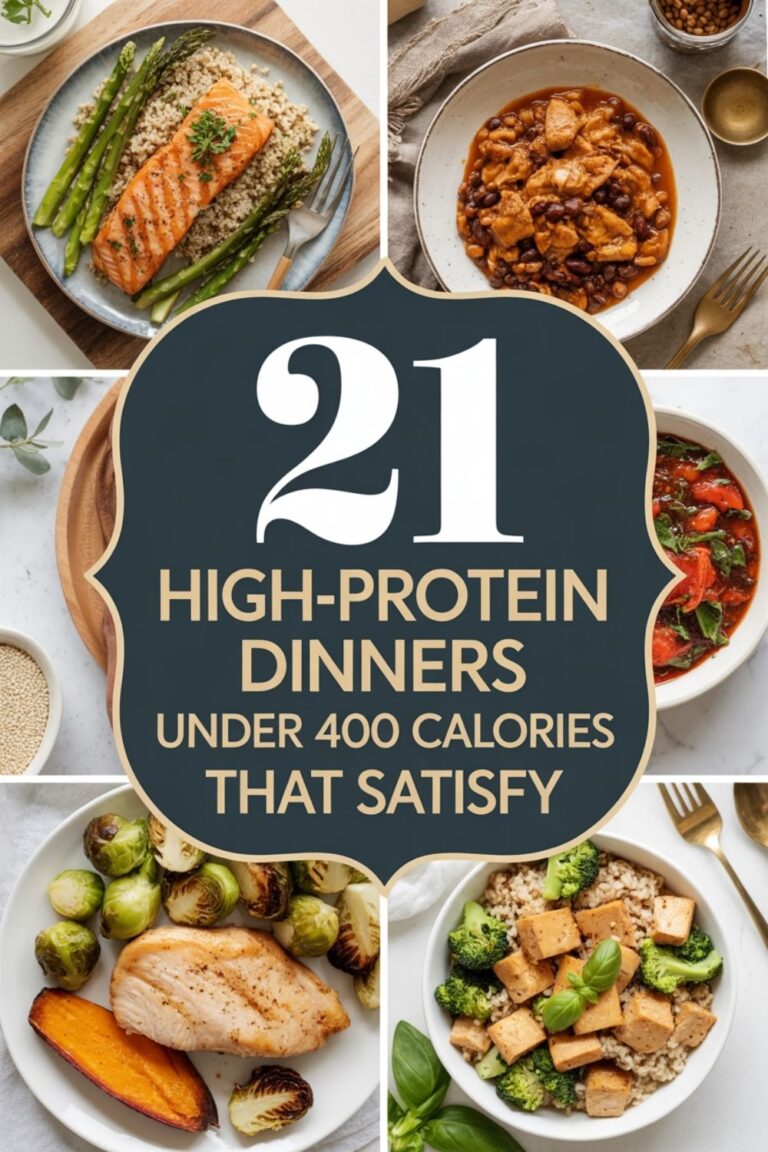
13. Sheet Pan Lemon Herb Chicken and Broccoli. Season chicken thighs with lemon zest, garlic, rosemary, and olive oil. Spread broccoli florets on the same pan. Roast at 425°F for 25 minutes. That’s it. One pan, minimal cleanup, maximum flavor. About 360 calories, 38g of protein. If you want an entire week of this style of cooking, the 30 low-calorie high-protein sheet pan dinners collection is a genuinely useful resource to have saved.
14. Baked Cod with Tomato and Olive Salsa. White fish is one of the leanest proteins you can eat. Baked cod fillet topped with diced tomatoes, Kalamata olives, capers, and fresh basil. Mediterranean vibes, weeknight timeline. About 270 calories, 32g of protein.
15. Turkey Meatballs in Marinara with Spaghetti Squash. Lean ground turkey meatballs seasoned with garlic, parsley, and parmesan, served over roasted spaghetti squash with a simple marinara sauce. This swap cuts over 200 calories compared to regular pasta while adding fiber and volume to the plate. Around 370 calories, 35g of protein.
16. Teriyaki Salmon with Edamame Fried “Rice” (Cauliflower Base). Pan-seared salmon fillet glazed with a low-sodium teriyaki sauce, served over cauliflower rice stir-fried with edamame, egg, garlic, and tamari. The cauliflower rice might sound like a cliche at this point, but honestly, it works really well under bold sauces. About 390 calories, 36g of protein.
17. Spicy Turkey and Black Bean Stuffed Peppers. Halved bell peppers filled with a spiced mixture of lean ground turkey, black beans, corn, diced tomatoes, and cumin, topped with a small amount of reduced-fat cheddar. Meal prep these on Sunday and reheat through the week. About 340 calories, 31g of protein.
Prep your protein on Sunday — roast a batch of chicken thighs, hard-boil a dozen eggs, cook a big pot of lentils. With protein already done, every meal this week builds in under 10 minutes.
Snack and Light Meal Recipes
18. Edamame and Sea Salt Protein Snack. A cup of shelled edamame, steamed and salted. Simple, portable, and genuinely one of the most complete plant-based protein snacks that exists. About 180 calories, 17g of protein. IMO, this is the snack that gets slept on the most.
19. Hard-Boiled Eggs with Everything Bagel Seasoning. Two hard-boiled eggs sprinkled generously with everything bagel seasoning. Nothing to explain here. About 140 calories, 12g of protein. Use a good quality seasoning blend — the sesame and dried garlic make a real difference.
20. Cottage Cheese and Tomato Protein Plate. Half a cup of low-fat cottage cheese alongside sliced heirloom tomatoes, a pinch of flaky salt, cracked black pepper, and fresh basil. It’s the kind of snack that looks like you know what you’re doing in the kitchen without any actual effort. About 160 calories, 16g of protein.
21. Protein-Packed Energy Bites. Rolled oats, protein powder, natural peanut butter, a tablespoon of honey, mini dark chocolate chips, and chia seeds, rolled into balls and chilled. Make a batch of fifteen on Sunday — they keep in the fridge all week. About 120 calories each, 8g of protein per bite. You can also browse these low-calorie protein-packed energy bites for variations on this concept.
22. Turkey and Cucumber Roll-Ups. Thin slices of lean turkey breast spread with a thin layer of cream cheese and wrapped around cucumber spears. Cut them into bite-sized pieces. Zero cooking involved, about four minutes of assembly time. About 150 calories for six pieces, 18g of protein.
23. High-Protein Smoothie with Spinach and Frozen Mango. Unsweetened almond milk, a scoop of vanilla whey protein, a cup of baby spinach, half a cup of frozen mango chunks, and a tablespoon of flaxseeds blended until smooth. The mango hides every trace of spinach flavor while adding a bright, tropical taste. About 280 calories, 28g of protein.
24. Greek Yogurt Dip with Raw Vegetables. Plain Greek yogurt stirred with garlic powder, dill, lemon juice, and a pinch of salt — a quick tzatziki-style dip served with cucumber slices, bell pepper strips, and carrot sticks. About 170 calories, 15g of protein for a generous portion. If this style of snacking interests you, the snacks that fuel fat loss guide is packed with ideas like this.
25. Baked Cinnamon Protein Oatmeal Cups. Mix rolled oats, vanilla protein powder, unsweetened applesauce, one egg, cinnamon, baking powder, and a small amount of maple syrup. Divide into a muffin tin and bake at 350°F for 18 minutes. These work as breakfast or a snack, they freeze well, and they taste like a proper baked good. About 180 calories per cup, 14g of protein.
Kitchen Tools That Make These Recipes Easier
Not a sales pitch — just the stuff that actually earns its counter space when you’re cooking high-protein meals regularly.
Physical Essentials
Digital Resources
How to Turn These Recipes Into a Real Meal Prep System
Having 25 good recipes is only half of the equation. The other half is having a system that actually gets them made without turning Sunday into a four-hour cooking marathon that leaves you exhausted and never wanting to see a meal prep container again.
Start by choosing just three to four recipes from this list each week — one breakfast, one or two lunches, one dinner, and one snack option. That’s it. You don’t need to cook all 25 at once. You need enough variety to stay interested without overwhelming yourself.
Cook proteins in batches. If you’re making the sheet pan chicken anyway, throw in double the amount. Shredded chicken works in wraps, bowls, salads, and stuffed peppers. One cooking session, four different meals. This is the kind of leverage that makes high-protein eating sustainable long-term, and it’s exactly what separates people who maintain their results from people who fall back to old habits after three weeks.
For a complete week-by-week structure, the weekly high-protein low-calorie meal prep guide lays out a full system — what to cook, how to store it, and how to keep the variety up without doing more work. And if you’re just getting started with this whole approach, the meal plans for beginners resource walks through everything in a no-jargon, practical format.
Store prepped proteins and grains separately from sauces and dressings. This keeps textures right all week and lets you mix and match combinations so nothing feels repetitive by day four.
According to research published in peer-reviewed literature and summarized across multiple clinical trials, high-protein diets consistently outperform standard-protein approaches for fat loss while preserving lean mass — which is the combination that actually changes how your body looks and feels over time. Getting that protein in through real, well-seasoned food rather than supplements alone is both more satisfying and more sustainable.
Frequently Asked Questions
How many calories should a macro-friendly low-calorie recipe have?
For most adults eating in a moderate calorie deficit, targeting between 300 and 450 calories per main meal keeps your total daily intake in a range that supports fat loss without leaving you running on empty. All 25 recipes in this collection fall comfortably within that range while providing at least 25g of protein to keep you satiated.
Can I build muscle while eating low-calorie, high-protein meals?
Muscle growth requires a calorie surplus in most cases, but you can absolutely maintain and even see improvements in muscle definition while eating at a slight deficit if your protein intake is high enough (typically 0.7 to 1g per pound of bodyweight). These recipes are built specifically to support that kind of body recomposition. The low-calorie high-protein recipes for muscle recovery collection digs deeper into that angle.
What are the best protein sources for low-calorie cooking?
Chicken breast and thigh, canned tuna, egg whites and whole eggs, Greek yogurt, cottage cheese, white fish like cod and tilapia, lean ground turkey, and legumes like lentils and edamame all offer excellent protein-to-calorie ratios. Mixing animal and plant sources through the week also gives you a broader range of nutrients, which tends to be better for long-term health outcomes.
Are these recipes good for vegetarians?
About a third of the recipes in this list work as-is for vegetarians, and most of the animal-protein ones can be adapted with legumes, tofu, tempeh, or Greek yogurt as substitutes. For dedicated plant-based options, the high-protein low-calorie vegan meals collection is specifically designed for that.
How far in advance can I meal prep these recipes?
Most cooked proteins, grains, and roasted vegetables keep well for four to five days in airtight glass containers in the refrigerator. Smoothies and overnight oat jars are best prepared the night before. The turkey burritos and protein bites both freeze well and last up to three months, making them the most make-ahead-friendly options in the collection.
The Bottom Line
Macro-friendly low-calorie eating works when the food is actually good. That’s the thesis here, and these 25 recipes are the proof. When you lead with protein, keep the cooking techniques simple, and build a realistic prep routine around meals you actually want to eat, hitting a calorie deficit stops feeling like a punishment and starts feeling like a sustainable lifestyle.
You don’t need to overhaul your entire relationship with food overnight. Pick two or three recipes from this list, make them this week, and see how you feel. The goal isn’t perfection — it’s building a set of reliable, go-to meals that make consistent progress feel effortless. That’s exactly what this collection is designed to do. Now go make something good.