7-Day Calorie Deficit Meal Plan That Keeps You Satisfied
7-Day Calorie Deficit Meal Plan That Keeps You Satisfied
If you’ve ever tried to eat less and ended up raiding the pantry at 9pm, you’re not alone. The biggest reason most calorie deficit plans fall apart isn’t willpower — it’s hunger. When meals feel like punishment, it’s only a matter of time before you bail.
This 7-day calorie deficit meal plan is built differently. Every day sits roughly between 1,400 and 1,600 calories, which creates a reasonable deficit for most people without making you feel like you’re surviving on air. The meals are filling, actually taste good, and don’t require you to spend your whole evening in the kitchen.
Think of this as the kind of eating plan you could realistically follow on a Tuesday, not just on a motivated Monday morning.
A few quick notes before you start: exact calorie counts will vary slightly depending on portions and brands, so treat these as ballpark figures. And if you’re very active or significantly taller or heavier than average, you may need to add a snack or slightly larger portions. Always listen to your body.
Day 1
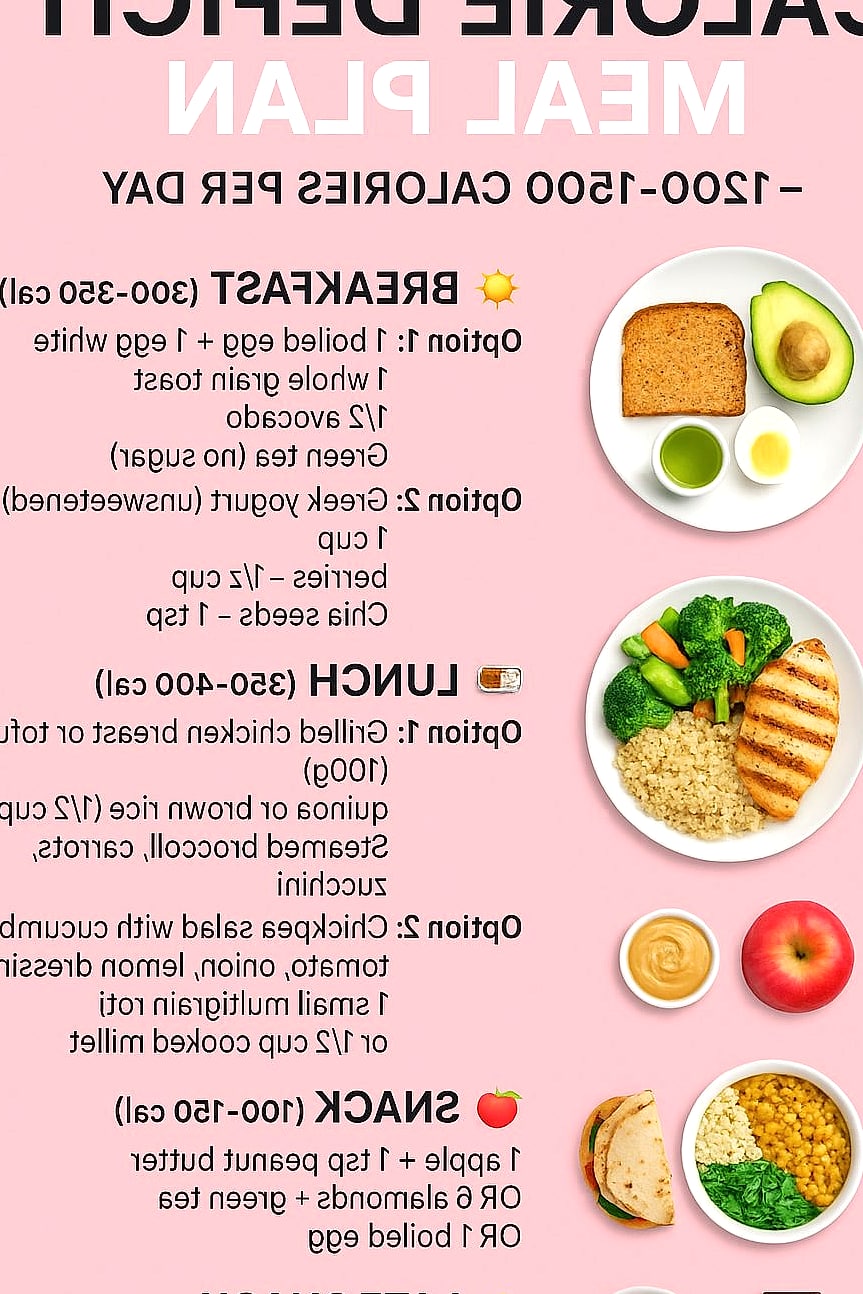
Breakfast: Greek yogurt (full-fat, 150g) with a handful of blueberries and a drizzle of honey. Filling, creamy, and genuinely satisfying first thing in the morning. The protein in Greek yogurt does a lot of heavy lifting here — it keeps you from thinking about food again an hour later.
Lunch: A big chicken and veggie wrap using a whole wheat tortilla, shredded rotisserie chicken, spinach, cucumber, and a tablespoon of hummus. Easy to pack, easy to eat at your desk, and it actually holds you over until dinner.
Dinner: Baked salmon fillet with roasted broccoli and a small portion of brown rice. Drizzle the salmon with a little lemon juice and olive oil before it goes in the oven. Simple, clean, and the kind of meal that feels like a treat even though it’s straightforward to make.
Optional snack: A small apple with a tablespoon of peanut butter.
This day sets a good tone — high protein, plenty of fiber, and healthy fats that keep hunger signals quiet.
Day 2
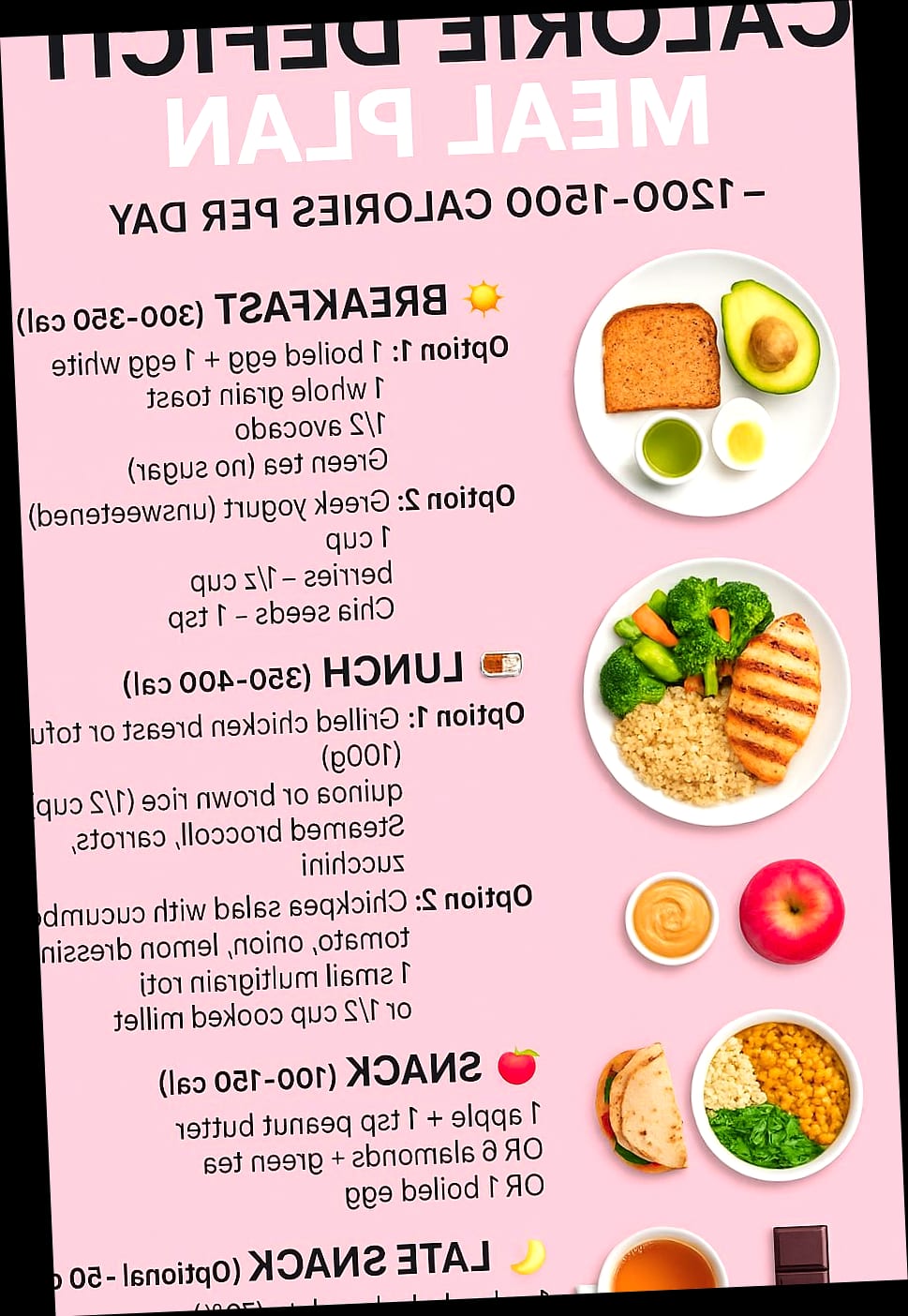
Breakfast: Two scrambled eggs with wilted spinach and a slice of whole grain toast. Takes about five minutes and keeps you going until lunch without any drama.
Lunch: Lentil soup — either homemade or a good quality store-bought version — with a small side salad dressed with olive oil and lemon. Lentils are genuinely underrated for a calorie deficit because they’re dense and fiber-rich without being calorie-heavy.
Dinner: Turkey meatballs in a simple tomato sauce with zucchini noodles. If spiralizing zucchini sounds like too much effort on a weeknight, just use a store-bought spiralizer or swap in regular spaghetti and adjust the portion size down slightly.
Optional snack: A small handful of almonds (around 20) or a boiled egg.
Day 2 leans into fiber and protein from different sources, which helps keep things interesting without overcomplicating your grocery list.
Day 3
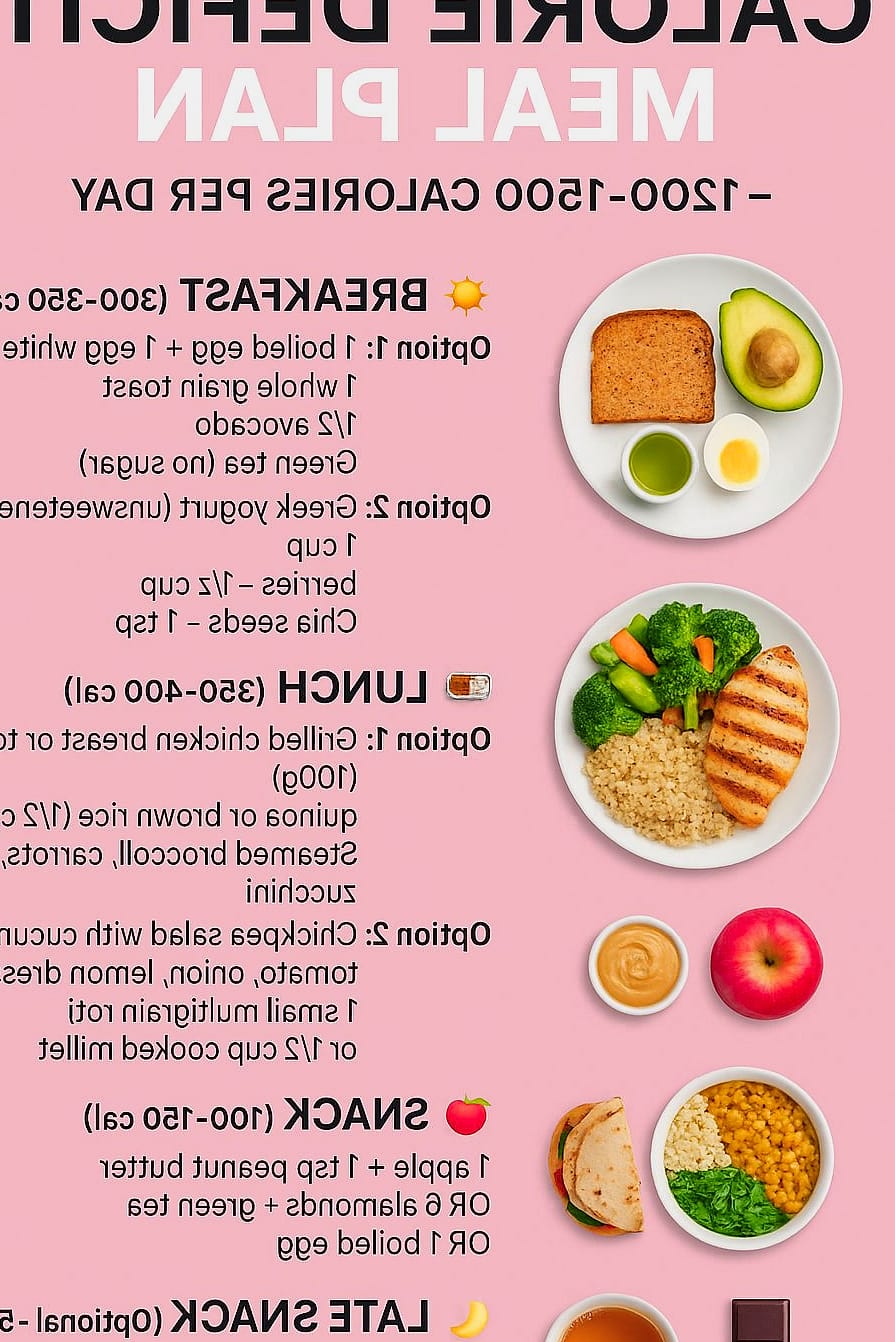
Breakfast: Overnight oats made with rolled oats, unsweetened almond milk, chia seeds, and half a banana sliced on top. You make this the night before, which makes mornings genuinely easier. The chia seeds add a subtle creaminess and a nice little fiber boost.
Lunch: Tuna salad on lettuce cups or whole grain crackers. Mix canned tuna with a little Greek yogurt instead of mayo, some diced celery, and a squeeze of lemon. Lighter than traditional tuna salad but just as satisfying.
Dinner: Stir-fried tofu and vegetables with a small portion of jasmine rice. Use a simple sauce of soy sauce, ginger, garlic, and a touch of sesame oil. The tofu gets slightly golden and crispy on the outside if you press it well beforehand — worth the extra step.
Optional snack: Sliced bell pepper with a couple of tablespoons of hummus.
Midweek can be where motivation dips, so this day keeps things quick and easy on purpose.
Day 4
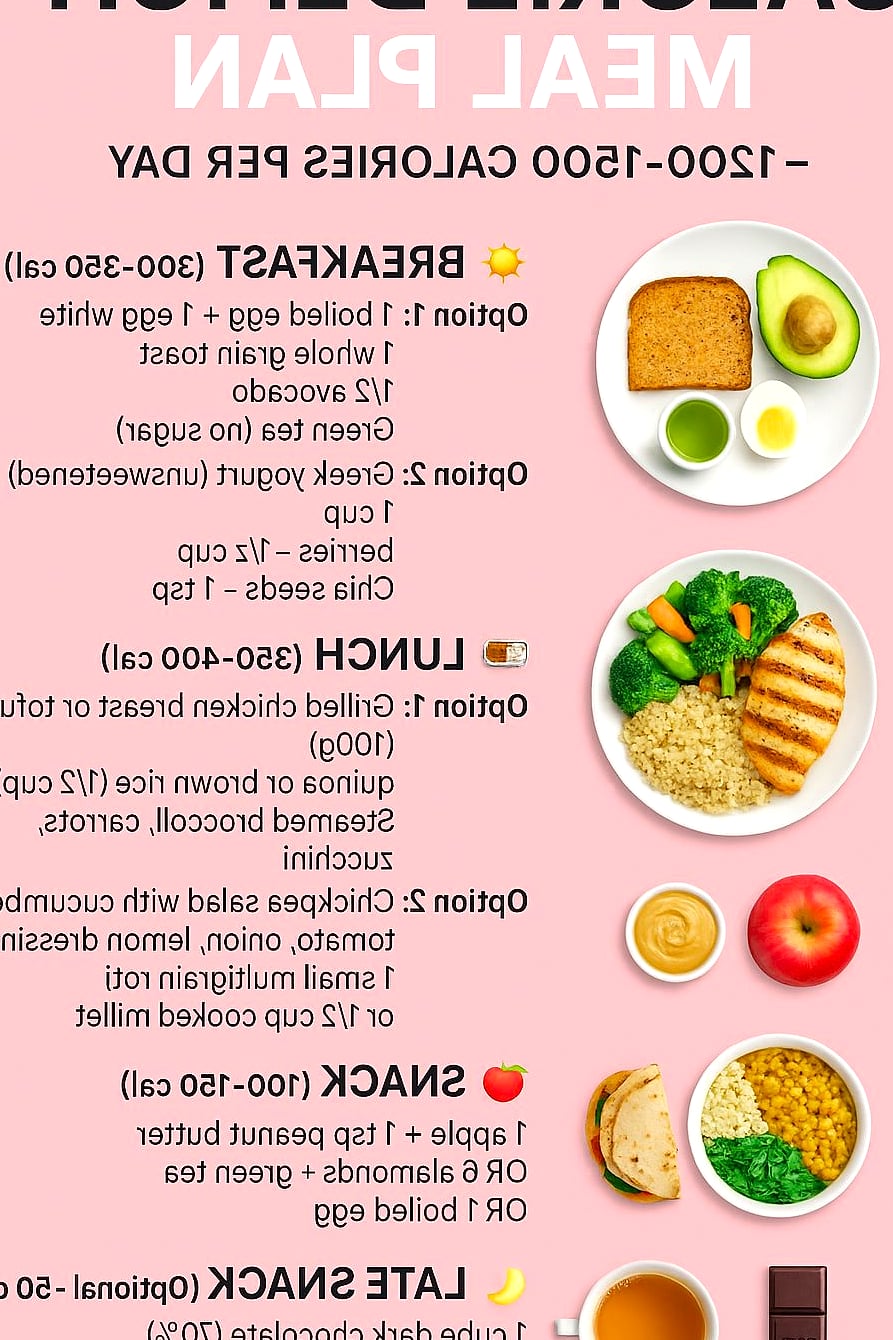
Breakfast: A protein smoothie with one scoop of vanilla protein powder, a handful of frozen spinach (you won’t taste it, promise), half a banana, unsweetened almond milk, and a spoonful of almond butter. Blend and go.
Lunch: Grilled chicken salad with mixed greens, cherry tomatoes, cucumber, red onion, and a light vinaigrette. Sounds boring on paper but if you season the chicken well and use a dressing you actually like, this is genuinely good.
Dinner: Black bean tacos in small corn tortillas with shredded cabbage, salsa, avocado slices, and a little lime juice. Two to three tacos depending on your appetite. These are the kind of tacos that don’t feel like diet food, which is exactly the point.
Optional snack: Cottage cheese with a few sliced strawberries.
Day four is the halfway point, and the meals here are intentionally a bit more fun — tacos and smoothies tend to feel like a reward rather than a restriction.
Day 5
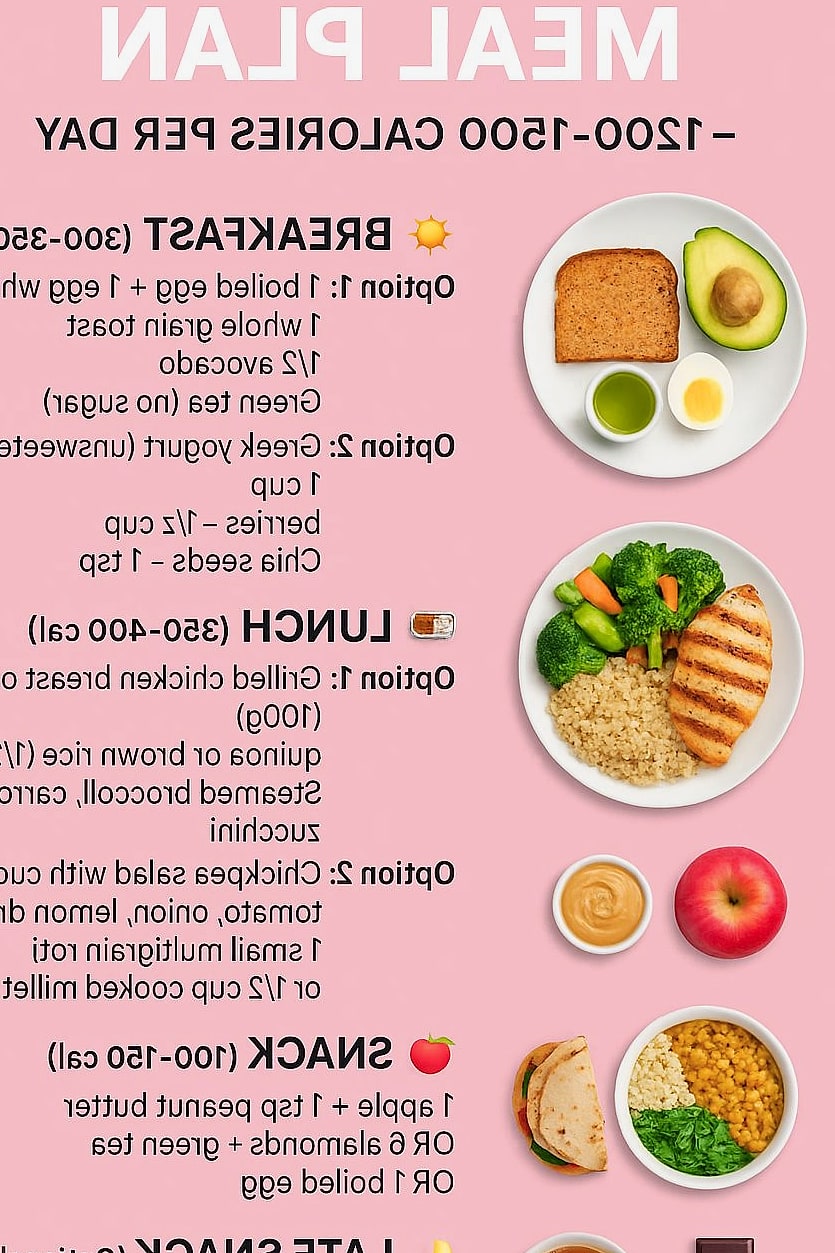
Breakfast: Two poached or fried eggs on a slice of whole grain toast with half an avocado. Season with salt, pepper, and red pepper flakes if you like a little heat. A classic for good reason.
Lunch: Homemade vegetable and chickpea soup. You can batch cook this and eat it across several days. Chickpeas bring a nice hearty texture and keep hunger away far longer than broth-only soups.
Dinner: Baked chicken thighs (skin removed to keep calories down) with roasted sweet potato and steamed green beans. Chicken thighs stay juicy and tender even when baked, unlike chicken breasts which can sometimes dry out if you’re not watching them.
Optional snack: A small orange or a few rice cakes with a thin spread of peanut butter.
This is a classic comfort food kind of day — the meals feel warm and familiar, which helps when you’re five days into a calorie deficit and your brain starts negotiating with you.
Day 6
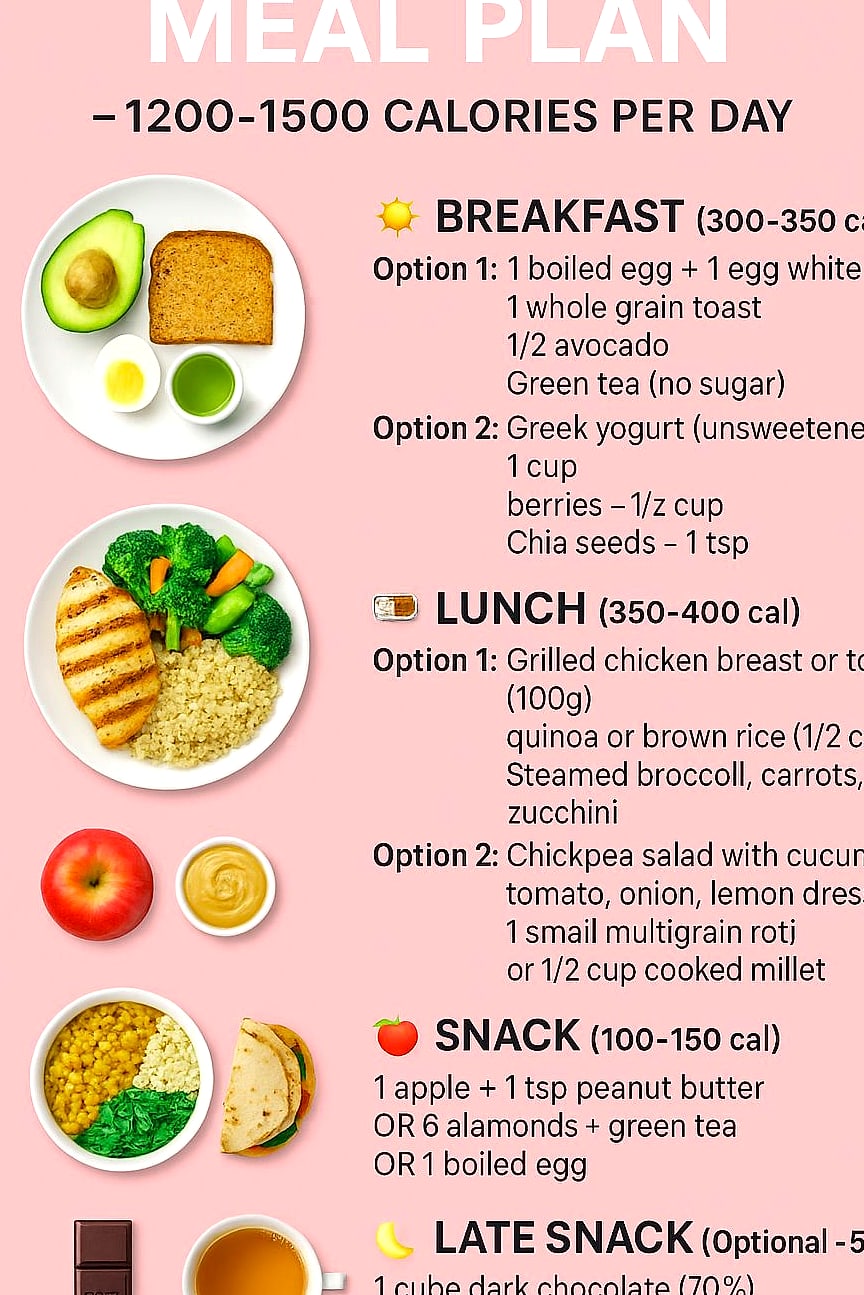
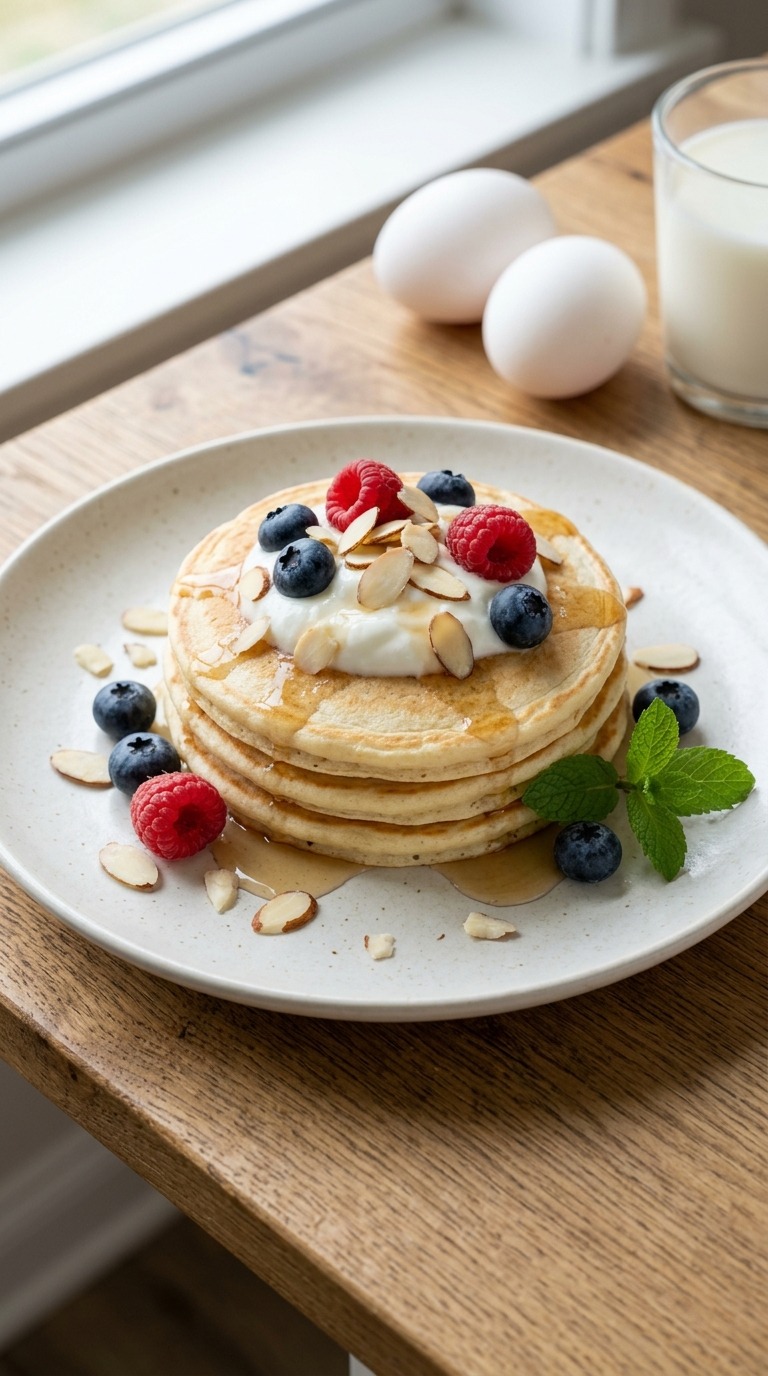
Breakfast: Cottage cheese pancakes — blend one cup of cottage cheese with two eggs and a little oat flour, then cook them in a non-stick pan. They come out fluffy with a slight golden edge and have way more protein than standard pancakes. Top with fresh berries.
Lunch: A grain bowl with cooked quinoa, roasted vegetables (whatever you have in the fridge works well), a handful of spinach, and a tahini dressing. These are endlessly adaptable and a great way to use up produce before it turns.
Dinner: Shrimp stir-fry with bok choy, snap peas, and a garlic-ginger sauce, served over a small portion of cauliflower rice or regular rice depending on your preference. Shrimp cooks in minutes and feels a bit more special than chicken on a weekend evening.
Optional snack: A small dark chocolate square or two, plus a handful of walnuts. Because a little chocolate goes a long way and completely eliminating things you enjoy is how plans fall apart.
Day six is the weekend, so the meals here are slightly more relaxed and enjoyable without going overboard.
Day 7
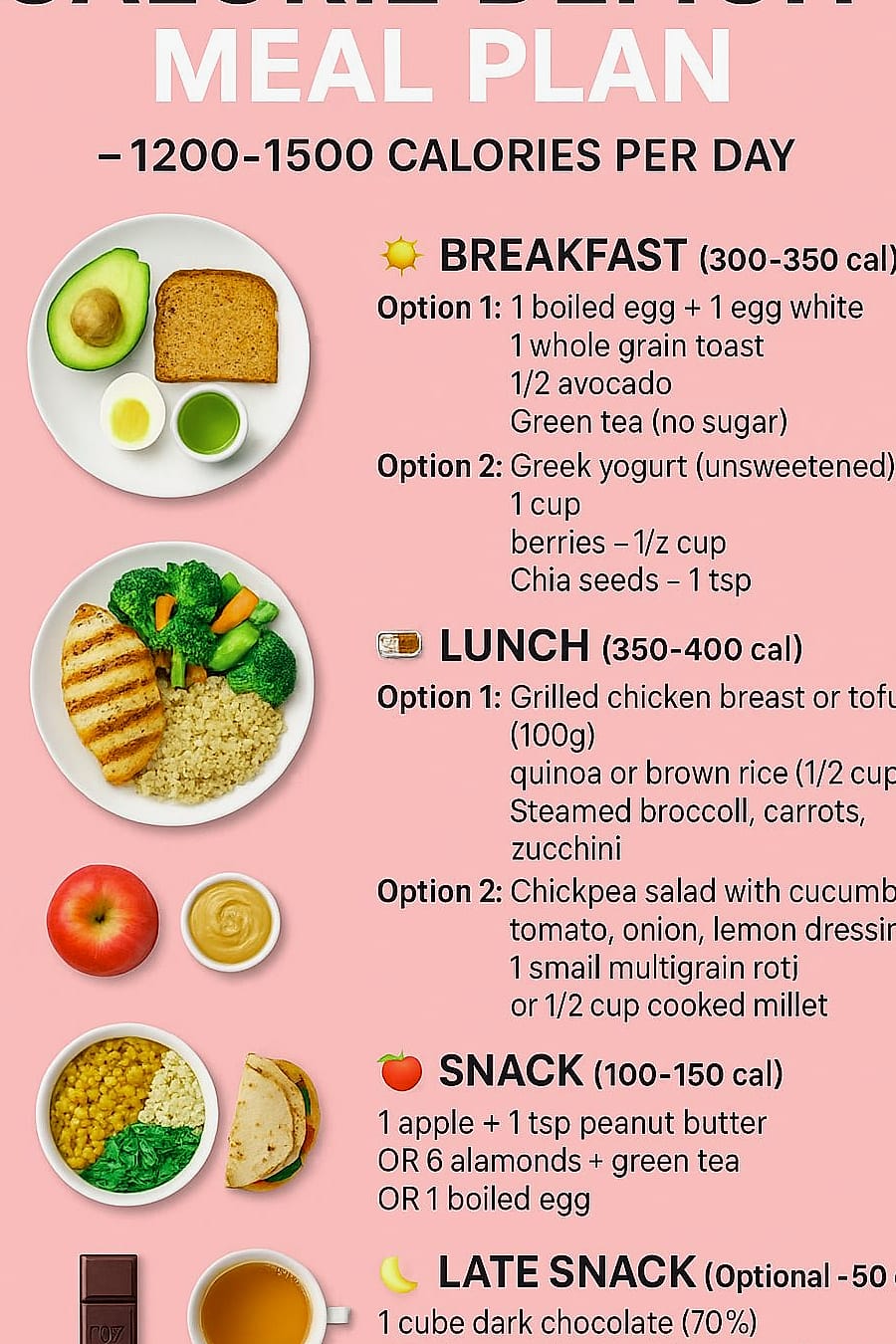
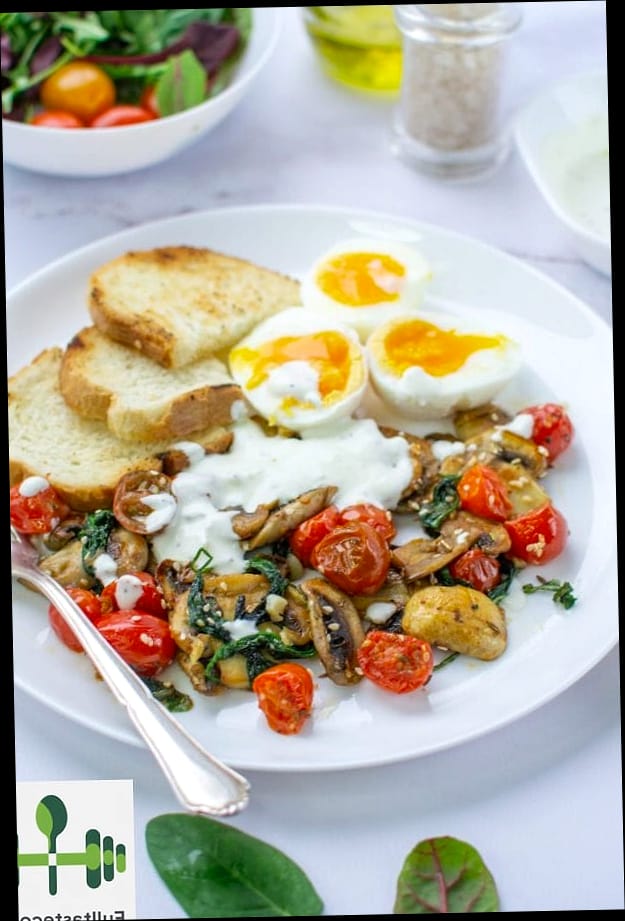
Breakfast: A veggie-loaded omelet with mushrooms, diced tomatoes, onion, and a small amount of feta cheese. Use two eggs and one extra egg white if you want to bump up the protein without adding much more fat.
Lunch: Leftover soup or grain bowl from earlier in the week. Sunday is a good day to clear out the fridge, and this keeps waste low and effort even lower.
Dinner: Oven-baked cod with a herby breadcrumb topping, served with roasted asparagus and a small portion of mashed cauliflower. Cod is mild and flaky, and the breadcrumb topping gives it a satisfying crunch that makes it feel like something you’d order at a restaurant.
Optional snack: Greek yogurt with a teaspoon of honey and a few chopped walnuts.
Ending the week with a genuinely good Sunday dinner makes the whole thing feel sustainable rather than something you’re just enduring.
Tips for Making This Plan Work
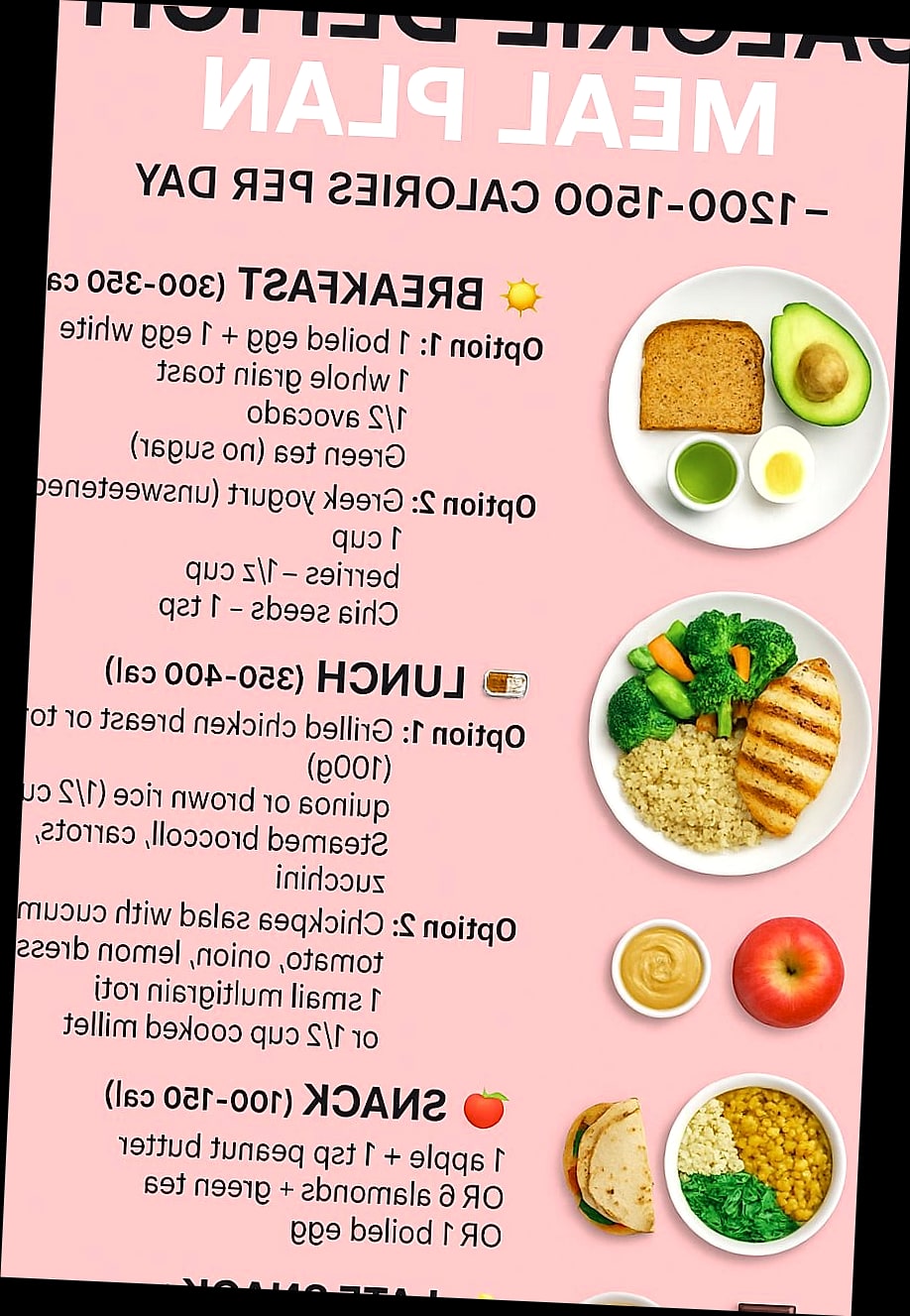
Meal prep is your best friend here. Spending an hour or so on Sunday cooking grains, roasting a tray of vegetables, and prepping some protein makes the weekdays dramatically easier. You’re far less likely to stray from the plan when lunch is already sitting in the fridge.
Hydration matters more than most people realize when cutting calories. Sometimes what feels like hunger is actually just thirst, so keep water nearby throughout the day.
Don’t be rigid about swapping meals around. If Day 3’s dinner sounds better on Day 5, move it. The structure here is a guide, not a rule book.
Calorie deficit eating works best when it doesn’t feel like a permanent state of sacrifice. The goal with this plan is to keep portions reasonable, meals filling, and the whole thing easy enough to actually stick to past the first three days. That’s where the results actually come from — consistency over a few weeks, not perfection over seven days.
Give yourself credit for starting, adjust as needed, and eat food that you actually enjoy along the way.
30-Day High-Protein
Low-Calorie Meal Plan
Every breakfast, lunch, dinner & snack — all 30 days fully mapped out. Just follow the plan.
- ✓50+ complete recipes with ingredients & step-by-step instructions
- ✓4-week day-by-day plans — every meal for all 30 days
- ✓4 weekly shopping lists organised by store section
- ✓Printable habit & progress tracker — 30 full days
- ✓100g+ protein per day — scientifically optimised macros
Instant PDF · Print at home
Results guaranteed with consistency