19 High-Protein Smoothies Under 300 Calories
Look, I get it. You’re trying to hit your protein goals without feeling like you’re drinking a meal replacement that tastes like cardboard mixed with gym socks. Been there. The struggle is real when you’re standing in front of your blender at 6 AM, half-awake, wondering if you should just grab a breakfast burrito instead.
But here’s the thing about high-protein smoothies that actually clock in under 300 calories—they’re not just for bodybuilders chugging chalky shakes between sets. These are legitimate, taste-good drinks that keep you full, fuel your muscles, and don’t require a degree in nutrition to figure out. I’ve been down the smoothie rabbit hole for years now, and honestly? Once you nail a few solid recipes, you’ll wonder why you ever bothered with anything else for breakfast.
The beauty of keeping these under 300 calories is that you’re getting serious bang for your nutritional buck. We’re talking 20-30 grams of protein without the calorie bomb that comes with those massive coffee shop concoctions. No judgment if that’s your thing, but when you’re watching your intake, every calorie counts.
Why Protein Matters More Than You Think
Before we get into the recipes, let’s talk about why protein is such a big deal. According to Johns Hopkins Medicine, protein builds and maintains muscle mass while keeping you satisfied between meals. It’s not just gym talk—protein actually slows down digestion and helps stabilize blood sugar levels.
Here’s what most people miss: you need protein throughout the day, not just after workouts. Research shows that higher-protein diets can lead to greater weight loss and fat loss while preserving lean muscle. That’s the sweet spot we’re aiming for here.
Protein does three major things in your smoothie: It keeps hunger at bay for hours (no mid-morning snack attacks), it helps your body repair and build muscle tissue after exercise, and it actually burns more calories during digestion than carbs or fats do.
The Best Protein Sources for Low-Calorie Smoothies
Not all protein is created equal, especially when you’re trying to keep calories down. I’ve tried pretty much everything, and some sources are just smarter choices than others.
Greek Yogurt
This is my go-to base for most smoothies. A half-cup of nonfat Greek yogurt gives you around 12 grams of protein for roughly 60 calories. It adds this creamy texture that makes your smoothie feel indulgent without the calorie price tag. Plus, you’re getting probiotics for gut health—bonus points.
The key difference between Greek and regular yogurt? Greek yogurt is strained to remove the liquid whey, concentrating the protein. It’s thicker, tangier, and way more protein-dense. I always keep a big tub of plain nonfat Greek yogurt in my fridge because it’s versatile for both smoothies and snacks.
Protein Powder
Here’s where things get personal. Everyone has an opinion about protein powder, and honestly, you need to find what works for your taste buds and your wallet. I’ve had some that tasted like sweetened dirt and others that were legitimately delicious.
What to look for: Keep it simple with the ingredients list. You want minimal additives and artificial junk. Check the sugar content—aim for single digits per serving. A good powder should give you 20-25 grams of protein per scoop without loading you up with unnecessary calories.
Whey protein is fast-digesting and great post-workout. Plant-based options like pea or hemp protein work fantastic if you’re dairy-free. I personally rotate between both depending on what I’m making. Sometimes I’ll use a chocolate whey protein powder for my morning shake, other times I reach for a vanilla pea protein blend when I’m doing a fruit-heavy smoothie.
🏆 My Go-To Protein Powder for Smoothies
After trying literally dozens of protein powders, I keep coming back to Optimum Nutrition Gold Standard Whey. It’s been my daily driver for over two years, and here’s why it’s perfect for these smoothie recipes.
- 24g protein per scoop with only 120 calories
- Blends incredibly smooth—no chalky texture or clumps
- Double Rich Chocolate flavor actually tastes like chocolate, not sadness
- Mixes well with any liquid (even just water in a pinch)
- Great value—you get 74 servings per container
The vanilla ice cream flavor is also phenomenal for fruit-based smoothies. It doesn’t have that artificial sweetener aftertaste that cheaper brands have.
Nut Butters (Used Wisely)
Peanut butter, almond butter, cashew butter—they’re all packed with protein and healthy fats. The catch? They’re also calorie-dense. Two tablespoons of peanut butter will run you about 190 calories. That’s why I measure religiously with a digital kitchen scale instead of eyeballing it.
One tablespoon is usually the sweet spot for keeping calories in check while still getting that nutty flavor and 4 grams of protein. For those with peanut allergies, sunflower seed butter works surprisingly well and has a similar nutritional profile.
If you’re watching your intake super closely, try powdered peanut butter. It’s peanuts with most of the fat removed, giving you that peanut flavor for a fraction of the calories. Mix it right into your smoothie—works like magic.
Cottage Cheese
Don’t knock it till you try it. I know cottage cheese in a smoothie sounds weird, but trust me on this. A half-cup of low-fat cottage cheese packs 12 grams of protein for about 80 calories, and when you blend it up, it creates this incredibly smooth, almost cheesecake-like texture.
You can’t taste it when you pair it with fruit and other flavors. It just makes everything richer. This has become my secret weapon for protein smoothies that feel like dessert.
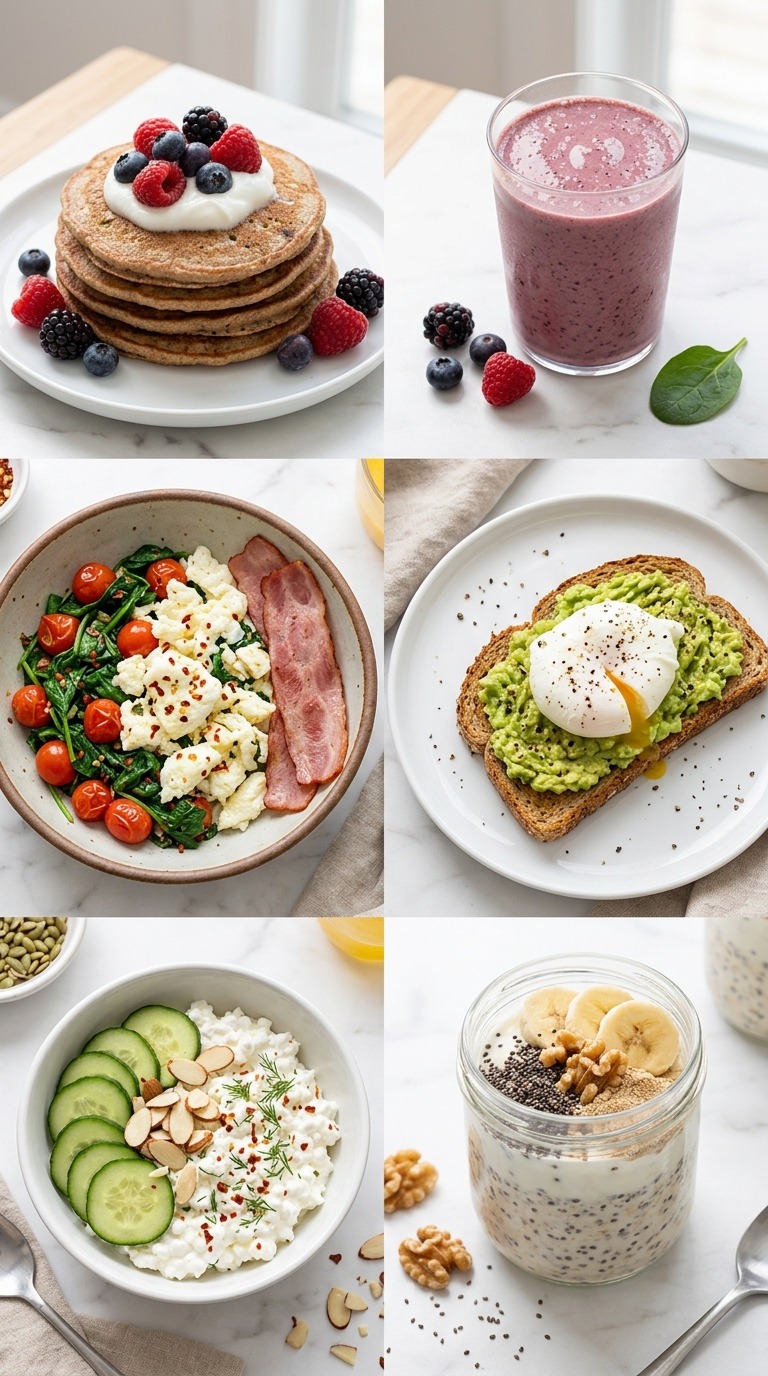
Speaking of breakfast creativity, you might also love these high-protein breakfast bowls for busy mornings when you want something you can actually chew.
Building Your Perfect 300-Calorie Formula
Once you understand the basic formula, you can improvise like crazy. It’s not rocket science, but there is a method to the madness if you want to keep things under 300 calories while maxing out protein.
The base components:
- Liquid (80-120 calories): Unsweetened almond milk, skim milk, coconut water, or just water if you’re going minimal.
- Protein source (80-120 calories): Greek yogurt, protein powder, cottage cheese, or a combo.
- Fruit (40-80 calories): Usually one serving—think half a banana, a cup of berries, or some frozen mango chunks.
- Add-ins (0-60 calories): Spinach, ice, cinnamon, vanilla extract, or a small amount of nut butter.
The trick is to prioritize protein and keep the sugar sources (even natural ones from fruit) in check. I see people throw in two bananas, a cup of OJ, honey, and dates, then wonder why their “healthy” smoothie is 600 calories. Everything in moderation.
19 High-Protein Smoothie Recipes Under 300 Calories
Alright, let’s get to the good stuff. These recipes are organized by flavor profile, and I’ve tested every single one. Some are my daily drivers, others are for when I’m feeling fancy.
Berry-Based Smoothies
1. Classic Berry Protein Blast
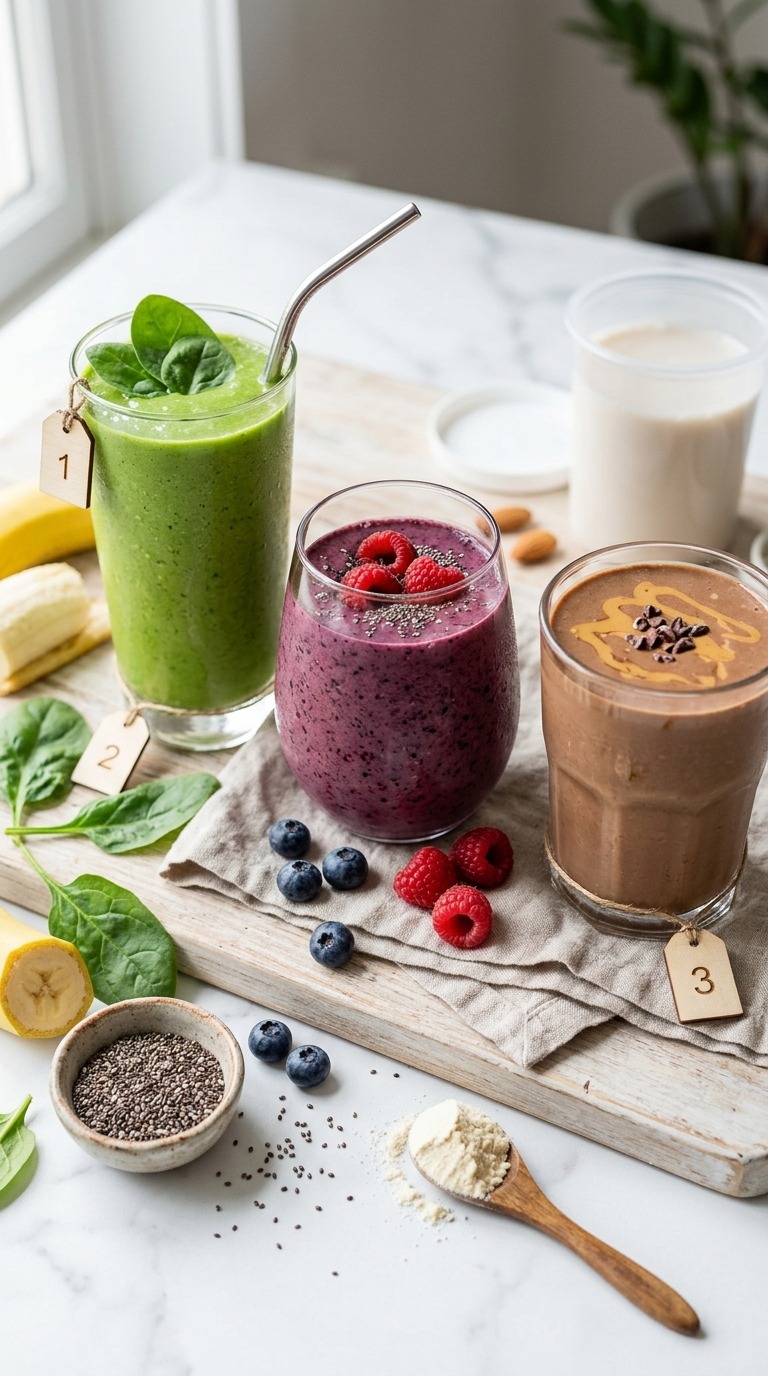
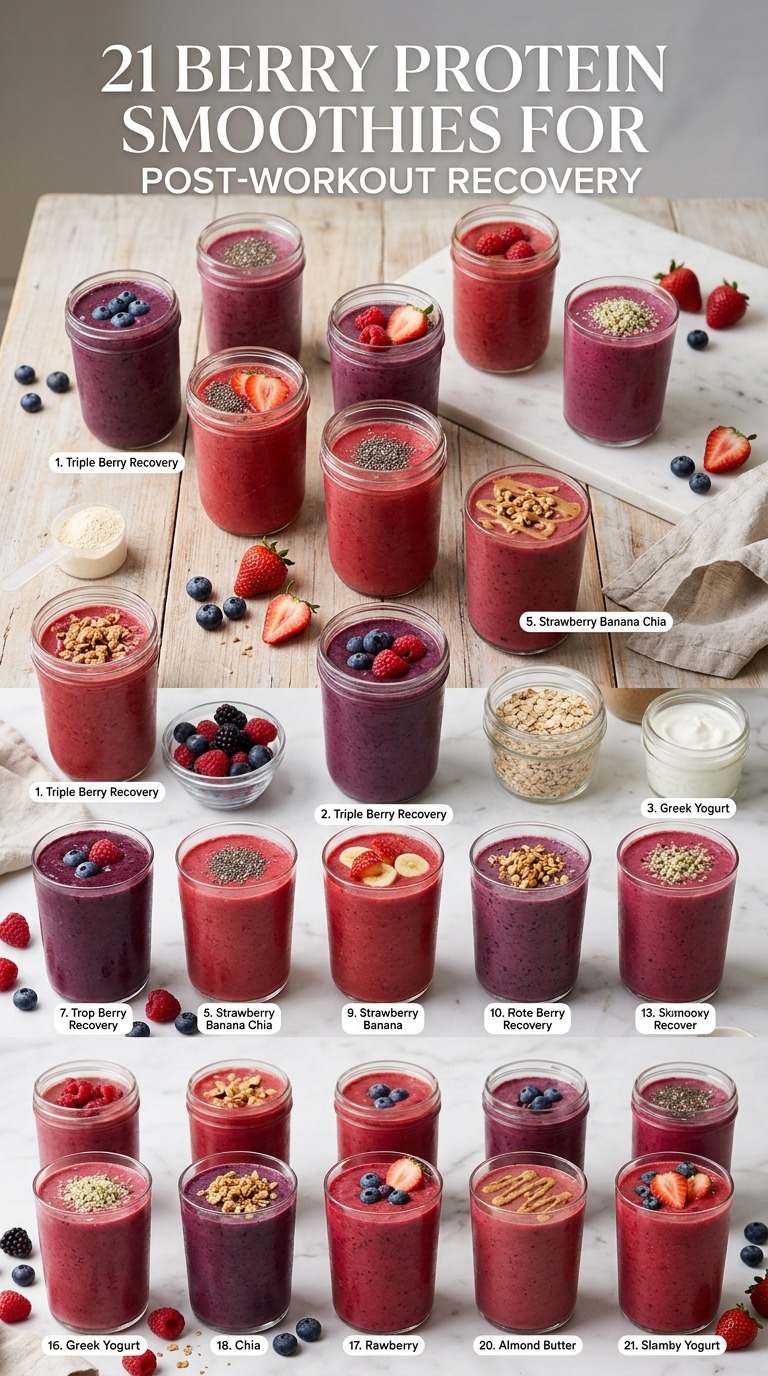
This is my default breakfast probably three times a week. It’s simple, tastes great, and the color is this gorgeous purple that makes you feel like you’re doing something right with your life. Mix one cup of unsweetened almond milk with one scoop of vanilla protein powder. Toss in a half-cup of frozen mixed berries and a half-cup of nonfat Greek yogurt. Get Full Recipe.
Total comes to about 240 calories with 28 grams of protein. The frozen berries make it thick and frosty without needing added ice, which I prefer because ice can water things down. If you want it sweeter, add a few drops of liquid stevia, but honestly, the berries usually do the trick.
2. Triple Berry Cottage Cheese Dream
Here’s where cottage cheese really shines. Blend half a cup of low-fat cottage cheese with a cup of water, a half-cup each of strawberries, blueberries, and raspberries, and a handful of spinach (you won’t taste it, promise). Add a scoop of vanilla protein powder if you need more protein, but the cottage cheese already gets you halfway there. This one lands around 280 calories with 25 grams of protein.
The tartness from the berries balances the creaminess of the cottage cheese perfectly. I make this one with a high-powered blender because it really smooths out the cottage cheese curds completely.
3. Strawberry Banana Protein Shake
A classic for a reason. One cup of unsweetened almond milk, one scoop of strawberry or vanilla protein powder, a half of a frozen banana, and five large frozen strawberries. If you want it thicker, add a couple of ice cubes. Get Full Recipe.
This hits about 250 calories with 26 grams of protein. The banana adds natural sweetness and makes it creamy without Greek yogurt. I like to add a teaspoon of chia seeds for extra fiber and omega-3s—barely adds any calories but keeps you fuller longer.
Chocolate Smoothies
4. Chocolate Peanut Butter Power
If you’re a Reese’s fan, this is your smoothie. One cup of skim milk, one scoop of chocolate protein powder, one tablespoon of peanut butter, half a frozen banana, and a handful of ice. Blend it up and prepare to feel like you’re cheating on your diet (you’re not).
Comes in around 285 calories with 30 grams of protein. The combo of chocolate and peanut butter is unbeatable. Sometimes I’ll add a tablespoon of unsweetened cocoa powder for an extra chocolate kick without many additional calories.
5. Chocolate Cherry Recovery Shake
This one’s inspired by post-workout needs. One cup of unsweetened almond milk, one scoop of chocolate protein powder, one cup of frozen dark cherries, a handful of spinach, and a tablespoon of ground flaxseed. Cherries have been shown to help reduce muscle soreness after exercise, making this a smart choice after tough workouts.
About 265 calories with 27 grams of protein. The cherries give it this sophisticated flavor that doesn’t taste like your typical smoothie. Plus, that ground flaxseed I keep in my fridge adds omega-3s and fiber for barely any calories.
6. Double Chocolate Breakfast Shake
Sometimes you just want chocolate for breakfast, and that’s okay. One cup of skim milk, one scoop of chocolate protein powder, two tablespoons of unsweetened cocoa powder, a quarter cup of nonfat Greek yogurt, and a handful of ice. Sweeten with a few drops of liquid stevia if needed.
Sits right at 270 calories with 32 grams of protein. This is my go-to when I’m craving something sweet but need to stay on track. It’s rich, thick, and surprisingly filling. I blend this in my personal blender cup that I can take straight to work.
Green Smoothies
7. Tropical Green Machine
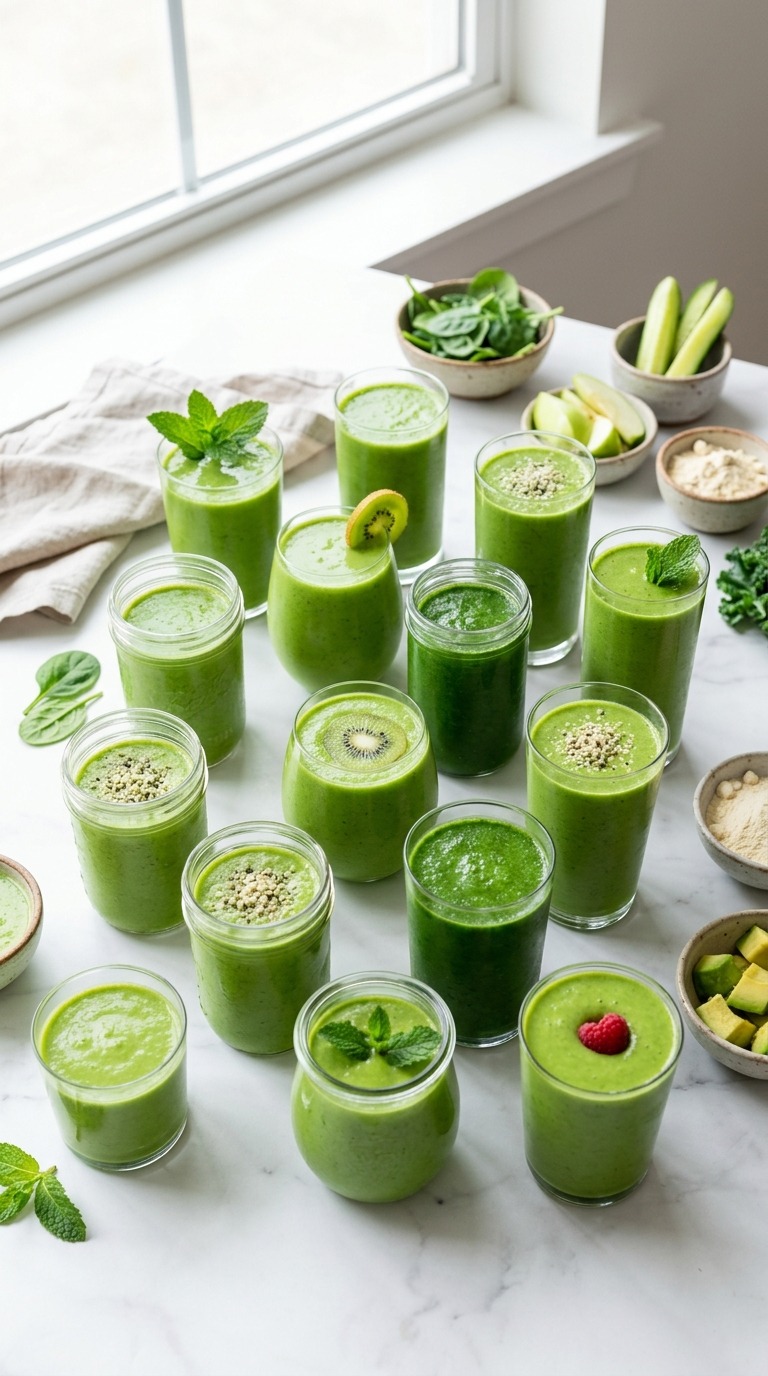
Don’t let the green color scare you. One cup of coconut water, one scoop of vanilla protein powder, one cup of spinach, a half-cup of frozen mango chunks, and a quarter of an avocado for healthy fats. The mango completely masks the spinach taste.
Around 280 calories with 24 grams of protein. The avocado makes it incredibly creamy and adds filling healthy fats. This one feels like vacation in a glass. If you want even more tropical vibes, add a quarter cup of frozen pineapple.
8. Green Protein Power Bowl (Drinkable Version)
This is basically a smoothie bowl you can drink. One cup of unsweetened almond milk, one scoop of vanilla protein powder, two cups of spinach (sounds like a lot but it’s mostly air), a half of a frozen banana, and a tablespoon of almond butter.
Clocks in at 295 calories with 28 grams of protein. The almond butter adds this nutty richness that pairs well with the banana. Sometimes I’ll top this with a sprinkle of granola if I’m eating it as a bowl, but as a drink, it’s perfect as-is.
9. Cucumber Mint Protein Refresher
This one’s for when you want something light and refreshing. One cup of coconut water, one scoop of vanilla protein powder, a half-cup of chopped cucumber, a handful of spinach, fresh mint leaves, juice of half a lime, and ice. Get Full Recipe.
Only about 210 calories with 25 grams of protein. It’s like a spa day for your insides. The cucumber and mint combo is incredibly refreshing, especially in summer. This is the smoothie I make when I’m feeling fancy and want something different from the usual fruit blends.
For more plant-powered inspiration, check out these high-protein vegan meals that complement this lifestyle perfectly.
Coffee-Inspired Smoothies
10. Mocha Protein Wake-Up Call
For those mornings when you need caffeine AND protein. One cup of cold brew coffee, one scoop of chocolate protein powder, a quarter cup of nonfat Greek yogurt, half a frozen banana, and ice. This is basically a healthier version of those expensive coffee shop drinks.
Around 260 calories with 29 grams of protein, plus you get your caffeine fix. The cold brew keeps it from being too sweet, and the banana adds just enough creaminess. I make a big batch of cold brew every week in a cold brew coffee maker specifically for these morning smoothies.
11. Vanilla Iced Coffee Protein Shake
A lighter version for the vanilla lovers. One cup of cold brew coffee, one scoop of vanilla protein powder, two tablespoons of sugar-free vanilla syrup (or a few drops of vanilla extract), and ice. Optional: add a splash of unsweetened almond milk for creaminess.
Comes in around 220 calories with 25 grams of protein. This tastes exactly like those iced vanilla lattes but with way more protein and fewer calories. It’s my afternoon pick-me-up when I need something to power through the day.
Tropical Smoothies
12. Piña Colada Protein
All the tropical vibes, none of the guilt. One cup of unsweetened coconut milk (the carton kind, not the canned stuff), one scoop of vanilla protein powder, a half-cup of frozen pineapple chunks, a quarter cup of nonfat Greek yogurt, and a teaspoon of shredded unsweetened coconut.
About 275 calories with 27 grams of protein. This legitimately tastes like a piña colada but keeps you full for hours. The coconut milk base makes it feel super indulgent. I like to blend this extra long so the pineapple gets completely smooth.
13. Mango Protein Paradise
Simple but effective. One cup of unsweetened almond milk, one scoop of vanilla protein powder, one cup of frozen mango chunks, a quarter cup of nonfat Greek yogurt, and a squeeze of lime juice. The lime really brightens up the mango flavor in an unexpected way.
Around 265 calories with 28 grams of protein. Mangoes are naturally sweet, so you don’t need any additional sweeteners. This is one of my summer favorites when I want something that feels like dessert but is actually nutritious.
14. Peachy Protein Perfection
One cup of skim milk, one scoop of vanilla protein powder, one cup of frozen peach slices, a pinch of cinnamon, and a handful of ice. Peaches and cinnamon are a criminally underrated combo. Get Full Recipe.
Hits about 255 calories with 29 grams of protein. This tastes like peach cobbler in liquid form. I make this with those frozen peach slices you can grab from any grocery store—no need to get fancy. The cinnamon adds warmth without calories.
Unique Flavor Combinations
15. Pumpkin Spice Protein Shake
Not just for fall, folks. One cup of unsweetened almond milk, one scoop of vanilla protein powder, a third of a cup of pure pumpkin puree (not pie filling), half a frozen banana, pumpkin pie spice, and a pinch of cinnamon. This is cozy in a glass.
About 280 calories with 26 grams of protein. The pumpkin adds fiber and vitamin A while keeping calories low. I keep canned pumpkin in my pantry year-round because this smoothie is too good to limit to autumn. Make sure you’re using pure pumpkin puree, not the sweetened pie filling.
16. Chai Protein Delight
One cup of strong brewed chai tea (cooled), one scoop of vanilla protein powder, half a frozen banana, a quarter cup of nonfat Greek yogurt, and a dash of cinnamon and ginger. This has all the warm spices of chai but in smoothie form.
Around 270 calories with 28 grams of protein. The chai tea adds this complex flavor profile that makes it feel special. I brew a strong batch of chai tea and keep it in the fridge so I can make this quickly in the morning.
17. Blueberry Vanilla Protein Heaven
One cup of unsweetened almond milk, one scoop of vanilla protein powder, one cup of frozen blueberries, a quarter cup of nonfat Greek yogurt, and a teaspoon of vanilla extract. Simple ingredients, incredible flavor.
About 265 calories with 28 grams of protein. Blueberries are packed with antioxidants, and they blend up beautifully. This one has this gorgeous deep purple color that looks amazing in photos if you’re into that. The extra vanilla extract really amplifies the vanilla protein powder.
18. Cinnamon Roll Protein Shake
This is my cheat-day-that’s-not-really-a-cheat-day smoothie. One cup of skim milk, one scoop of vanilla protein powder, half a frozen banana, a quarter cup of nonfat Greek yogurt, a tablespoon of old-fashioned oats, a teaspoon of cinnamon, and a few drops of liquid stevia.
Sits at 295 calories with 30 grams of protein. The oats add this slight thickness and make it more filling. It literally tastes like drinking a cinnamon roll. I blend this in my high-speed blender to make sure the oats get completely pulverized.
19. Maple Walnut Protein Treat
One cup of unsweetened almond milk, one scoop of vanilla protein powder, half a frozen banana, a tablespoon of crushed walnuts, a teaspoon of sugar-free maple syrup (or a tiny bit of the real stuff), and ice. This tastes like maple walnut ice cream but actually fuels your body.
Around 285 calories with 27 grams of protein. The walnuts add healthy fats and that satisfying crunch factor when you’re drinking it. This is a great option when you want something that feels like a treat but still fits your macros.
If you’re looking for more ways to keep your protein high while managing calories, these muscle recovery recipes are perfect post-workout fuel.
Common Mistakes That Blow Your Calorie Budget
I’ve made every smoothie mistake in the book, so let me save you some trouble. These are the sneaky things that can turn your 300-calorie smoothie into a 600-calorie sugar bomb.
Going Overboard with Fruit
Fruit is healthy, sure, but it’s not calorie-free. I see people throw in two bananas, a cup of mango, a cup of berries, and some pineapple, then act shocked when they’re not losing weight. One serving of fruit is plenty for a smoothie. If you need more volume, add leafy greens—they bulk up your drink without many calories.
Not Measuring Nut Butters
This is probably the most common mistake. You think you’re adding a tablespoon of almond butter, but you’re actually adding three. Nut butters are incredibly calorie-dense—two tablespoons can be 200 calories. Always, always use a measuring spoon or that digital food scale I mentioned earlier.
Adding Too Many “Healthy” Fats
Avocado, coconut oil, chia seeds, flaxseeds, hemp hearts—they’re all great for you, but they add up fast. Pick one or two max and measure them carefully. A quarter of an avocado is about 60 calories. A tablespoon of chia seeds is 70 calories. These are not free foods.
Using Sweetened Milk or Yogurt
Vanilla almond milk can have 13 grams of sugar per cup. Flavored Greek yogurt can be even worse. Stick with unsweetened versions and add your own sweetness if needed with a bit of stevia or a small amount of honey. You’ll save a ton of calories and sugar this way.
Juice as a Base
Please don’t use juice as your smoothie base if you’re watching calories. A cup of orange juice is about 110 calories of straight sugar with no protein or fiber. Use water, unsweetened milk alternatives, or coconut water instead. Your blood sugar will thank you.
Many people also love quick meal-prep options like these high-protein bowls you can prep in under 20 minutes for those days when you want variety.
Prepping and Storing Your Protein Smoothies
Real talk: the best smoothie is the one you’ll actually make. If prep time is holding you back, these strategies will help.
Freezer Bag Method
This is my favorite prep method. On Sunday, I portion out all my smoothie ingredients (except the liquid and protein powder) into individual freezer bags. Each bag gets exactly what I need—measured fruit, greens, any seeds or add-ins. In the morning, I dump one bag into the blender, add my protein powder and liquid, and blend. Done.
Pro tip: write the liquid amount and protein powder type on the outside of each bag with a permanent marker. Future you will appreciate not having to think at 6 AM.
Can You Pre-Make Smoothies?
You can, but they’re better fresh. If you must make them ahead, store them in an airtight container in the fridge for up to 24 hours. Give them a good shake or quick re-blend before drinking because ingredients will separate. The texture won’t be quite as perfect, but it’s better than skipping it entirely.
Some people freeze entire smoothies in mason jars and let them thaw overnight in the fridge. I’ve tried this, and it works okay, but the texture gets a bit icy. Your mileage may vary.
Best Containers for Smoothies
I’m particular about this. Those insulated stainless steel tumblers with straw lids are game-changers. They keep your smoothie cold for hours, and you can drink it slowly at your desk without it getting warm and gross. Plus, they don’t retain odors like plastic can.
For meal prep storage, wide-mouth mason jars work great because they’re glass (no weird chemical leaching), and you can blend directly
30-Day High-Protein
Low-Calorie Meal Plan
Every breakfast, lunch, dinner & snack — all 30 days fully mapped out. Just follow the plan.
- ✓50+ complete recipes with ingredients & step-by-step instructions
- ✓4-week day-by-day plans — every meal for all 30 days
- ✓4 weekly shopping lists organised by store section
- ✓Printable habit & progress tracker — 30 full days
- ✓100g+ protein per day — scientifically optimised macros
Instant PDF · Print at home
Results guaranteed with consistency