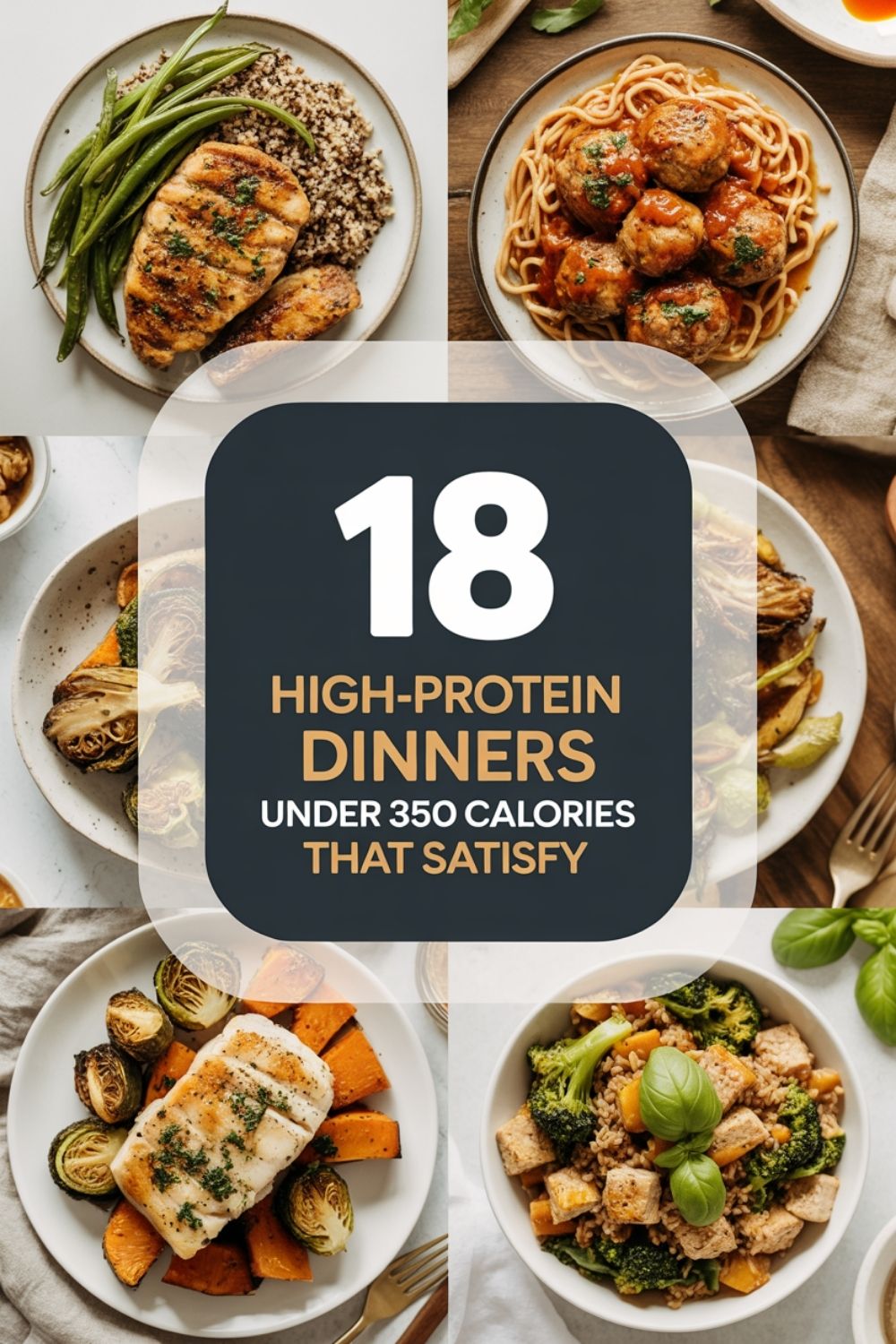
18 High-Protein Dinners Under 350 Calories
Look, I get it. You want to eat something that actually tastes good, keeps you full past 9 PM, and doesn’t require a second mortgage to afford the ingredients. And honestly? You’re tired of the same boring chicken breast and steamed broccoli routine that makes dinner feel like punishment rather than pleasure.
Here’s the thing about high-protein, low-calorie dinners—they don’t have to suck. I’ve spent way too many evenings staring at sad salads that left me raiding the pantry an hour later. But once I figured out how to actually build satisfying meals that pack serious protein without blowing my calorie budget, everything changed.
These 18 dinners all clock in under 350 calories, deliver at least 25 grams of protein, and taste like actual food you’d want to eat. No weird protein powder smoothies for dinner. No sad tuna from a can eaten over the sink. Just real meals that happen to work with your goals.
Why Protein Actually Matters for Dinner
Before we jump into the recipes, let’s talk about why protein at dinner is kind of a big deal. According to Mayo Clinic, most people need around 15-30 grams of protein per meal to properly support muscle maintenance and satiety. That’s especially important as you age—after 40, your protein requirements actually go up to help combat muscle loss.
And here’s where it gets interesting: protein keeps you full way longer than carbs or fats. Ever notice how you can demolish a huge pasta dinner and still want dessert an hour later? That’s because refined carbs digest quickly and don’t trigger the same satiety signals that protein does.
When you’re trying to maintain a calorie deficit for weight loss, protein becomes your best friend. It preserves muscle mass while you’re losing fat, keeps your metabolism from tanking, and prevents those late-night kitchen raids that derail your progress.
Prep your proteins on Sunday night—grill 4-5 chicken breasts, bake some salmon fillets, cook a batch of ground turkey. You’ll thank yourself every single weeknight when dinner comes together in 10 minutes instead of 40.
The Math That Makes It Work
Let me break down the magic formula here. To build a satisfying dinner under 350 calories with high protein, you’re looking at roughly:
- 25-35 grams of lean protein (that’s about 100-140 calories)
- 2-3 cups of non-starchy vegetables (maybe 50-100 calories)
- A small portion of complex carbs or healthy fats (100-150 calories)
This combo gives you volume, nutrients, and staying power without the calorie overload. The vegetables bulk up your plate so it doesn’t look sad and tiny, while the protein does the heavy lifting on satiety.
Most restaurant meals pack 800-1200 calories easy, with way more fat and sodium than you need. Cooking at home gives you control over portions and ingredients, plus you can actually taste what you’re eating instead of drowning everything in heavy sauces.
18 Dinners That Actually Deliver
1. Lemon Herb Grilled Chicken with Roasted Vegetables
This is my default weeknight winner. A 4-ounce chicken breast gives you about 35 grams of protein for roughly 185 calories. Toss it with lemon juice, garlic, oregano, and a tiny bit of olive oil—I’m talking one teaspoon max because this olive oil sprayer makes it so much easier to control portions without feeling stingy.
Roast whatever vegetables are hanging out in your fridge. Bell peppers, zucchini, cherry tomatoes, asparagus—all game. Season them aggressively with salt, pepper, and any herbs you’ve got. Total dinner: about 280 calories, 37 grams of protein. Get Full Recipe.
2. Baked Cod with Cauliflower Rice Stir-Fry
Fish gets unfairly dismissed as complicated, but cod is basically foolproof. Pat it dry, season with whatever spices you’re feeling (Old Bay is elite here), and bake at 400°F for 12-15 minutes. A 5-ounce piece has about 26 grams of protein and only 120 calories.
While that’s cooking, stir-fry some cauliflower rice with garlic, ginger, and soy sauce. Add frozen peas and carrots if you’re fancy. The whole meal comes in around 240 calories with 28 grams of protein, leaving you room for a small side or sauce. Speaking of which, this fish spatula changed my life for flipping delicate fish without it falling apart into sad flakes.
3. Turkey and Zucchini Skillet
Ground turkey is ridiculously underrated. A 4-ounce serving packs 34 grams of protein for about 160 calories if you go with 93% lean. Brown it up with diced onions and garlic, throw in spiralized or diced zucchini, add some crushed tomatoes and Italian seasoning, and you’ve got dinner.
Total calorie count: around 290 with 36 grams of protein. It’s basically deconstructed turkey zucchini boats without the hassle of actually stuffing zucchini boats. Get Full Recipe.
If you’re looking for more hands-off cooking approaches that still deliver on protein, you might love these high-protein slow cooker meals or these Instant Pot recipes that basically cook themselves while you do literally anything else.
4. Shrimp and Broccoli Stir-Fry
Shrimp cooks in like three minutes, which makes it perfect for those nights when you walk in the door at 7 PM and need food immediately. Six ounces of shrimp delivers about 35 grams of protein for only 170 calories.
Stir-fry with tons of broccoli (seriously, use the whole head), a splash of soy sauce, a bit of sesame oil, and some red pepper flakes. Serve over a small portion of brown rice if you’ve got calories to spare, or just eat it straight. Total: 320 calories, 37 grams of protein. I use this carbon steel wok for stir-fries because nothing else gets hot enough to actually sear instead of steam.
5. Egg White and Veggie Scramble
Don’t sleep on breakfast for dinner. One cup of egg whites gives you 26 grams of protein for just 125 calories. Mix in a whole egg for flavor and healthy fats (adds 70 calories and 6 more grams of protein), then load it up with spinach, mushrooms, bell peppers, and tomatoes.
Serve with a slice of whole grain toast if you want, or just eat it straight. Total: about 280 calories with 34 grams of protein. This is my go-to when I’ve had a heavy lunch and want something lighter but still filling.
Buy pre-cut vegetables from the produce section. Yes, they cost more. But if paying an extra two bucks means you’ll actually cook instead of ordering pizza, it’s worth every penny. Your future self will appreciate the investment.
6. Baked Chicken Thighs with Brussels Sprouts
I know, I know—chicken thighs have more calories than breasts. But hear me out. A skinless, boneless thigh (about 3 ounces cooked) has roughly 180 calories and 26 grams of protein. The extra fat makes them way more forgiving to cook, so you’re less likely to end up with shoe leather.
Roast them with halved Brussels sprouts tossed in balsamic vinegar and a spray of oil. Season everything with garlic powder, smoked paprika, and black pepper. The whole plate comes in around 340 calories with 28 grams of protein, and it actually tastes like restaurant food. Get Full Recipe.
7. Tuna Stuffed Bell Peppers
Before you wrinkle your nose at canned tuna, this version is different. Mix drained tuna (a 5-ounce can has about 30 grams of protein and 150 calories) with Greek yogurt instead of mayo, diced celery, a squeeze of lemon, and some Dijon mustard.
Stuff into halved bell peppers and bake until the peppers are tender. Sprinkle with a tiny bit of cheese if you’ve got room in your calorie budget. Total: around 270 calories with 32 grams of protein. It’s like tuna salad grew up and became respectable.
8. Grilled Pork Tenderloin with Green Beans
Pork tenderloin is criminally underused. A 4-ounce serving packs 31 grams of protein for about 180 calories, and it’s tender enough that you don’t need fancy cooking skills. Rub it with a mix of garlic powder, cumin, chili powder, and a pinch of brown sugar, then grill or roast until it hits 145°F.
Serve with steamed green beans tossed with a bit of butter and almond slivers. The whole meal: 310 calories, 33 grams of protein. IMO, pork tenderloin beats chicken breast in both flavor and ease of cooking.
For more complete meal ideas that incorporate similar protein sources, check out these protein-packed bowls you can throw together in under 20 minutes.
9. Lemon Garlic Tilapia with Asparagus
Tilapia gets hate from food snobs, but it’s mild, cheap, and takes maybe 10 minutes to cook. A 5-ounce fillet has 28 grams of protein and 145 calories. Bake it with lemon slices, minced garlic, and a sprinkle of parsley.
Roast asparagus alongside it with just salt and pepper. The whole plate comes in at 240 calories with 30 grams of protein, leaving you plenty of room for a small side if you want. This fish turner makes it way easier to get the fillet off the pan in one piece instead of shredded chunks.
10. Chicken Sausage and Pepper Skillet
Not all sausages are calorie bombs. Chicken or turkey sausage links usually have about 140 calories and 14 grams of protein per link. Slice two links and sauté with sliced bell peppers, onions, and maybe some zucchini.
Season with Italian herbs or go Cajun with some paprika and cayenne. Total calories: around 340 with 30 grams of protein. It’s the kind of meal that feels indulgent but actually fits your macros. Get Full Recipe.
11. Baked Salmon with Roasted Cauliflower
Salmon is fattier than white fish, but it’s the good kind of fat your body actually needs. A 4-ounce piece has about 25 grams of protein and 200 calories. Season with dill, lemon, and black pepper, then bake at 375°F for 12-15 minutes.
Roast cauliflower florets with turmeric and a tiny bit of olive oil until they’re golden and crispy. The whole meal: 330 calories, 27 grams of protein, plus all those omega-3s that everyone says you should eat more of.
12. Turkey Meatballs with Marinara and Zoodles
Mix ground turkey with an egg, some breadcrumbs, minced garlic, and Italian seasonings. Roll into meatballs and bake. Four medium meatballs give you about 28 grams of protein and 200 calories.
Serve over spiralized zucchini noodles (zoodles) with marinara sauce. The zoodles add basically no calories but tons of volume, so your plate looks abundant instead of depressing. Total meal: 320 calories, 30 grams of protein. I use this spiralizer for making zoodles because handheld ones are annoying and inconsistent.
Speaking of convenient meal prep, these sheet pan dinners use the same baking approach and make cleanup stupidly easy.
Double your batch of meatballs. Freeze half for a future dinner when you don’t feel like cooking. Your freezer is basically a time machine for meals—past you can help out future you.
13. Greek-Style Chicken Bowl
Dice up 4 ounces of grilled chicken breast (35 grams protein, 185 calories). Toss with diced cucumbers, cherry tomatoes, red onion, a handful of spinach, and a tablespoon of crumbled feta cheese.
Dress with lemon juice, a tiny drizzle of olive oil, oregano, and salt. Add a few kalamata olives if you’re feeling it. Total: 290 calories, 37 grams of protein. It’s like a deconstructed Greek salad that actually fills you up. Get Full Recipe.
14. Garlic Butter Scallops with Green Beans
Scallops seem fancy but they’re actually super simple. Five large scallops have about 25 grams of protein and 150 calories. Pat them bone-dry (this is crucial), season with salt and pepper, and sear in a hot pan with a tiny bit of butter and garlic for literally 90 seconds per side.
Serve with steamed green beans. The whole meal: 280 calories, 27 grams of protein. Scallops are pricey, sure, but they cook so fast you’re not wasting gas or electricity, so it kind of balances out. Maybe.
15. Spicy Turkey Lettuce Wraps
Brown 4 ounces of ground turkey (34 grams protein, 160 calories) with ginger, garlic, and red pepper flakes. Add a splash of soy sauce and a squeeze of lime. Spoon into butter lettuce leaves and top with shredded carrots, cilantro, and maybe some crushed peanuts if you’ve got calories to spare.
Total: 260 calories, 36 grams of protein. It’s like having P.F. Chang’s without the wait or the bill. Butter lettuce is the move here because iceberg is boring and romaine is too stiff for wrapping.
16. Baked Chicken with Ratatouille
Season a chicken breast with herbs de Provence and bake it. While that’s happening, dice up tomatoes, zucchini, eggplant, and bell peppers. Sauté everything with garlic and a splash of vegetable broth until it’s tender and saucy.
Serve the chicken over the ratatouille. Total: 300 calories, 38 grams of protein. It’s basically a fancy vegetable medley that makes you feel like you’re eating at a bistro instead of reheating leftovers. Get Full Recipe.
For more veggie-forward approaches that still pack protein, these high-protein salads prove that salad doesn’t have to mean sad desk lunch.
17. Cod with Tomato Caper Sauce
Bake a 5-ounce cod fillet (26 grams protein, 120 calories). While it cooks, make a quick sauce by simmering diced tomatoes, capers, garlic, and a pinch of red pepper flakes. Pour over the fish.
Serve with steamed broccoli or cauliflower. The whole meal: 250 calories, 28 grams of protein. The capers add this briny punch that makes the dish taste way more complicated than it actually is.
18. Lemon Pepper Chicken with Roasted Radishes
Yes, radishes. Roasted radishes lose their sharp bite and turn mild and slightly sweet. Toss halved radishes with olive oil spray, salt, and pepper, then roast until golden. They’re like potatoes but with way fewer calories.
Season a chicken breast with lemon pepper seasoning and bake. Total meal: 270 calories, 36 grams of protein. This is the kind of meal that makes people ask “wait, what are those?” when they see radishes that aren’t just salad garnish. Get Full Recipe.
How to Make These Work in Real Life
Here’s the thing nobody tells you about meal planning: you don’t have to be perfect. I’ve tried the whole “cook 21 different meals every week” thing, and it’s exhausting. What actually works is choosing 4-5 dinners, rotating them through the week, and switching things up when you get bored.
Buy proteins on sale and freeze them in individual portions using these reusable silicone bags that actually seal properly. Pre-chop vegetables on Sunday while you’re watching TV or listening to a podcast. Use this vegetable chopper if you hate knife work—no shame in making your life easier.
Keep your pantry stocked with basics: olive oil spray, soy sauce, balsamic vinegar, Dijon mustard, various dried herbs and spices. These turn basic proteins and vegetables into actual meals instead of bland diet food.
Looking for more minimal-ingredient meals? These 5-ingredient high-protein recipes prove you don’t need a grocery list as long as your arm to eat well.
Invest in a digital food scale. Eyeballing portions is how you accidentally eat 6 ounces of chicken instead of 4 and blow past your calorie target. The scale takes five seconds and saves you from guesswork.
The Protein Math That Actually Matters
Here’s some real talk about protein needs. Most adults need about 0.8 grams of protein per kilogram of body weight as a baseline. But if you’re active, trying to lose weight, or over 40, that number goes up to 1.0-1.2 grams per kilogram.
For a 150-pound person, that’s roughly 68-82 grams of protein daily. Spread that across three meals, and you’re looking at about 23-27 grams per meal. These dinners hit that target while keeping calories in check, which is the whole point.
The beauty of high-protein dinners is they keep you satisfied through the evening. No more raiding the pantry at 10 PM because you’re “hungry” (read: bored and unsatisfied from a meal that was mostly carbs). Protein triggers satiety hormones that actually tell your brain you’re done eating.
📖 The Complete High-Protein, Low-Calorie Cookbook
After cooking hundreds of these meals, I finally grabbed The High-Protein Low-Calorie Cookbook by a registered dietitian who actually gets it. No weird ingredients you can’t pronounce, no recipes that require three hours and a culinary degree.
This cookbook specifically focuses on meals under 400 calories with 25+ grams of protein per serving. What sold me on it:
- 150+ recipes organized by protein source (chicken, fish, plant-based, etc.)
- Full nutritional breakdown for every recipe including macros
- Meal prep guidance with shopping lists and batch cooking tips
- Substitution guides for dietary restrictions (dairy-free, gluten-free options)
- Restaurant copycat recipes that actually taste like the real thing
The recipes are practical—stuff you can actually make on a Wednesday night without wanting to quit halfway through. Plus, it includes a 28-day meal plan if you want someone else to do the thinking for you.
Common Mistakes That Sabotage Your Dinners
Let me save you from the mistakes I’ve made. First: using too much oil. One tablespoon of olive oil is 120 calories. Use a spray bottle or one of those oil misters to control portions without going overboard.
Second mistake: adding tons of cheese or creamy sauces. I love cheese as much as the next person, but an ounce is about the size of four dice. Use it strategically as a finishing touch, not as a main ingredient.
Third: skimping on vegetables because you’re “not that hungry.” Load up your plate with non-starchy vegetables. They add volume, fiber, and nutrients without many calories. Your stomach registers fullness partly by volume, not just calories.
Fourth: overcooking your protein. Dry, tough chicken or fish makes eating healthy feel like punishment. Use a meat thermometer and pull chicken at 165°F, fish at 145°F. Carryover cooking will bring it up those last few degrees while it rests.
For foolproof protein cooking, these beginner-friendly meal ideas walk you through the basics without assuming you went to culinary school.
📊 High-Protein Macro Tracker & Meal Planner
Honestly, tracking my protein intake was a game-changer when I started focusing on building these kinds of meals. I kept undershooting my targets until I started using a dedicated tracker designed specifically for high-protein, low-calorie eating.
This High-Protein Meal Planner & Macro Tracker is built for people who are serious about hitting their protein goals without the guesswork. It includes:
- Daily protein, calorie, and macro tracking sheets
- Weekly meal planning templates optimized for high-protein diets
- Grocery shopping lists organized by protein sources
- Progress tracking for weight loss and muscle building goals
- Recipe scaling calculator to adjust portions based on your needs
When to Adjust These Recipes
These dinners work great if you’re aiming for 1,500-2,000 calories per day total. But if you’re more active or have higher calorie needs, you can easily scale them up by adding a serving of brown rice, quinoa, or sweet potato.
A half-cup of cooked brown rice adds about 110 calories and 2.5 grams of protein. A medium sweet potato adds 100 calories and 2 grams of protein. These additions make the meals more substantial without derailing your protein goals.
On the flip side, if 350 calories feels like too much for dinner (maybe you had a heavier lunch), most of these recipes scale down easily. Use 3 ounces of protein instead of 4-5, or skip the small carb portion I mentioned as optional.
📱 MyFitnessPal Premium – The Protein Tracker’s Best Friend
Look, I resisted paying for a food tracking app for way too long. But once I upgraded to MyFitnessPal Premium, I realized how much time I was wasting with the free version’s limitations.
Here’s what makes the premium version worth it for high-protein meal planning:
- Custom macro goals by meal – set your dinner target at 30g+ protein specifically
- Meal planning feature that helps you hit weekly protein targets
- Priority customer support when you have questions
- Ad-free tracking (because who needs diet ads while trying to log dinner?)
- Food insights that show you exactly where your protein is coming from
The premium version basically pays for itself in saved time and better results. Plus, you can scan barcodes and import recipes directly, which is clutch when you’re meal prepping.
30-Day High-Protein
Low-Calorie Meal Plan
Every breakfast, lunch, dinner & snack — all 30 days fully mapped out. Just follow the plan.
- ✓50+ complete recipes with ingredients & step-by-step instructions
- ✓4-week day-by-day plans — every meal for all 30 days
- ✓4 weekly shopping lists organised by store section
- ✓Printable habit & progress tracker — 30 full days
- ✓100g+ protein per day — scientifically optimised macros
Instant PDF · Print at home
Results guaranteed with consistency
Similar Posts
20 Protein-Packed Low-Calorie Dinners for Fat Loss
20 Protein-Packed Low-Calorie Dinners for Fat Loss 20 Protein-Packed Low-Calorie Dinners for Fat Loss Look, I’m just going to say it: most “healthy dinner” recipes taste like someone cooked cardboard in a swamp. And I’m tired of pretending otherwise. Here’s the thing about fat loss nobody wants to admit—it’s not about eating less, it’s about…
21 High-Protein Dinners Under 400 Calories
21 High-Protein Dinners Under 400 Calories 21 High-Protein Dinners Under 400 Calories Look, I get it. You want to lose weight, but you also want to keep your muscle. You’re tired of those bland chicken breast dinners that leave you feeling like you just ate cardboard. And honestly? The whole “eat less, move more” mantra…
18 Low-Calorie Dinners That Taste Like A Treat
Table of Contents Why You’ll Love This Recipe Ingredients You’ll Need Tips for the Best Results Storage and Reheating Frequently Asked Questions 18 Low-Calorie Dinners That Taste Like A Treat 🍴 Jump to Recipe ↓ I’ll be honest, “low-calorie dinner” usually makes me think of sad little salads that leave me raiding the pantry an…
25 Easy Low-Calorie High-Protein Crockpot Recipes
25 Easy Low-Calorie High-Protein Crockpot Recipes 25 Easy Low-Calorie High-Protein Crockpot Recipes Look, I’m not going to pretend I’m some meal prep wizard who has it all figured out. Most weeks, I’m scrambling at 6 PM wondering what to make for dinner, and the last thing I want is something complicated. That’s where my crockpot…
15 Low-Calorie High-Protein Dinners for Busy Weeknights
15 Low-Calorie High-Protein Dinners for Busy Weeknights 15 Low-Calorie High-Protein Dinners for Busy Weeknights Look, I get it. You’re staring at the clock, it’s 6 PM, and you’ve got about as much energy as a deflated balloon. The last thing you want to do is spend an hour cooking something that’ll leave you hungry again…
30-Day High-Protein Low-Calorie Reset Plan
30-Day High-Protein Low-Calorie Reset Plan 30-Day High-Protein Low-Calorie Reset Plan Let’s be real—you’ve probably tried a dozen different eating plans, felt great for about five days, then face-planted into a pizza by day six. Been there, done that, have the stretchy pants to prove it. But what if I told you there’s a way to…