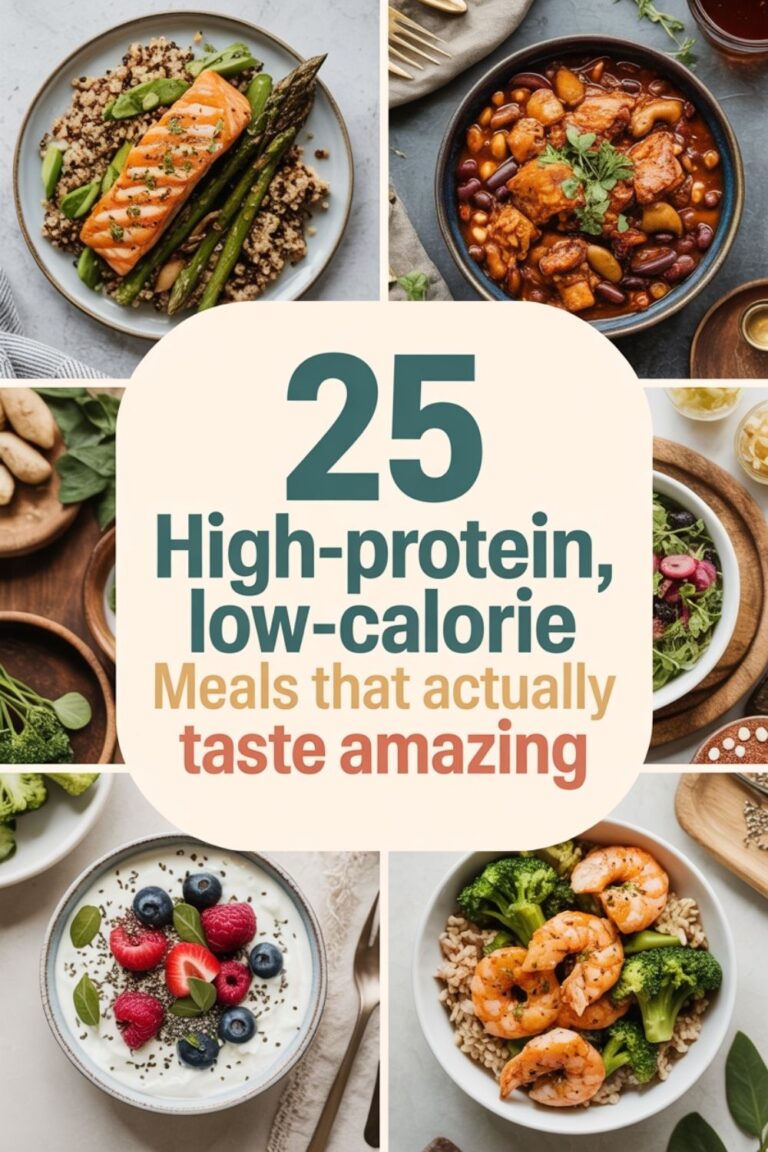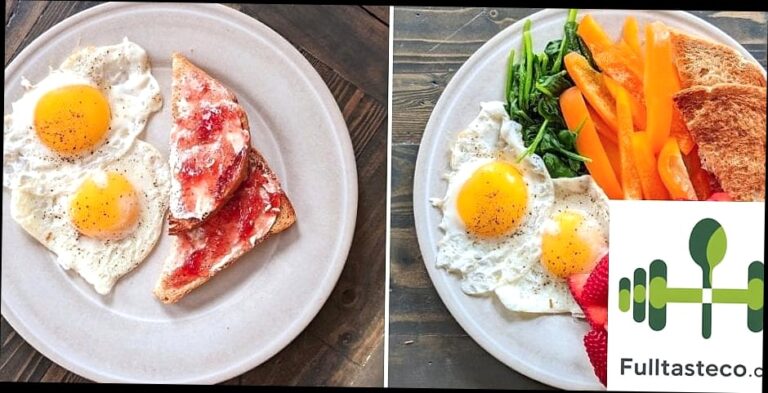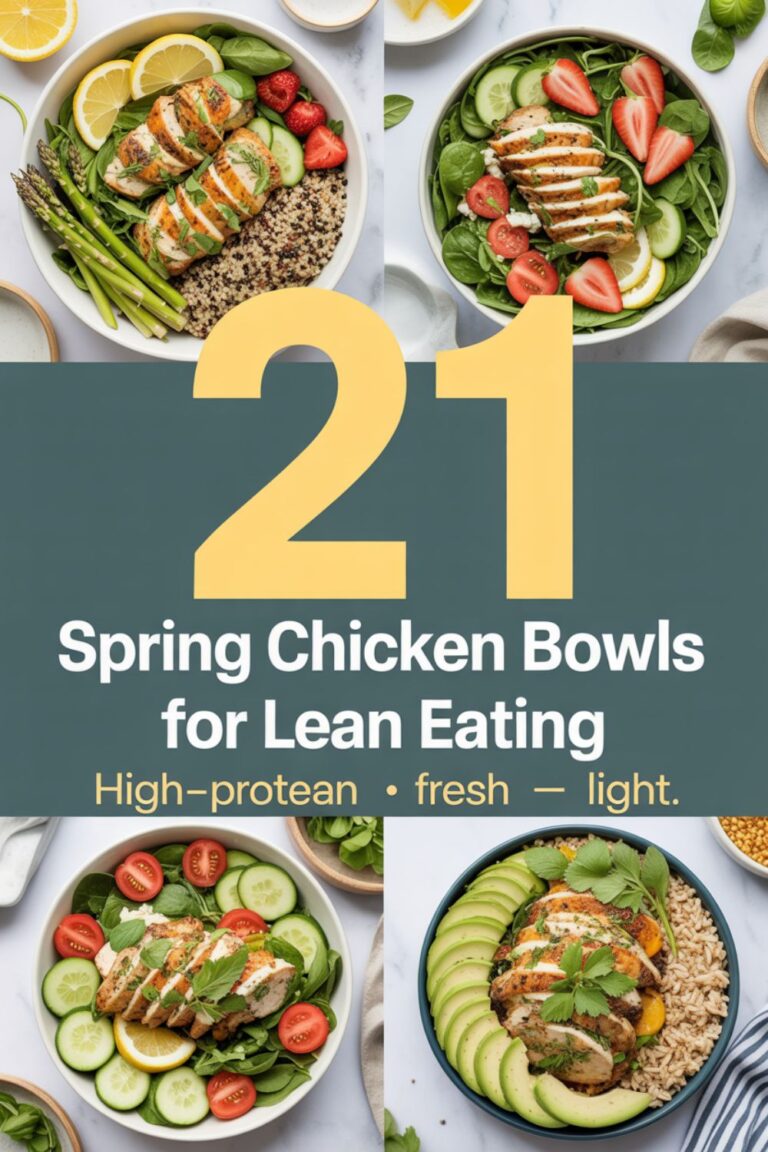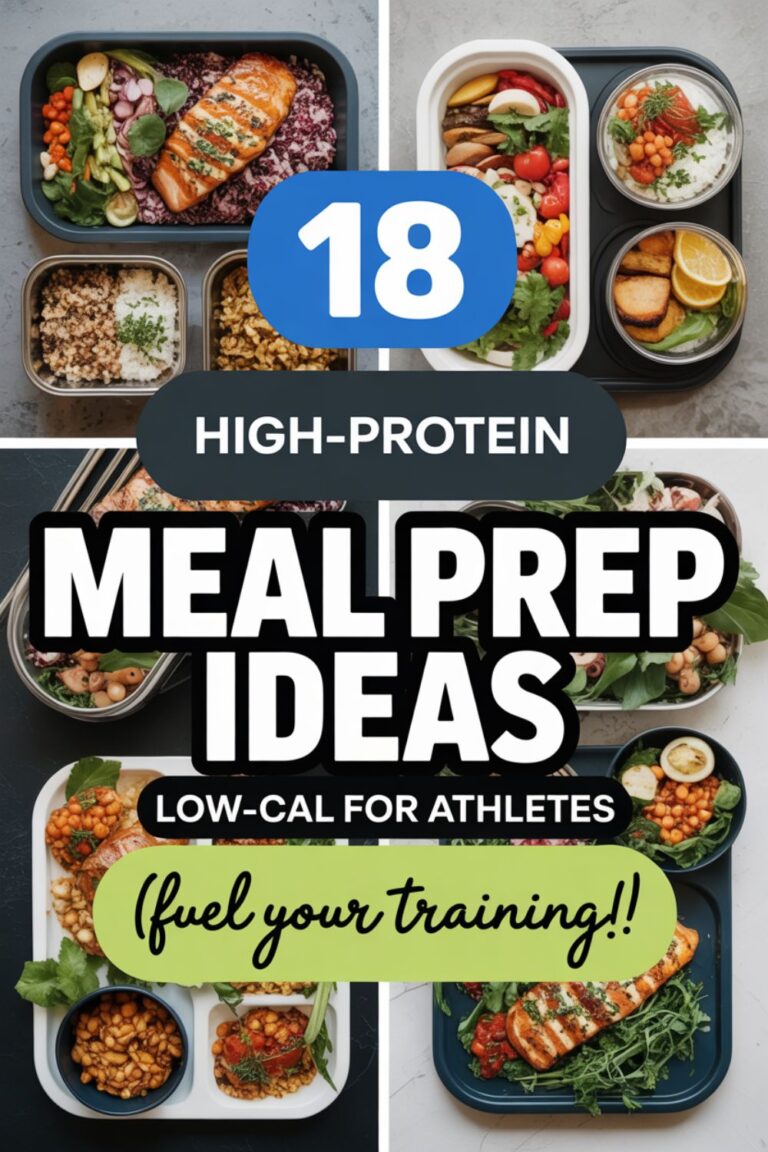
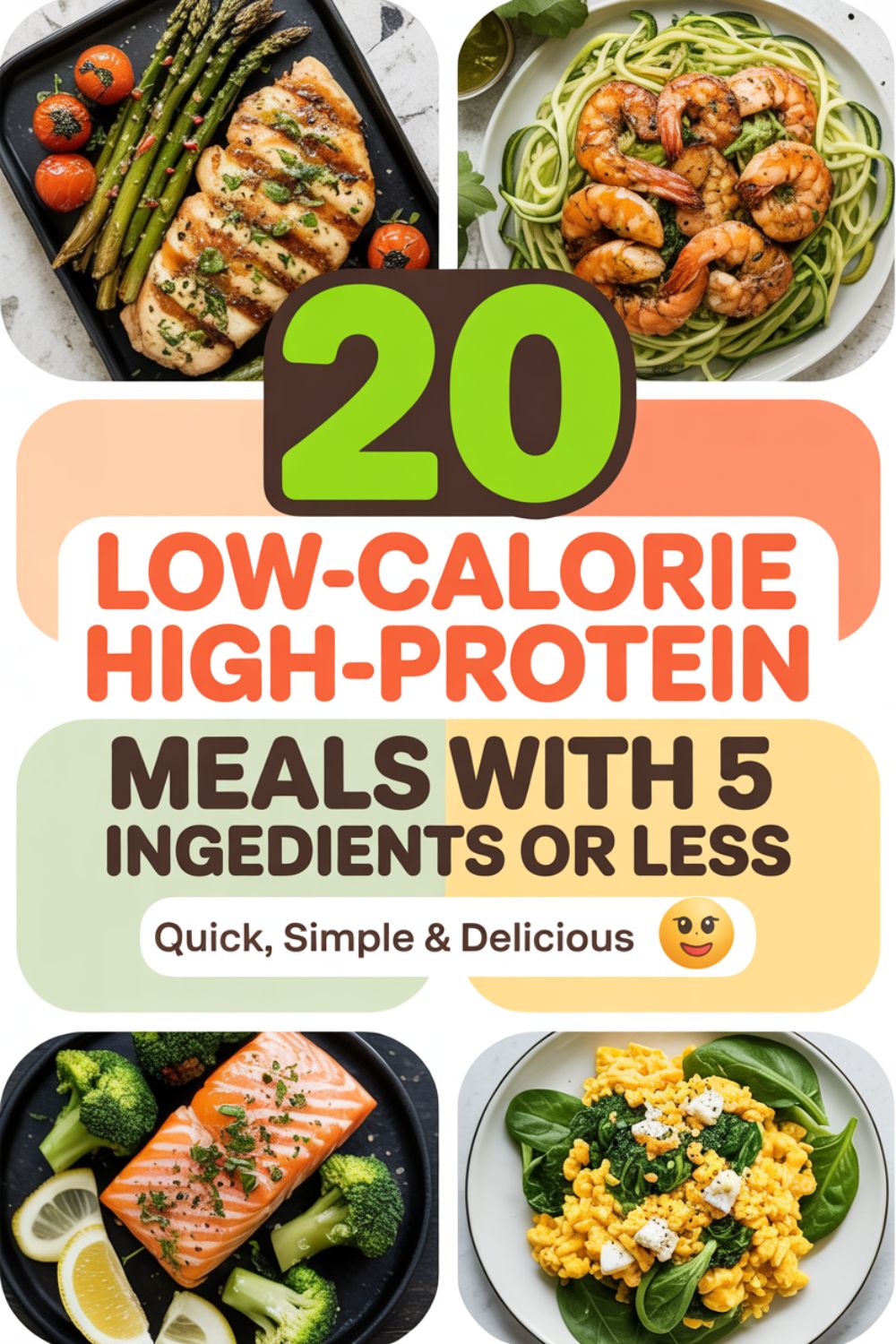
20 Low-Calorie High-Protein Meals with 5 Ingredients or Less
Look, I’m just going to say it: those elaborate 47-ingredient recipes that promise to change your life? Yeah, they’re collecting digital dust in your Pinterest board right now. Meanwhile, you’re staring at your fridge wondering if you can make chicken breast exciting for the fifth night in a row.
Here’s the thing about high-protein, low-calorie cooking that nobody tells you—simplicity wins every single time. When you’re trying to hit your macros without turning into a professional meal-prep robot, keeping your ingredient list stupidly short isn’t just convenient. It’s actually the secret weapon that makes everything sustainable.
I’ve spent the last few years figuring out how to make protein-packed meals that don’t require a culinary degree or a pantry that looks like a small grocery store. And honestly? Five ingredients or less is the sweet spot. Enough to make things interesting, but not so many that you’re spending your Sunday chopping vegetables until your hands cramp.
So if you’re tired of complicated diet recipes that sound great in theory but fall apart when real life happens, stick around. We’re diving into 20 meals that actually work when you’re hungry, busy, and just want something that tastes good without derailing your goals.
Why the 5-Ingredient Rule Actually Makes Sense
Before we jump into the recipes, let’s talk about why this approach works so damn well. When you limit yourself to five ingredients per meal (not counting basics like salt, pepper, and cooking oil), three things happen.
First, your grocery trips stop being a scavenger hunt. You’re not wandering around Whole Foods trying to find some obscure spice blend that costs more than your gym membership. You grab what you need and get out. I use this insulated grocery tote to keep everything organized—meat in one section, produce in another, and nothing gets crushed on the way home.
Second, meal prep becomes something you can actually do on a random Tuesday evening instead of dedicating your entire Sunday to it. When you’re working with chicken, broccoli, garlic, lemon, and olive oil, you’re not drowning in prep bowls and dirty dishes.
Third—and this is the part that took me way too long to figure out—simplicity forces you to pick quality ingredients. When you only have five things going into a dish, each one needs to pull its weight. You start caring about whether your chicken is actually fresh, whether your spices are worth a damn, and whether that sad, half-wilted spinach in the back of your fridge is going to cut it. (Spoiler: it won’t.)
Keep a running list on your phone of the five ingredients you always want stocked. Mine? Chicken breast, eggs, Greek yogurt, spinach, and whatever fruit is on sale. Everything else builds from there.
The Protein Math That Actually Matters
Let’s get real about protein for a second. You’ve probably heard a million different recommendations—eat your body weight in grams, eat half your body weight, eat until you feel like a human protein shake. The truth is a bit more nuanced, and according to Mayo Clinic, most people need about 0.8 grams per kilogram of body weight at minimum.
But here’s where it gets interesting. If you’re active, trying to lose weight while preserving muscle, or over 40 (when muscle loss starts accelerating), you probably need more like 1.0 to 1.2 grams per kilogram. That’s roughly 15-30 grams of protein per meal if you’re eating three times a day.
The low-calorie part? That’s where things get tricky. You want to keep meals under 400-500 calories while still hitting that protein target. This means choosing lean proteins, being smart about fats (they’re not evil, but they’re calorie-dense), and loading up on vegetables that give you volume without blowing your calorie budget.
Research published in the Journal of Obesity & Metabolic Syndrome shows that high-protein diets increase satiety hormones while decreasing hunger hormones. Translation? You actually feel full without needing to eat your weight in food. Pretty neat, right?
Speaking of keeping things simple, I’ve found these low-calorie high-protein salad recipes to be absolute lifesavers for lunch. They follow the same five-ingredient philosophy and you can batch-prep the components on Sunday.
Breakfast: Starting Strong Without the Hassle
1. Greek Yogurt Power Bowl
Mix plain Greek yogurt with frozen berries, a drizzle of honey, and top with chopped almonds. That’s it. About 25 grams of protein, 250 calories, and you’re out the door in three minutes. I keep these glass meal prep bowls ready to go in the fridge with the yogurt already portioned out.
2. Egg White Veggie Scramble
Egg whites, spinach, cherry tomatoes, feta cheese, and a splash of hot sauce. Get Full Recipe. This one’s flexible—swap the spinach for mushrooms, the feta for cottage cheese, whatever’s in your fridge. The beauty is in the framework, not the specifics.
3. Cottage Cheese Toast
Whole grain bread, cottage cheese, sliced cucumber, everything bagel seasoning. Sounds weird, tastes incredible. About 20 grams of protein and it hits different than your standard avocado toast.
4. Protein Oatmeal
Oats cooked with egg whites stirred in (trust me on this), topped with cinnamon and sliced banana. The egg whites boost the protein without making it taste like eggs—it just makes the oatmeal super creamy. Get Full Recipe.
Batch-cook your proteins Sunday night. Grilled chicken, hard-boiled eggs, and baked tofu keep for days and turn any simple meal into a high-protein winner.
For more morning inspiration, check out these breakfast bowl ideas that keep things interesting without adding complexity.
Lunch: Midday Meals That Don’t Require a Nap After
5. Tuna Lettuce Wraps
Canned tuna (in water, not oil), Greek yogurt instead of mayo, diced celery, wrapped in butter lettuce. Get Full Recipe. I use this tuna press gadget to drain the cans perfectly—sounds silly, but it’s one of those small tools that eliminates annoying parts of cooking.
6. Chicken Caesar Salad (Simplified)
Grilled chicken breast, romaine, parmesan, and a quick dressing of Greek yogurt, lemon juice, and garlic. Skip the croutons if you’re watching calories closely, or keep them if you want the crunch. Life’s about balance.
7. Shrimp Zoodle Bowl
Sautéed shrimp, zucchini noodles, cherry tomatoes, garlic, and fresh basil. This is one of those meals that looks fancy enough for Instagram but takes about 12 minutes to make. I spiralize the zucchini with this handheld spiralizer—way easier to clean than the big countertop versions.
8. Turkey Roll-Ups
Deli turkey, cream cheese, cucumber sticks, and everything bagel seasoning rolled up. Get Full Recipe. It’s basically a deconstructed sandwich without the bread, and it works brilliantly when you need something you can eat at your desk.
If you’re tired of the same lunch rotation, these wrap variations might give you some fresh ideas. They’re all simple but somehow never boring.
Kitchen Tools for These Recipes
Honestly game-changing for portion control. You think you know what 4 ounces of chicken looks like until you actually weigh it. Reality check incoming.
I’ve tried the plastic ones, the divided ones, the color-coded ones. Glass is where it’s at. They don’t get gross, they reheat evenly, and they last forever.
Stop cutting into your chicken to see if it’s done. This takes two seconds and your meat stays juicy instead of turning into leather.
I know, I know—another meal planning template. But this one’s actually set up for five-ingredient meals with built-in grocery lists. Makes Sunday planning take 15 minutes instead of an hour.
If you’re new to tracking protein and calories, this breaks it down without the usual fitness-bro nonsense. Plain English, actual examples, no supplements required.
Full of ideas for turning your favorite comfort foods into high-protein versions. The pizza section alone is worth it.
Dinner: Ending the Day Right
9. Baked Salmon with Asparagus
Salmon fillet, asparagus, lemon, garlic, and olive oil all on one sheet pan. Twenty minutes at 400°F and dinner’s done. Get Full Recipe. The cleanup is almost nonexistent—I line my sheet pan with these reusable silicone mats and basically just wipe it down after.
10. Ground Turkey Lettuce Tacos
Ground turkey, taco seasoning (homemade or store-bought counts as one ingredient, fight me), diced tomatoes, shredded cheese, butter lettuce. All the taco flavor, none of the heavy feeling after.
11. Chicken Stir-Fry
Chicken breast, broccoli, soy sauce, ginger, and sesame oil. Get Full Recipe. Serve it over cauliflower rice if you’re being strict, regular rice if you’re not. Both work.
12. Pork Chops with Green Beans
Boneless pork chops, green beans, garlic, butter, and lemon. Season everything well, roast it together, and you’ve got a dinner that tastes like you tried way harder than you actually did.
When you need variety without complexity, these sheet pan dinners are absolute clutch. Everything cooks together, minimal dishes, maximum flavor.
Buy pre-minced garlic in jars. Yes, fresh is technically better. But you know what’s better than fresh garlic you don’t use because chopping garlic is annoying? Jarred garlic that you actually use. Be practical.
Quick Wins: Snacks and Sides
13. Protein Smoothie
Protein powder, frozen banana, spinach (you won’t taste it), almond milk. Blend and go. I’ve tried every blender under the sun and this personal blender is the only one I actually use consistently.
14. Hard-Boiled Egg Plate
Hard-boiled eggs, cherry tomatoes, cucumber slices, sea salt, and a drizzle of balsamic vinegar. Stupid simple, ridiculously satisfying. Get Full Recipe.
15. Caprese Skewers
Fresh mozzarella, cherry tomatoes, basil leaves, balsamic glaze. Thread them on skewers or just eat them with a fork. Either way, you’re getting protein and it feels fancier than it is.
16. Edamame with Sea Salt
Frozen edamame, boiling water, sea salt. Three minutes and you’ve got a snack with 17 grams of protein per cup. Keep these microwave-safe bowls handy—they’re perfect for steaming edamame without dirtying a pot.
Looking for more options? These snack recipes work for kids and adults alike. Because let’s be honest, adult snacks and kid snacks aren’t that different when you strip away the marketing.
The Meal Prep Advantage
17. Mason Jar Salads
Dressing at the bottom, protein in the middle (grilled chicken works great), vegetables on top, greens at the very top. Shake when you’re ready to eat. Get Full Recipe. These wide-mouth mason jars are specifically made for salads and they don’t leak.
18. Baked Egg Cups
Eggs, diced bell peppers, spinach, turkey sausage, and cheese in a muffin tin. Bake a batch on Sunday, grab two for breakfast all week. They reheat perfectly and taste way better than those frozen breakfast sandwiches.
19. Chicken and Veggie Bowls
Pre-cooked chicken breast, steamed broccoli, quinoa, and a simple lemon-tahini dressing. Get Full Recipe. Mix and match the vegetables based on what’s on sale—the protein and grain stay constant.
20. Beef and Cauliflower Rice
Lean ground beef, riced cauliflower, diced tomatoes, cumin, and cilantro. It’s basically a deconstructed burrito bowl that reheats like a dream. Season it well and nobody will miss the actual rice.
For complete meal prep systems, check out these meal prep ideas that build on the same five-ingredient philosophy. They’re designed to work together so you’re not cooking 20 different things.
Making It Work in Real Life
Here’s the part where I’m supposed to tell you that meal planning will change your life and you’ll never eat takeout again. But that’s nonsense. You’re still going to order pizza sometimes. You’re still going to have days where cooking feels impossible.
The goal isn’t perfection—it’s having a reliable system for the days when you actually feel like cooking. When I started with this approach, I picked three recipes from this list and rotated them for two weeks straight. Boring? Maybe. Effective? Absolutely.
Once those three became automatic, I added two more. Then two more. Now I can throw together any of these without thinking about it, which means healthy eating happens even when I’m mentally checked out.
One thing that helped was keeping what I call my “protein basics” always stocked. Canned tuna, frozen chicken breast, eggs, Greek yogurt, and cottage cheese. If I have those five things, I can make something that hits my macros even when the fridge is looking sad.
Set a recurring grocery delivery for your staples. I do this every two weeks for chicken, eggs, yogurt, and frozen vegetables. One less thing to remember, and I’m never caught without the basics.
The beauty of simple, high-protein meals is they’re forgiving when life gets messy. Forgot to defrost chicken? Use eggs. Out of spinach? Grab some frozen broccoli. The framework stays the same even when the exact ingredients change.
What Actually Makes These Work
You’ve probably noticed a pattern in these recipes. They’re not reinventing the wheel—they’re just stripping away the unnecessary stuff that makes cooking feel like a second job.
Every meal follows a basic template: protein source + vegetable + flavor component + optional healthy fat. That’s it. Once you see the pattern, you can basically improvise meals without even looking at recipes.
According to WebMD’s research on high-protein diets, the combination of adequate protein with calorie control helps reduce harmful fat accumulation, especially around the midsection. But—and this is important—it works because you can actually stick to it.
Nobody’s sticking to a diet that requires 17 specialty ingredients and three hours of prep time. But grabbing chicken, broccoli, garlic, lemon, and olive oil? That’s doable on a random Tuesday when you just got home from work.
For athletes or anyone doing serious training, these athlete-focused meal prep ideas take the same approach but dial up the portions and timing around workouts.
The Ingredient Quality Conversation
Let’s talk about something that gets weirdly controversial: does it actually matter if you buy organic, grass-fed, free-range everything?
My take? Buy the best quality you can reasonably afford, but don’t let perfect be the enemy of good. Regular chicken breast from the grocery store is still way better than fast food. Frozen vegetables are just as nutritious as fresh ones and sometimes more convenient.
The one place I do spend more money is protein sources. Not necessarily organic, but I look for chicken that’s not pumped full of solution (makes it weigh more but cook terribly), and I buy wild-caught fish when I can swing it. The difference in how it cooks and tastes is noticeable.
For Greek yogurt, I go for the full-fat version even though it’s slightly higher in calories. The satiety factor is worth it—I’m way less likely to be hungry an hour later. Cleveland Clinic notes that full-fat dairy options can be part of a balanced diet, and sometimes the extra fat helps with nutrient absorption.
If you’re plant-based, these vegan high-protein meals show you don’t need animal products to hit your protein goals. The five-ingredient rule still applies, just with different protein sources.
Common Mistakes I See People Make
After helping friends get into simple high-protein cooking, I’ve noticed the same mistakes keep popping up. First one? Underseasoning everything. Just because you’re eating healthy doesn’t mean food needs to taste like cardboard. Salt, pepper, garlic, lemon juice—these are your friends.
Second mistake: buying everything fresh and then watching half of it rot in the fridge. Frozen vegetables are completely fine. Sometimes they’re better because they’re flash-frozen at peak freshness. I keep frozen broccoli, spinach, and mixed vegetables on hand always.
Third mistake, and this one’s subtle: not having a backup plan. You will have days where you don’t want to cook. Keep some quality frozen protein options around. Pre-cooked chicken strips, frozen shrimp, canned tuna. Something you can throw together in five minutes when motivation is at zero.
Fourth: thinking you need to eat different meals than the rest of your family. These recipes scale up easily. Make extra protein, let other people add rice or pasta if they want it, and you stick to your portion. Everyone’s happy.
When you’re just starting out with meal prep, these beginner-focused meal ideas ease you in without overwhelming you with too many new concepts at once.
The Sustainability Question
People always ask if eating this way is sustainable long-term. IMO, that’s the wrong question. The better question is: can you see yourself eating this way without feeling deprived?
I’ve been using this approach for three years now. Some weeks I’m perfect with it. Other weeks I eat pizza four times and call it a wash. The difference is I always come back to these simple meals because they work and they don’t feel like punishment.
The variety comes from rotating proteins, changing up vegetables based on what’s in season, and experimenting with different flavor profiles. Greek-style one week, Mexican-inspired the next, Asian fusion after that. Same basic template, completely different eating experience.
And here’s the thing nobody talks about: eating well gets easier the longer you do it. Your taste buds adjust. You start craving grilled chicken and vegetables instead of just tolerating them. Your body gets used to feeling good instead of sluggish after meals.
That’s not diet culture talking—that’s just what happens when you consistently feed yourself food that works for your body instead of against it.
For post-workout recovery specifically, check out these muscle recovery meals. They’re timed and portioned for optimal recovery without going overboard on calories.
Frequently Asked Questions
Can I really get enough protein with just five ingredients?
Absolutely. When one of those ingredients is a quality protein source like chicken, fish, eggs, or Greek yogurt, you’re already starting with 20-30 grams of protein per serving. The other ingredients add flavor, volume, and nutrients without diluting the protein content. The key is choosing protein-dense foods as your foundation rather than trying to cobble together protein from multiple smaller sources.
How do I prevent these simple meals from getting boring?
Rotate your protein sources and change your flavor profiles weekly. Use the same basic template but swap chicken for shrimp one week, then turkey the next. Change your seasoning from Italian herbs to Mexican spices to Asian-inspired flavors. The structure stays simple, but the taste experience varies enough to keep things interesting without requiring entirely new recipes.
What if I don’t have time for meal prep?
These recipes work perfectly for one-off meals too. The five-ingredient limit means most of them take 20 minutes or less from start to finish. You’re not locked into meal prep—you can cook these fresh every night if you prefer. The simplicity is what makes that actually feasible instead of just theoretical.
Are frozen vegetables really as good as fresh?
Yes, and sometimes better. Frozen vegetables are typically flash-frozen right after harvesting, which preserves their nutrients. Fresh vegetables can lose nutrients during transport and storage. Plus, frozen options reduce food waste since they last much longer and you can use exactly what you need without worrying about the rest going bad in your crisper drawer.
Can I use these recipes if I’m vegetarian or vegan?
Most of these recipes can be adapted with plant-based protein sources. Swap chicken for tofu or tempeh, use plant-based Greek yogurt, and replace meat with legumes or edamame. The five-ingredient structure works just as well with plant proteins—you’re just changing the protein source while keeping the simple framework intact.
Final Thoughts
Look, healthy eating doesn’t need to be complicated. You don’t need a pantry full of exotic ingredients, a degree in nutrition science, or three hours every Sunday to prep meals.
What you need is a handful of reliable recipes that work with your actual life—the one where you’re tired after work, where unexpected things come up, where sometimes the best you can do is throw something together in 15 minutes.
These 20 meals give you exactly that. They’re not Instagram-perfect or restaurant-fancy. They’re just solid, protein-packed meals that keep you full, hit your macros, and taste good enough that you’ll actually want to eat them.
Start with three of these recipes this week. Just three. Cook them, see which ones you like, adjust the seasonings to your taste. Once those feel automatic, add two more. Before you know it, you’ll have a rotation of simple meals that make healthy eating feel less like a chore and more like just… eating.
And honestly? That’s the whole point. Making nutrition so straightforward that it stops being a thing you have to think about and just becomes what you do. Five ingredients at a time.
30-Day High-Protein
Low-Calorie Meal Plan
Every breakfast, lunch, dinner & snack — all 30 days fully mapped out. Just follow the plan.
- ✓50+ complete recipes with ingredients & step-by-step instructions
- ✓4-week day-by-day plans — every meal for all 30 days
- ✓4 weekly shopping lists organised by store section
- ✓Printable habit & progress tracker — 30 full days
- ✓100g+ protein per day — scientifically optimised macros
Instant PDF · Print at home
Results guaranteed with consistency