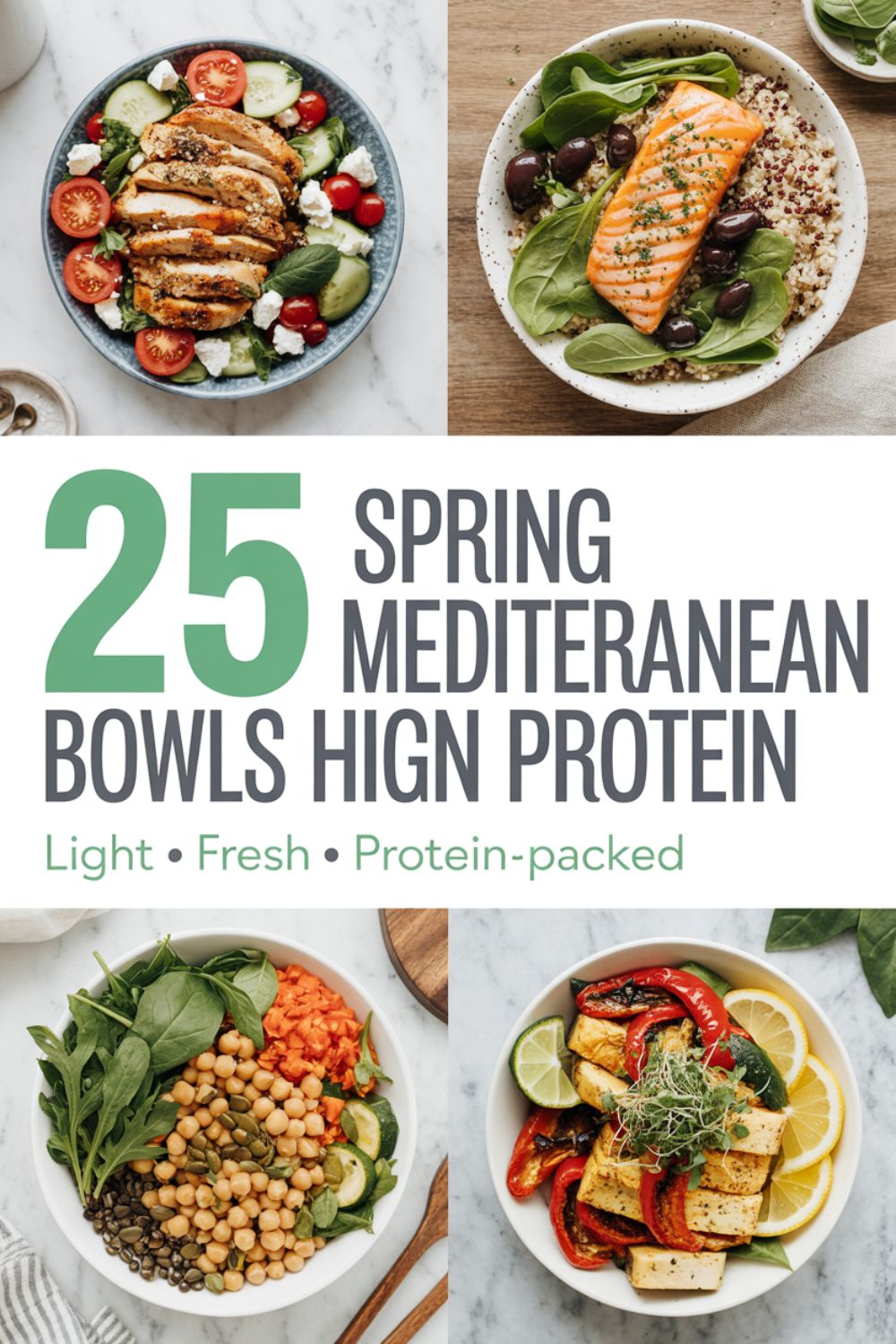
25 Spring Mediterranean Bowls High in Protein
Spring just hits different when you’ve got a bowl full of bright veggies, fresh herbs, and enough protein to actually keep you full past 10 AM. I’m talking about Mediterranean bowls that don’t skimp on the good stuff—chickpeas, grilled chicken, feta, quinoa, all the players that make lunch feel like a vacation without the plane ticket.
Here’s the thing: Mediterranean food gets hyped for a reason. It’s not just tasty—it’s backed by actual science. Research from Harvard Health shows that Mediterranean-style eating patterns support heart health, weight management, and longevity. Plus, it’s one of the few diets that doesn’t make you feel like you’re punishing yourself.
I’ve pulled together 25 spring-ready Mediterranean bowls that pack serious protein. Whether you’re meal prepping for the week or just need something that tastes good and doesn’t leave you scrounging for snacks an hour later, these bowls deliver. No sad desk lunches here.
Why Mediterranean Bowls Are Perfect for Spring
Spring vegetables are having a moment, and Mediterranean flavors know exactly what to do with them. Asparagus, peas, radishes, fresh greens—they all play nicely with olive oil, lemon, and herbs. You’re not forcing heavy winter ingredients into warmer weather; you’re working with what’s actually fresh and available.
The protein part matters because let’s be honest, a bowl of just vegetables sounds virtuous but leaves you starving. Adding grilled chicken, shrimp, white beans, or Greek yogurt turns a side salad into an actual meal. According to Mayo Clinic, spreading 15-30 grams of protein across each meal helps maintain energy levels and supports muscle health—exactly what you need when the days get longer and busier.
Mediterranean cuisine also embraces healthy fats—think olive oil, nuts, and avocado. These aren’t just flavor carriers; they help you absorb fat-soluble vitamins and keep you satisfied. It’s the opposite of those fat-free diet trends that left everyone hangry and snacking on rice cakes.
The Protein Power Players in Mediterranean Bowls
Not all proteins are created equal, and Mediterranean bowls give you options that go way beyond plain chicken breast. Here’s what actually works:
Lean Meats and Seafood
Grilled chicken is the obvious choice, but don’t sleep on turkey, lamb, or shrimp. Lamb adds richness without being heavy, and shrimp cooks in minutes—perfect when you’re already over cooking for the day. I marinate chicken thighs in lemon, garlic, and oregano overnight using this glass marinating dish, and they taste infinitely better than those dry breast cutlets.
Fish like salmon, tuna, or white fish bring omega-3s to the party. These fatty acids support cardiovascular health and reduce inflammation. Plus, they make your bowl feel a little more restaurant-quality.
Plant-Based Protein Champions
Chickpeas, lentils, and white beans are Mediterranean staples for good reason. They’re cheap, shelf-stable, and pack around 15 grams of protein per cup. Roast chickpeas with olive oil and za’atar until they’re crispy using a good sheet pan, and suddenly you’ve got a topping that’s better than croutons.
Quinoa and farro add both protein and texture. Farro has this chewy, nutty thing going on that makes bowls feel more substantial. It’s also a whole grain, so you’re getting fiber along with your protein—double win for keeping hunger at bay.
Looking for more plant-based inspiration? Check out these high-protein vegan meals that prove you don’t need animal products to hit your protein goals.
Dairy That Actually Contributes
Greek yogurt and feta cheese aren’t just garnishes—they’re legitimate protein sources. Greek yogurt has about twice the protein of regular yogurt, and it works as a creamy base or tangy topping. Feta brings salty, briny flavor plus around 4 grams of protein per ounce. Sure, it’s not a ton, but every bit counts when you’re building a balanced bowl.
“I started making these Mediterranean bowls for my family three months ago, and we’ve dropped our takeout budget by half. My husband lost 12 pounds without even trying, and my kids actually ask for ‘the chicken quinoa bowl’ now. Game changer.” — Rachel M., community member
25 Spring Mediterranean Bowls You’ll Actually Want to Eat
Alright, let’s get into the actual bowls. I’ve organized these by protein type so you can jump to what you’re feeling. Some are meal-prep friendly, others are best made fresh. All of them taste way better than whatever sad lunch you had yesterday.
Chicken-Based Bowls
1. Lemon Herb Grilled Chicken Bowl
Grilled chicken over quinoa with roasted asparagus, cherry tomatoes, cucumbers, and a lemon-tahini dressing. The asparagus gets that charred sweetness, and the tahini adds creaminess without dairy. Get Full Recipe.
2. Mediterranean Chicken and Farro Bowl
Seasoned chicken breast with chewy farro, sautéed spinach, sun-dried tomatoes, Kalamata olives, and crumbled feta. I cook my farro in this versatile pot that makes it foolproof every time.
3. Greek Chicken Souvlaki Bowl
Marinated chicken skewers over rice with tzatziki, diced tomatoes, red onion, and fresh dill. The tzatziki is basically required—it’s cooling and tangy and makes everything better. Get Full Recipe.
4. Chicken Shawarma Bowl
Spiced chicken with turmeric rice, hummus, pickled turnips, shredded lettuce, and garlic sauce. The pickled turnips add that bright, acidic punch that cuts through the richness.
5. Mediterranean Chicken and Chickpea Bowl
Grilled chicken with crispy roasted chickpeas, cucumber-tomato salad, and a drizzle of tahini. Double protein, double satisfaction.
Seafood-Forward Bowls
6. Lemon Garlic Shrimp and Orzo Bowl
Pan-seared shrimp with orzo pasta, arugula, cherry tomatoes, and lemon zest. Orzo is underrated—it’s like rice’s more interesting cousin.
7. Mediterranean Tuna Quinoa Bowl
Canned tuna (the good stuff in olive oil) with quinoa, white beans, artichoke hearts, and a squeeze of lemon. This one’s a pantry hero when you forgot to grocery shop.
8. Grilled Salmon and Farro Bowl
Flaky salmon over farro with roasted beets, arugula, goat cheese, and balsamic glaze. The beets add earthiness, and the goat cheese makes it feel fancy.
9. Shrimp and White Bean Bowl
Garlic shrimp with cannellini beans, sautéed kale, sun-dried tomatoes, and a splash of white wine in the pan. The beans make this feel hearty without being heavy.
10. Mediterranean Cod Bowl
Baked cod with lemon and herbs over couscous, roasted red peppers, olives, and fresh parsley. Cod is mild enough that it takes on whatever flavors you throw at it.
For more protein-packed ideas, these chicken recipes that actually taste good will keep your meal rotation fresh.
Vegetarian and Plant-Based Bowls
11. Falafel and Quinoa Power Bowl
Crispy baked falafel (or fried if you’re feeling it) with quinoa, mixed greens, cucumber, tomato, and tahini sauce. The falafel packs around 12 grams of protein per serving. Get Full Recipe.
12. Mediterranean Lentil Bowl
Green lentils with roasted cauliflower, cherry tomatoes, spinach, feta, and a lemon-herb vinaigrette. Lentils are criminally underused—they’re cheap, filling, and cook faster than you think.
13. Chickpea and Farro Bowl with Tahini
Roasted chickpeas over farro with roasted zucchini, red onion, and a generous drizzle of tahini. I use these silicone baking mats for roasting chickpeas—they get perfectly crispy every time.
14. Greek-Inspired Hummus Bowl
A thick layer of hummus topped with sautéed vegetables, chickpeas, olives, and a sprinkle of za’atar. You basically eat the bowl with the veggies as your utensil situation.
15. White Bean and Artichoke Bowl
Cannellini beans with marinated artichokes, roasted red peppers, arugula, and shaved Parmesan. Simple but somehow sophisticated.
If you’re loving the plant-based vibe, you’ll want to check out these vegetarian high-protein recipes for even more meatless meal inspiration.
Bowls with Eggs and Dairy
16. Mediterranean Breakfast Bowl
Soft-boiled eggs over quinoa with sautéed spinach, cherry tomatoes, feta, and a drizzle of olive oil. Breakfast for dinner? Absolutely.
17. Greek Yogurt Bowl with Savory Toppings
Thick Greek yogurt as the base with roasted vegetables, chickpeas, cucumber, and a sprinkle of za’atar. Sounds weird, tastes incredible.
18. Shakshuka-Inspired Bowl
Poached eggs in a tomato-pepper sauce over farro or bulgur, topped with feta and fresh herbs. The runny yolk mixes with everything and becomes the sauce.
Lamb and Red Meat Bowls
19. Lamb Kofta Bowl
Spiced ground lamb shaped into meatballs, served over rice with tzatziki, cucumber-tomato salad, and pickled onions. The lamb brings a richness that chicken just can’t match.
20. Mediterranean Beef Bowl
Seasoned ground beef with bulgur wheat, roasted eggplant, tahini, and pomegranate seeds. The pomegranate adds little bursts of sweetness.
Mixed Protein Bowls
21. Protein-Packed Mediterranean Mezze Bowl
A little bit of everything: grilled chicken, chickpeas, falafel, hummus, quinoa, and all the vegetables. This is what you make when you can’t decide.
22. Mediterranean Surf and Turf Bowl
Grilled shrimp and sliced steak over couscous with chimichurri (okay, not traditional Mediterranean, but it works), roasted vegetables, and feta. Sometimes fusion just makes sense.
23. Spring Vegetable and Halloumi Bowl
Grilled halloumi (the cheese that doesn’t melt) with asparagus, snap peas, radishes, and lemon vinaigrette. Halloumi has that squeaky texture and salty flavor that’s oddly addictive.
24. Mediterranean Taco Bowl
Ground turkey or beef seasoned with Mediterranean spices, over rice with all the traditional toppings: lettuce, tomato, olives, feta, and tzatziki instead of sour cream.
25. Everything Bowl
When you’ve got random leftovers: any grain, any protein, whatever vegetables didn’t wilt yet, topped with tahini or yogurt. The best bowls are often the ones you improvise.
For more meal prep inspiration, these bowls you can prep ahead will save your weeknights.
Building Your Own Mediterranean Bowl Formula
Once you understand the formula, you can throw together a Mediterranean bowl without a recipe. It’s basically kitchen freestyle, and it rarely goes wrong.
The Base Layer
Start with a grain or green. Quinoa, farro, bulgur, couscous, or rice work for grains. Arugula, spinach, or mixed greens work if you want it lighter. Sometimes I do half and half—grains for staying power, greens for volume.
Cook your grains in vegetable or chicken broth instead of water. Small move, big flavor difference. I keep these airtight containers stocked with pre-cooked grains so I’m never starting from scratch.
The Protein Component
Pick one or two proteins. Grilled chicken, shrimp, salmon, chickpeas, lentils, falafel, or eggs all work. Aim for at least 20-30 grams of protein total to make it a complete meal.
Season your protein properly. Lemon, garlic, oregano, cumin, paprika, and za’atar are your friends. Don’t be shy with the spices—bland protein is why people think healthy food is boring.
The Vegetable Situation
Use whatever’s in season. For spring, that’s asparagus, peas, radishes, cucumbers, tomatoes, and fresh herbs. Some you’ll roast, some you’ll leave raw. Roasting brings out sweetness; raw keeps things crisp and fresh.
I roast vegetables on silicone baking mats to avoid the scrubbing situation later. Life’s too short for stuck-on vegetables.
The Sauce or Dressing
This is where flavor really happens. Tahini, tzatziki, hummus, olive oil and lemon, or a simple vinaigrette all work. The sauce should be generous—skimping here is what makes healthy bowls feel like punishment.
A basic tahini dressing is just tahini, lemon juice, garlic, water to thin, salt, and pepper. Mix it in a small mason jar and shake. Done in two minutes, good for a week.
The Finishing Touches
Feta, olives, fresh herbs, lemon wedges, nuts, or seeds add texture and extra flavor. These aren’t optional—they’re what take a bowl from “meh” to “I’d actually order this at a restaurant.”
Toasted pine nuts or slivered almonds add crunch. Fresh parsley, dill, or mint add brightness. A squeeze of lemon at the end wakes everything up.
Meal Prep Strategy for Mediterranean Bowls
Mediterranean bowls are basically designed for meal prep. Most components store well separately and come together fast when you’re ready to eat.
What to Prep Ahead
Grains: Cook a big batch on Sunday. They last 4-5 days in the fridge in an airtight container. Quinoa, farro, and rice all reheat well.
Proteins: Grill or bake your proteins in bulk. Chicken, shrimp, and fish are best used within 3-4 days. Chickpeas and beans last the full week.
Roasted vegetables: Most roasted vegetables keep for 4-5 days. Store them separately from raw vegetables to maintain texture.
Dressings and sauces: Make your tahini, tzatziki, or vinaigrette ahead. Most last a week in the fridge. Keep them in squeeze bottles or small jars for easy portioning.
Need more meal prep ideas? These meal prep recipes will keep your fridge stocked all week.
What to Keep Fresh
Delicate greens: Wash and dry them well, then store in a container with a paper towel. Add them fresh when assembling your bowl.
Fresh herbs: These wilt quickly when pre-mixed. Keep them whole and chop just before eating.
Avocado and lemon: Add these right before eating to prevent browning.
Assembly Strategy
Store components in separate containers. When you’re ready to eat, layer everything in a bowl and add dressing. This keeps textures distinct and prevents soggy situations.
If you’re taking your bowl to work, pack the dressing separately in these small containers. Add it right before eating so nothing gets mushy.
Kitchen Tools That Make Mediterranean Bowl Prep Easier
Look, you don’t need a ton of fancy equipment, but a few solid tools make the whole process way less annoying. Here’s what actually gets used in my kitchen:
- Heavy-Duty Sheet Pans – For roasting vegetables and proteins without warping or sticking. The rimmed edges save you from oven-floor disasters.
- Glass Meal Prep Containers – Keep grains, proteins, and vegetables fresh all week. They don’t stain, don’t smell weird, and you can reheat directly in them.
- Instant-Read Thermometer – Because overcooked chicken is a tragedy, and guessing doesn’t work. Perfect chicken every time.
- Mediterranean Meal Prep E-Book – Complete shopping lists, prep schedules, and 50+ bowl combinations that actually work together.
- Printable Bowl Builder Template – Visual guide for mixing and matching bases, proteins, vegetables, and toppings without thinking too hard.
- Weekly Meal Planner PDF – Plan your week, track your prep, and never wonder “what’s for lunch” again. Includes grocery list templates.
Common Mistakes People Make with Mediterranean Bowls
I’ve made basically every Mediterranean bowl mistake possible, so let me save you some mediocre lunches.
Underseasoning Everything
Healthy doesn’t mean flavorless. If your bowl tastes like cardboard, you underseasoned. Salt your proteins, season your grains, and don’t skip the acid (lemon juice or vinegar). The Mediterranean diet isn’t about deprivation—it’s about flavor.
Taste as you go. Add salt gradually. A squeeze of lemon at the end can save a bland bowl.
Making Everything Soggy
Wet ingredients on the bottom, dry ingredients on top. If you put dressing on first and then pile everything on top, you’re setting yourself up for sad, soggy grain mush.
If meal prepping, keep components separate and assemble fresh. Your Monday self will thank your Sunday self.
Skipping Healthy Fats
Fat carries flavor and keeps you full. Don’t be afraid of olive oil, tahini, nuts, or avocado. The Mediterranean diet is moderate in fat, not low-fat. Those fat-free dressings are doing you no favors.
Forgetting Texture Contrast
Good bowls have crunch, creaminess, and chew all in one bite. If everything’s soft, it’s boring. Add toasted nuts, crispy chickpeas, or fresh vegetables for texture variety.
Overcooking Proteins
Dry chicken ruins everything. Use a meat thermometer (165°F for chicken, 145°F for fish). Let meat rest before slicing. These aren’t optional steps—they’re the difference between “pretty good” and “actually delicious.”
For foolproof protein cooking methods, check out these meal prep ideas for athletes that nail texture and flavor every time.
Nutritional Benefits Beyond Just Protein
Yeah, we’re here for the protein, but Mediterranean bowls bring a lot more to the table nutritionally speaking.
Fiber for Days
Between the whole grains, legumes, and vegetables, these bowls pack serious fiber. Most Americans don’t get nearly enough fiber, and it matters for digestion, blood sugar control, and feeling full.
Chickpeas and lentils are fiber champions—around 12-15 grams per cup. Pair that with quinoa or farro, and you’re easily hitting half your daily fiber needs in one meal.
Micronutrient Density
Fresh vegetables bring vitamins A, C, K, and a bunch of B vitamins. Dark leafy greens add iron and calcium. Tomatoes bring lycopene. It’s like a multivitamin that actually tastes good.
Spring vegetables like asparagus are high in folate, which supports cell function and tissue growth. Radishes add vitamin C. Even those little garnishes contribute something beyond looking pretty.
Anti-Inflammatory Properties
Olive oil, fatty fish, nuts, and colorful vegetables all have anti-inflammatory compounds. Chronic inflammation is linked to basically every disease you don’t want, so eating this way is preventative health that doesn’t feel like medicine.
Omega-3s from fish, polyphenols from olive oil, antioxidants from vegetables—these aren’t just buzzwords. They actually do something useful in your body.
“My cholesterol dropped 40 points after three months of eating these bowls for lunch. My doctor asked what I changed, and honestly, it just feels like I’m eating better food, not like I’m on some restrictive diet.” — James K., community member
Adapting Mediterranean Bowls for Different Diets
Mediterranean bowls are flexible enough to work with most dietary preferences without major overhauls.
For Vegans
Skip the dairy and focus on plant proteins: chickpeas, lentils, quinoa, tahini, and hummus. These bowls still work beautifully. Nutritional yeast can add a cheesy flavor if you miss feta.
For complete vegan meal plans, these vegan meal prep ideas show you exactly how to hit your protein targets plant-based.
Add hemp seeds or pumpkin seeds for extra protein and omega-3s. Tempeh or tofu can replace animal proteins if you want something with more heft.
For Keto or Low-Carb
Swap grains for cauliflower rice or zucchini noodles. Focus on protein and fat: grilled meats, fish, eggs, cheese, olives, and lots of olive oil. You lose some fiber, but the bowls still work.
Add avocado for healthy fats. Use full-fat Greek yogurt instead of low-fat. The Mediterranean approach to fat aligns pretty well with keto principles.
For Gluten-Free
Most Mediterranean ingredients are naturally gluten-free. Stick with quinoa, rice, or certified gluten-free grains. Skip the bulgur and couscous (unless you find gluten-free versions).
Watch your tahini and hummus labels—most are fine, but some brands add weird stuff. Falafel can be tricky unless you make it yourself.
For Dairy-Free
Skip the feta and yogurt, add more tahini and hummus. Use coconut yogurt if you want that creamy element. The bowls lose a little of that tangy, salty punch, but they’re still solid.
Nutritional yeast can mimic some of that savory, umami flavor that cheese provides. It’s not the same, but it works.
Frequently Asked Questions
How much protein should a Mediterranean bowl have?
Aim for at least 20-30 grams of protein per bowl to make it a complete meal that keeps you full for 3-4 hours. Combining a lean protein like chicken or fish (around 25-30g) with legumes or whole grains easily hits this target. If you’re using only plant-based proteins, you might need to combine sources—like chickpeas plus quinoa—to reach the same amount.
Can I eat Mediterranean bowls every day?
Absolutely. The Mediterranean diet is one of the most sustainable eating patterns long-term because it’s based on variety and whole foods rather than restriction. Just rotate your ingredients—different vegetables, proteins, and grains throughout the week—to ensure you’re getting a full range of nutrients and not getting bored.
Are Mediterranean bowls good for weight loss?
Yes, when portion sizes are reasonable. These bowls are nutrient-dense and high in fiber and protein, which helps control hunger and prevents overeating. The healthy fats from olive oil and nuts provide satiety without excessive calories. The key is not drowning everything in dressing or overdoing the cheese—use them as flavor accents, not the main event.
How long do prepped Mediterranean bowls last in the fridge?
Most components last 4-5 days when stored properly in airtight containers. Cooked grains, roasted vegetables, and most proteins stay fresh for this timeframe. However, delicate greens, fresh herbs, and cut avocado are best added fresh. Store dressings separately and add right before eating to maintain the best texture and flavor.
What’s the best grain for Mediterranean bowls?
It depends on what you’re going for. Quinoa and farro are highest in protein (about 8g per cup for quinoa, 7g for farro) and have great texture. Bulgur cooks fastest—just 15 minutes. Couscous is light and fluffy if you want something less filling. Rice is the most neutral base if you want other flavors to shine. Honestly, rotate between them all to keep things interesting.
Final Thoughts
Mediterranean bowls aren’t revolutionary, but they work. They taste good, they’re flexible, and they don’t require you to buy seventeen specialty ingredients you’ll use once. Spring is the perfect time to lean into fresh vegetables and lighter proteins without sacrificing the substance that makes meals actually satisfying.
The protein piece matters because it’s the difference between a snack and a meal. Whether you’re team chicken, team chickpeas, or team shrimp, there’s a Mediterranean bowl combination that fits your life. Meal prep them on Sunday, improvise them on Wednesday, whatever works.
Start with one or two bowls from this list. See what you like, adjust what you don’t, and build from there. The formula’s simple enough that you’ll be freestyling your own combinations within a week. And honestly, that’s when cooking stops feeling like work and starts feeling like actual creativity.
30-Day High-Protein
Low-Calorie Meal Plan
Every breakfast, lunch, dinner & snack — all 30 days fully mapped out. Just follow the plan.
- ✓50+ complete recipes with ingredients & step-by-step instructions
- ✓4-week day-by-day plans — every meal for all 30 days
- ✓4 weekly shopping lists organised by store section
- ✓Printable habit & progress tracker — 30 full days
- ✓100g+ protein per day — scientifically optimised macros
Instant PDF · Print at home
Results guaranteed with consistency