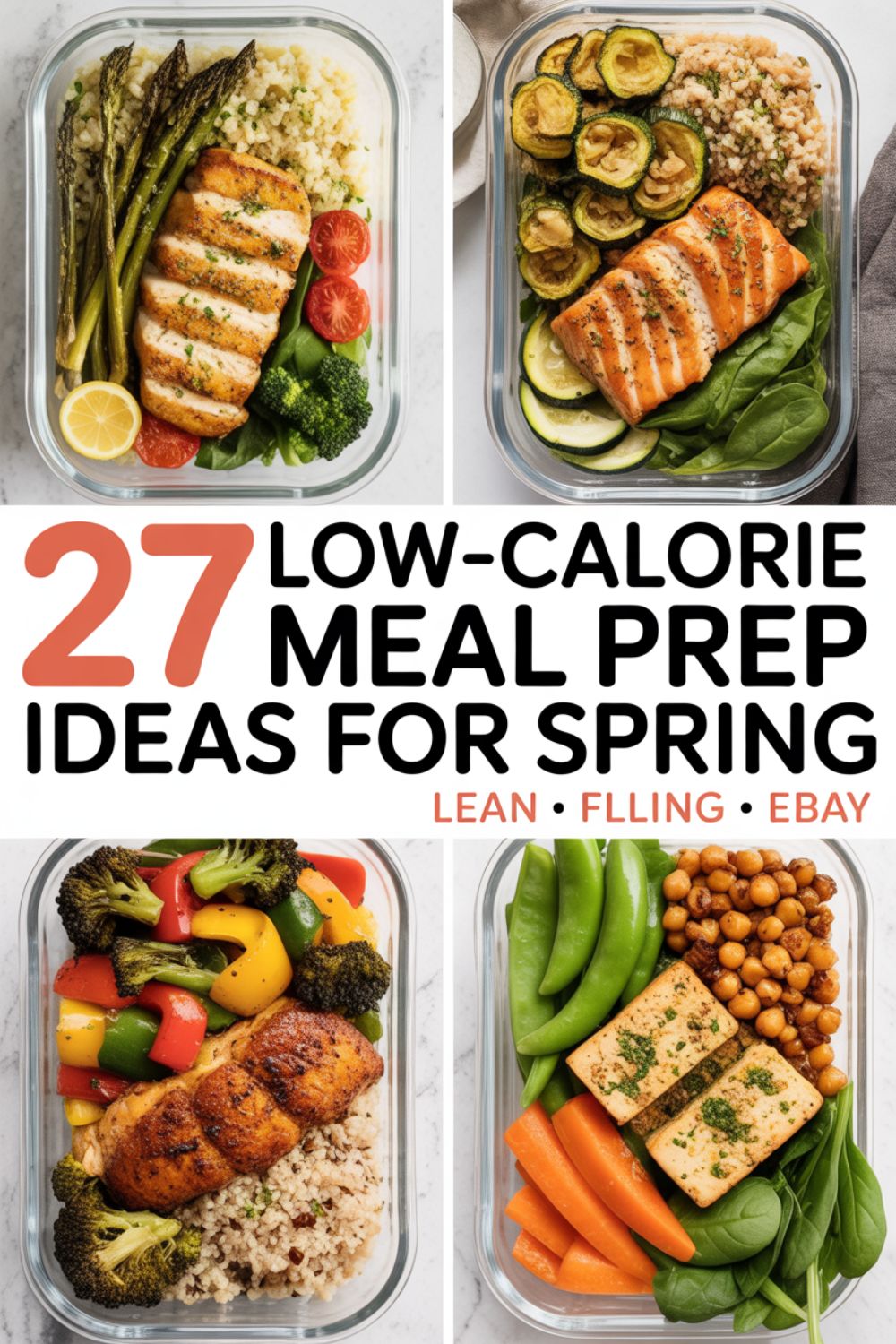
27 Low-Calorie Meal Prep Ideas for Spring
Fresh, light, and genuinely delicious — because eating well in spring should feel effortless, not like a punishment.
Every January, people make meal prep their entire personality. By March, most of them are eating cereal for dinner and swearing off food prep forever. Spring, though — spring is a different story. The weather shifts, produce gets interesting again, and suddenly cooking doesn’t feel like a chore you’re gritting your teeth through. There’s asparagus. There’s snap peas. There’s actual flavor returning to your grocery store produce section after a long winter of sad hothouse tomatoes.
This list of 27 low-calorie meal prep ideas for spring is built for the real world. You don’t need to spend your entire Sunday in the kitchen, and you don’t need to eat flavorless salads to stay on track. These are meals that actually taste good on Thursday, recipes that work for families and solo eaters alike, and prep strategies that give you back your weekday mornings instead of stealing your weekend.
Whether you’re trying to lose weight, maintain a calorie deficit without feeling deprived, or simply stop spending money on sad desk lunches, these ideas will carry you through the season. Let’s get into it.
Why Spring Is the Best Season to Reset Your Meal Prep
There’s a reason so many people talk about “spring cleaning” their diet, and it’s not just because January’s motivation has run dry. Seasonally, spring brings a wave of produce that’s naturally low in calories and incredibly versatile. Asparagus, spinach, peas, strawberries, radishes, artichokes, spring onions — these are ingredients that make low-calorie cooking feel abundant rather than restrictive.
From a purely practical standpoint, spring produce is cheaper, fresher, and easier to work with than what you’ve been wrestling with all winter. A wilted January carrot and a crisp April sugar snap pea are not the same experience. And when ingredients taste good on their own, you don’t need to slather them in calorie-dense sauces to make a meal worth eating.
Research on meal prepping for weight loss consistently shows that planning your meals ahead is one of the most effective tools for maintaining a calorie deficit without feeling deprived. The key is building meals with high volume, plenty of fiber, and enough protein to keep you satisfied — and spring produce is practically engineered for exactly that.
Prep your greens on Sunday night. Wash, dry, and store spinach, arugula, and spring mix in a container lined with paper towels. You’ll thank yourself every single morning.
The 27 Low-Calorie Spring Meal Prep Ideas
Breakfast Ideas (Recipes 1–7)
Strawberry Lemon Overnight Oats
Layered oats with Greek yogurt, lemon zest, chia seeds, and sliced strawberries. Prep six jars on Sunday and breakfast is handled until Friday.
~280 cal
Spring Veggie Egg Muffins
Baked egg cups loaded with asparagus, spinach, cherry tomatoes, and a pinch of feta. Twelve at a time in a muffin tin. Reheats in 60 seconds.
~210 cal / 3 muffins
Pea and Mint Frittata Slices
A light, oven-baked frittata with fresh peas, spring onions, and mint. Slice it up, wrap individually, and grab one each morning.
~190 cal
Mango Spinach Smoothie Packs
Pre-portioned freezer bags with frozen mango, spinach, ginger, and banana. Dump in a blender with almond milk, blend, done. Prep ten packs in under 15 minutes.
~240 cal
Cottage Cheese Bowls with Spring Berries
High-protein, low-effort. A cup of cottage cheese with strawberries, blueberries, a drizzle of honey, and a crack of black pepper if you’re feeling adventurous.
~220 cal
Avocado and Radish Toast Kits
Mash your avocado mix Sunday, store in lemon juice to keep it green. Pre-slice radishes and microgreens. Toast bread fresh each morning.
~295 cal
Greek Yogurt Parfait Jars
Layer high-protein Greek yogurt with granola, sliced kiwi, and spring honey. Make five jars at once. These actually get better overnight as the granola softens slightly.
~265 cal
Breakfasts are where meal prep pays off fastest. When you have something ready in the fridge that takes under two minutes to grab, you stop making bad choices out of morning desperation. If you want even more morning inspiration, the 15 protein-packed breakfasts for busy mornings and the 21 spring breakfast bowls are worth bookmarking right now.
Speaking of quick morning meals, the 7-day protein-packed breakfast plan maps out an entire week for you. Or if smoothies are your thing, check out the 12 low-calorie smoothies to boost metabolism — they’re genuinely good.
Lunch Ideas (Recipes 8–16)
Lemon Herb Chicken and Quinoa Bowls
Marinated chicken breast, cooked quinoa, roasted cherry tomatoes, cucumber, and a lemon-tahini drizzle. Make a big batch and portion into containers. Get Full Recipe
~370 cal
Spring Pea and Mint Soup
Blend fresh or frozen peas with vegetable broth, mint, and a squeeze of lemon. It’s bright green, insanely easy, and works hot or cold depending on the day.
~165 cal
Tuna and White Bean Salad Jars
Layer arugula, white beans, olive oil-packed tuna, capers, and shaved fennel in mason jars. Shake before eating. Extremely satisfying for under 350 calories.
~320 cal
Asparagus and Chickpea Wraps
Roasted asparagus, chickpeas, hummus, and pickled onion rolled into a whole wheat wrap. Wrap in parchment, refrigerate. They hold up well for three days.
~340 cal
Strawberry Spinach Salad with Balsamic
Spinach, sliced strawberries, toasted almonds, goat cheese crumbles, and balsamic vinaigrette. Pack dressing separately. This is the salad that actually makes people excited about lunch.
~295 cal
Turkey and Spring Veggie Lettuce Cups
Ground turkey seasoned with ginger and soy, served in butter lettuce cups with shredded carrot, snap peas, and chili-lime dressing. Very low calorie, very high satisfaction.
~255 cal
Greek Orzo Salad Bowls
Orzo with cucumber, Kalamata olives, cherry tomatoes, red onion, and lemon-oregano dressing. Make a big pot and it feeds you for four lunches. Get Full Recipe
~360 cal
Shrimp and Mango Rice Bowls
Sautéed shrimp over brown rice with fresh mango, sliced avocado, and a cilantro-lime drizzle. It tastes like a restaurant meal and costs about four dollars per serving.
~380 cal
Lentil and Roasted Pepper Salad
French green lentils, roasted red peppers, arugula, and a Dijon vinaigrette. Lentils are a powerhouse for plant-based protein and fiber — they keep you genuinely full for hours.
~310 cal
Lunch is IMO the most important meal to have prepped and ready. It’s the one meal where most people buckle and hit the nearest delivery app. Having five containers in the fridge that look genuinely appetizing changes your default choice entirely. For more ideas, 25 easy low-calorie high-protein lunches gives you a whole extra week of options.
I started doing spring meal prep bowls after hitting a wall with my usual chicken-and-broccoli routine. Three weeks in, I had more energy, I stopped snacking at 3pm, and I actually looked forward to lunch for the first time in years. The lemon herb quinoa bowls are the ones I keep coming back to.
Dinner Ideas (Recipes 17–23)
Sheet Pan Lemon Salmon with Asparagus
Salmon fillets, asparagus, and lemon slices on one pan. Roast at 400F for 18 minutes. That’s it. Season generously and let the oven do the work.
~360 cal
Turkey Zucchini Meatballs with Marinara
Lean turkey meatballs with grated zucchini baked in the oven, served over zucchini noodles or low-calorie pasta with simple tomato sauce.
~320 cal
Cauliflower Fried Rice with Edamame
Riced cauliflower stir-fried with edamame, scrambled eggs, carrots, peas, and low-sodium soy sauce. A classic lightened-up comfort meal that actually delivers.
~285 cal
Chicken and Spring Veggie Stir-Fry
Chicken breast with snap peas, baby bok choy, spring onions, and a ginger-garlic sauce. Serve over a small amount of jasmine rice and each portion comes in under 380 calories.
~375 cal
White Bean and Kale Soup
A hearty one-pot soup with white beans, Tuscan kale, garlic, diced tomatoes, and vegetable broth. Make a big pot, refrigerate half, freeze the rest. Get Full Recipe
~255 cal
Baked Herb Chicken Thighs with Roasted Radishes
Here’s a spring twist most people overlook — roasted radishes lose their bite and turn buttery and mild. Pair with herb-roasted chicken thighs and you have a genuinely special weeknight meal.
~345 cal
Shrimp Tacos with Mango Slaw
Seasoned shrimp, corn tortillas, a simple mango-cabbage slaw, and lime crema made from light Greek yogurt. Two tacos per serving, fully satisfying.
~395 cal
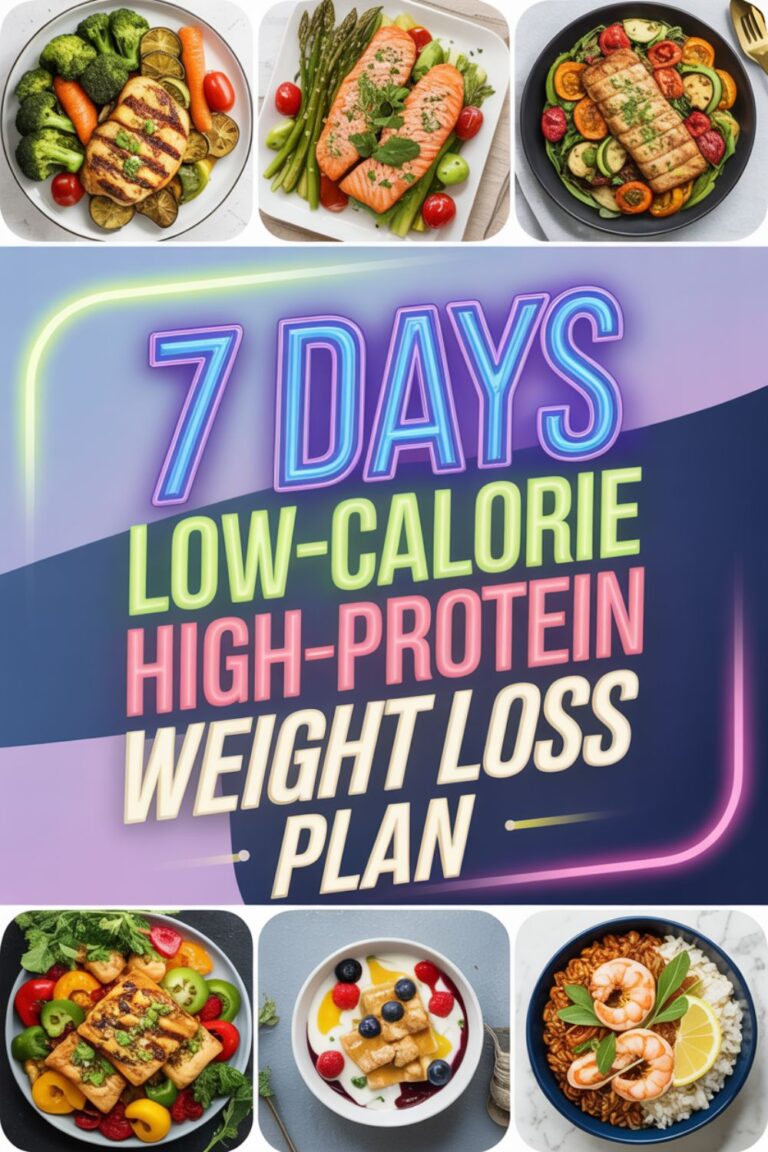
If you want a structured dinner plan to work from, the 7-day low-calorie high-protein dinner plan is a printable resource worth having. It pairs perfectly with this list.
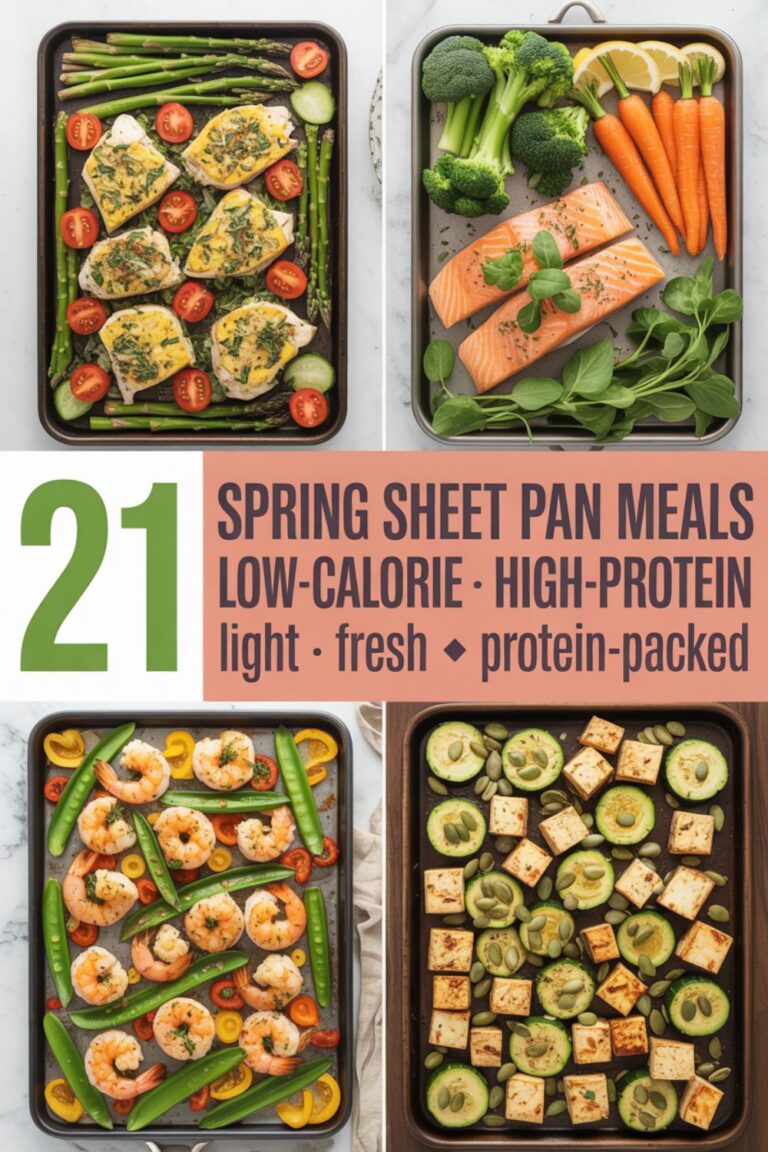
If sheet pan dinners are your strategy for easy weeknight cooking, 21 spring sheet pan meals is packed with seasonal ideas. For more one-pan inspiration, the 30 low-calorie one-pan meals collection covers every meal of the day.
Cook a double batch of protein every Sunday — chicken, ground turkey, or shrimp. Having cooked protein already in the fridge means meals that look like 30-minute dinners actually come together in under 10.
Snacks and Extras (Recipes 24–27)
Spring Herb Hummus with Veggie Sticks
Blitz store-bought hummus with fresh herbs and lemon for a quick upgrade. Portion into small containers with pre-cut snap peas, radishes, and mini peppers.
~140 cal
Protein Energy Bites with Oat and Honey
Rolled oats, peanut butter, honey, chia seeds, and dark chocolate chips. Roll into balls, refrigerate. These are genuinely dangerous to have around but each one is only about 80 calories.
~80 cal each
Cucumber Rolls with Smoked Salmon
Thinly sliced cucumber wrapped around cream cheese and smoked salmon. Pretty enough to put on Instagram, ready in five minutes.
~120 cal / 4 rolls
Roasted Chickpeas Three Ways
Roast a big batch of chickpeas. Divide into three bowls: season one with smoked paprika, one with lemon-herb, one with everything bagel seasoning. Crispy, satisfying, and 45 calories per handful.
~130 cal
How to Build a Spring Meal Prep System That Actually Sticks
The biggest mistake people make with meal prep is treating it like a performance. They want everything portioned perfectly, labeled with macros, arranged in matching glass containers they saw on someone’s Instagram. That’s aspirational, not functional. A real meal prep system is one you’ll actually do on Sunday and actually use on Thursday.
Start with what nutritionists call a “component prep” approach. Instead of fully assembling every meal in advance, you prep the building blocks: cook a big pot of grains (quinoa, brown rice, or farro work well), roast a sheet pan of seasonal vegetables, and cook two or three proteins. From those components, you can assemble five different meals throughout the week without eating the same thing twice.
For spring specifically, lean proteins like chicken breast, shrimp, turkey, and fish pair beautifully with the season’s produce. According to Healthline’s breakdown of calorie deficits, a daily deficit of 300 to 500 calories supports steady, sustainable weight loss — and hitting that target is far easier when your meals are already planned and portioned.
Storage and Equipment That Makes a Difference
You don’t need a fully kitted-out kitchen to meal prep well, but a few tools will save you significant time and frustration. Good storage containers matter more than most people realize — leaky lids and containers that warp in the microwave make the whole system more annoying than it’s worth. I’ve been using glass meal prep containers with locking lids for two years, and the difference is real: food actually stays fresh longer, reheating is easier, and nothing smells like last Tuesday’s lunch.
A good sharp chef’s knife is the single biggest upgrade you can make to your prep speed. Most home cooks are wrestling with dull blades and making everything take twice as long. Twenty minutes of vegetable prep takes seven minutes with a knife that actually works. Pair that with a large wooden cutting board — I’m talking proper large, not the sad little thing that came with a knife block — and chopping a week’s worth of vegetables becomes almost meditative rather than a chore.
Meal Prep Essentials Used in This Plan
These are the things I actually use, not a list of everything available on Amazon. If you’re missing any of these, they’ll genuinely change how smoothly your prep day goes.
Glass Meal Prep Containers (Set of 10)
BPA-free, microwave and oven safe, locking lids that actually seal. The ones with glass tops are worth it — they stack neatly and you can see what’s inside without opening every container.
8-Inch Stainless Chef’s Knife
Balanced, sharp out of the box, and easy to maintain at home with a honing steel. This is the one tool that separates a 40-minute prep from a 20-minute prep.
Half-Sheet Baking Pans (Set of 2)
Heavy-gauge aluminum, won’t warp at high heat, large enough to roast a whole week’s worth of vegetables without crowding the pan. I use these almost every single prep day.
Weekly Meal Prep Guide (Free)
A structured week-by-week template for low-calorie high-protein meal prep. Printable and digital formats. Saves about 30 minutes of planning every Sunday.
14-Day Meal Prep Plan
A complete two-week roadmap with shopping lists, prep schedules, and portioning guidance. Great if you want the thinking done for you.
Macro Tracking App (Premium)
Tracks calories, protein, fiber, and hydration with a barcode scanner for packaged foods. The meal logging feature connects directly to custom recipe imports — genuinely useful for portion control without obsessing over numbers.
Spring Ingredients That Do Most of the Work for You
One of the underrated benefits of cooking seasonally is that spring ingredients come pre-optimized for low-calorie eating. Most of them are naturally high in water content, loaded with fiber, and nutrient-dense in a way that makes you feel full without consuming a lot of calories. FYI, that’s not an accident — produce that grows quickly in cool, wet conditions tends to be lighter and more hydrating by nature.
Here’s what’s worth stocking up on throughout the season:
- Asparagus — incredibly low in calories (about 27 calories per cup), high in folate and vitamin K, and roasts beautifully in under 15 minutes. It’s also a natural diuretic, so it helps with bloating.
- Sugar snap peas and snow peas — eat them raw as snacks or lightly stir-fry them. Their natural sweetness means they rarely need seasoning beyond salt and a little sesame oil.
- Spinach and spring greens — pile them into everything. Spinach is almost calorie-free and wilts down dramatically when cooked, making it easy to add a massive amount of nutrition without much volume.
- Radishes — seriously underused. Eat them raw for crunch, or roast them for a completely different experience. Either way, they’re about 20 calories per cup.
- Strawberries and rhubarb — the first fruits of the season. Strawberries are lower in sugar than most fruits and pair well with both sweet and savory applications.
- Artichokes — a little more work, but incredibly filling for their calorie count. A whole medium artichoke is about 60 calories and keeps you satisfied for hours thanks to its fiber content.
From a nutritional standpoint, it’s also worth noting that the protein sources that pair best with spring produce — chicken breast, shrimp, white fish, and eggs — tend to be among the leanest available. Compared to heavier proteins like red meat, they let you build meals with high protein content while keeping overall calorie totals comfortably low.
Buy asparagus and snap peas at the start of the week, more delicate greens mid-week. Stagger your produce purchases so you’re not throwing out wilted spinach by Wednesday and eating the last sad asparagus stalk by Saturday.
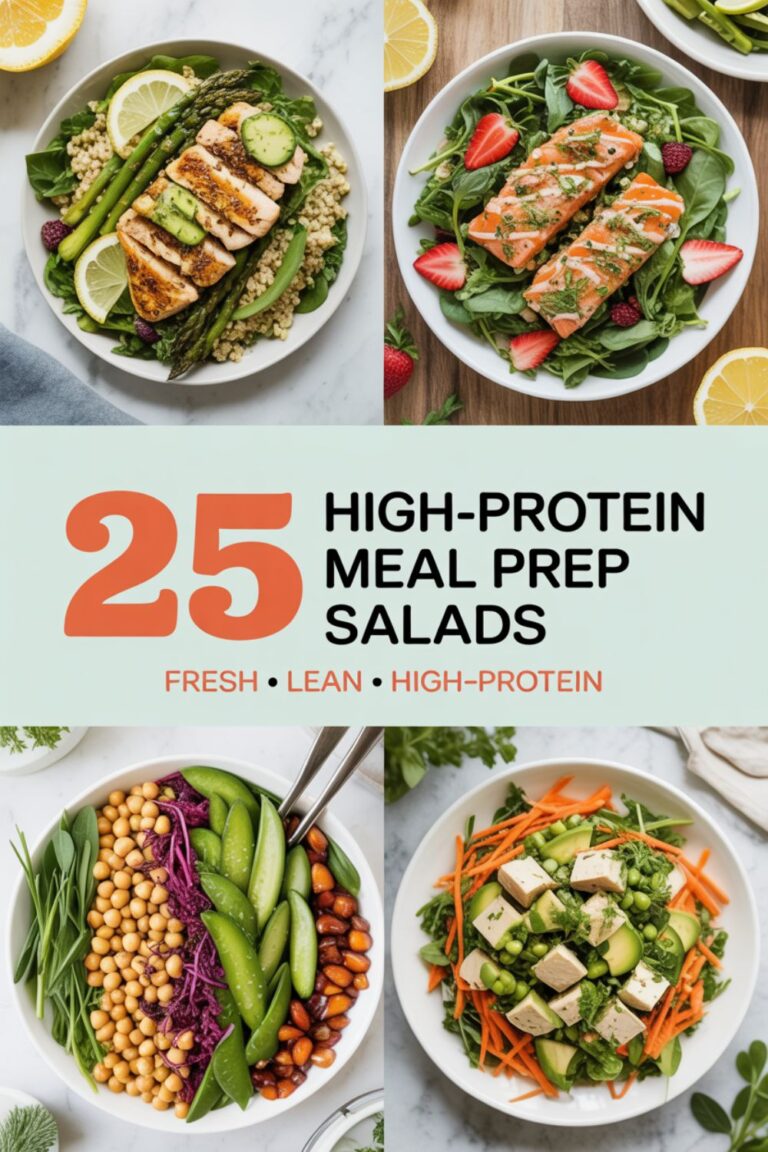
If you love the combination of seasonal produce and protein-forward cooking, 25 light spring high-protein meals for weight loss takes this whole idea further. The 20 low-calorie spring salads are also worth having on rotation — they’re genuinely not sad desk salads.
Practical Tips to Actually Follow Through on Prep Day
Meal prep is one of those things that sounds simple until you’re standing in the kitchen at 2pm on Sunday wondering why you have four different things going at once and none of them are ready at the same time. Here’s how to keep it from becoming chaos.
Work backwards from your longest cook time
Whatever takes longest — usually grains or a protein braise — goes in first. Preheat the oven, start the rice cooker or pot on the stove, and then work on everything that takes less time. By the time your quinoa is done, your vegetables should be roasted and your sauces should be prepped. Sequencing is everything.
Sauces and dressings are where the magic lives
The reason meal prep food gets boring fast is usually not the proteins or vegetables — it’s that everything gets the same seasoning. Make three or four different sauces on Sunday: a lemon-tahini, a ginger-soy, a herb yogurt, and a simple balsamic. Same chicken breast will taste completely different depending on which sauce you drizzle on it.
Don’t fully assemble everything
This sounds counterintuitive, but keep wet and dry elements separate when possible. Pack dressings in small containers, keep crunchy toppings in separate bags, and store delicate greens apart from heartier components. Everything stays fresher, and you get a meal that actually has texture on day four rather than a sad, soggy mess.
I’ve tried meal prep about six different times and always gave up by Tuesday. The thing that finally made it click was stopping trying to make complete meals and just prepping components instead. Now I have roasted veggies, cooked quinoa, and a protein ready to mix and match. It’s been four months straight and I’m down 18 pounds.
Frequently Asked Questions
How many calories should a low-calorie meal prep meal contain?
For most people, aiming for 300 to 450 calories per main meal (breakfast, lunch, or dinner) keeps the day in a reasonable deficit without feeling overly restrictive. Snacks can run 100 to 200 calories. Individual needs vary based on your size, activity level, and goals, so it’s worth calculating your personal maintenance calories before setting a specific target.
How long do spring meal prep containers last in the fridge?
Most cooked proteins and grains stay good for 4 to 5 days in airtight containers. Salads and fresh components (like cut fruit or delicate greens) are best within 2 to 3 days. If you’re prepping for a full week, consider freezing portions you won’t eat until Thursday or Friday.
What’s the best protein for low-calorie spring meal prep?
Chicken breast, shrimp, white fish (like cod or tilapia), and eggs are among the best options — they’re lean, take on flavors easily, and cook quickly. For plant-based eating, lentils, chickpeas, edamame, and firm tofu are excellent choices that work with spring produce beautifully.
Can I meal prep salads without them getting soggy?
Absolutely, with the right approach. Store dressings separately, keep crunchy elements (nuts, croutons, seeds) in separate bags, and use heartier greens like kale, arugula, or spinach as your base rather than soft lettuces. Spinach actually softens nicely over a day or two, while kale holds up for four to five days easily.
How do I make low-calorie meals actually filling?
Volume, fiber, and protein are your three tools. Meals feel filling when they contain a meaningful amount of protein (at least 25 to 30 grams per meal), plenty of high-fiber vegetables to add bulk, and enough healthy fat to slow digestion. Spring produce is ideal for this — it’s high in water content and fiber, which adds volume to meals without adding significant calories.
Start With Three, Not Twenty-Seven
Here’s the honest advice: don’t try to implement all 27 of these ideas at once. Pick three that sound genuinely appealing, make them this Sunday, and see how your week feels. If having lunches ready saves you two frustrating midday decisions and keeps you from overspending on delivery, that’s already a win worth building on.
The goal with spring meal prep isn’t perfection. It’s reducing friction between you and the food that makes you feel good. These 27 ideas all work on their own. They work even better when you start treating the weekly prep session as something you do for yourself — not something you do to punish yourself into better habits.
The season is short, the produce is good, and the meals genuinely taste like spring. That’s enough reason to give it a shot this weekend.
30-Day High-Protein
Low-Calorie Meal Plan
Every breakfast, lunch, dinner & snack — all 30 days fully mapped out. Just follow the plan.
- ✓50+ complete recipes with ingredients & step-by-step instructions
- ✓4-week day-by-day plans — every meal for all 30 days
- ✓4 weekly shopping lists organised by store section
- ✓Printable habit & progress tracker — 30 full days
- ✓100g+ protein per day — scientifically optimised macros
Instant PDF · Print at home
Results guaranteed with consistency