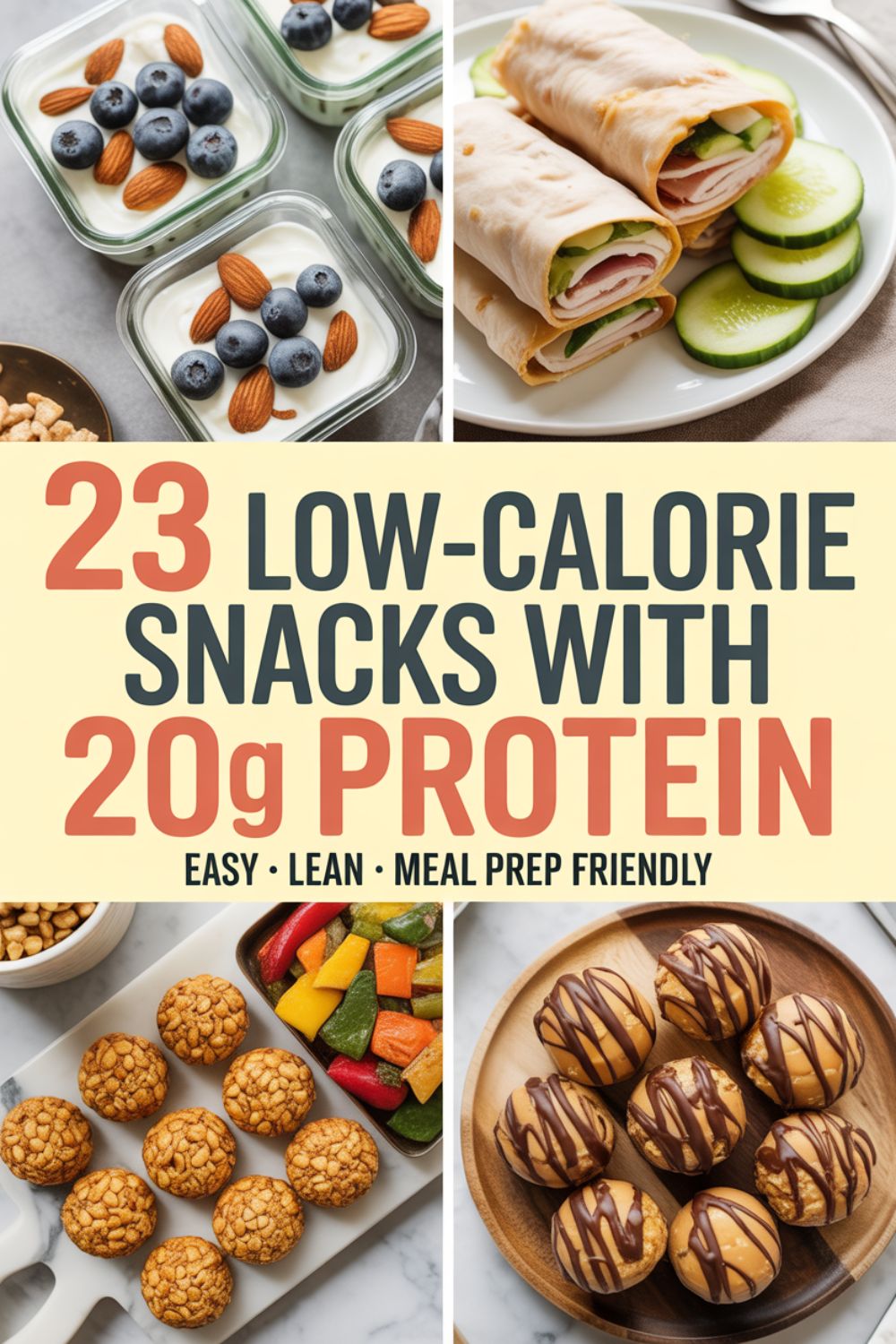
23 Low-Calorie Snacks with 20g Protein That Actually Taste Good
Why 20 Grams of Protein Is the Magic Number for Snacks
You’ve probably seen protein targets thrown around everywhere — and yes, it can get confusing fast. But for snacks specifically, 20 grams hits a really useful threshold. It’s enough to trigger a meaningful satiety response, support muscle protein synthesis after a workout, and genuinely bridge the gap between meals without becoming a whole meal itself.
The Harvard Health team points out that protein is especially valuable for keeping you full longer because it digests more slowly than carbohydrates. So that 3pm vending machine temptation? A snack with 20 grams of protein eaten around 2pm will handle that far better than a handful of crackers. This matters whether you’re actively trying to lose weight or just want to stop thinking about food every 45 minutes — both valid goals, IMO.
It’s also worth knowing that 20 grams isn’t a ceiling — it’s a good floor. For people who are strength training or in a calorie deficit, aiming for the higher end of the snack protein range makes a lot of sense. If you’re curious about building that into a full eating structure, the weekly high-protein low-calorie meal prep guide is a solid place to start.
Prep your high-protein snacks on Sunday — portion Greek yogurt into jars, hard boil a batch of eggs, and roast your chickpeas. Tuesday-afternoon-you will be genuinely grateful.
The 23 Low-Calorie Snacks with 20g Protein
A quick note on the numbers below: protein and calorie counts are approximate and based on standard serving sizes. Real-world results will vary depending on brands and exact measurements, so always check your labels. That said, these are all solid, reliable options that hit the target range when prepared as described.
Non-Fat Greek Yogurt with Berries
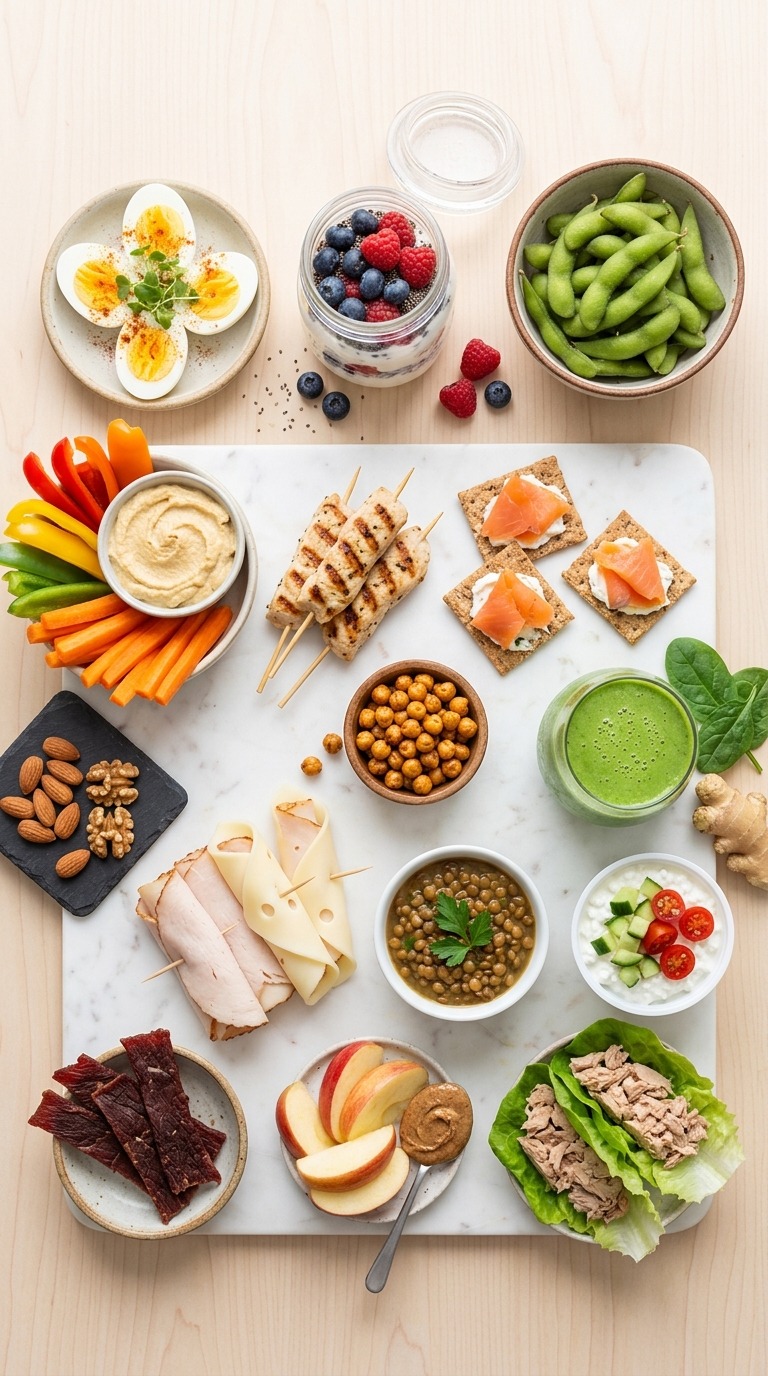
The classic for a reason. A three-quarter cup of non-fat plain Greek yogurt gives you 17–20 grams of protein on its own. Add a half-cup of fresh berries and you’ve got a complete snack with natural sweetness and zero fuss. Go for Fage 0% or Chobani Non-Fat if you want consistent macros. Get Full Recipe
Cottage Cheese with Sliced Cucumber
Cottage cheese is genuinely one of the most underrated snack ingredients out there. One cup of fat-free cottage cheese clocks in at about 25 grams of protein for 123 calories. Pair it with sliced cucumber and a crack of black pepper and it becomes something you’d actually want to eat. Get Full Recipe
Tuna in Water on Rice Cakes
Half a can of albacore tuna in water plus two lightly salted rice cakes. Simple, fast, and legitimately filling. Add a squeeze of lemon and a tiny bit of Dijon mustard if you want to feel like you made an effort. Tuna packed in water keeps calories far lower than oil-packed varieties.
Hard-Boiled Egg Whites (6 whites)
Pure protein, essentially. Six egg whites contain about 21 grams of protein for roughly 100 calories, which is an almost absurd macro ratio. Sprinkle with everything bagel seasoning or smoked paprika — because plain egg whites with nothing on them are technically edible but very sad.
Shredded Chicken Breast with Celery
Four ounces of cooked, shredded chicken breast gives you 26 grams of protein for about 123 calories. Add a few stalks of celery with a light drizzle of hot sauce and you’ve got something genuinely satisfying. This one requires a bit of prep, but if you’re already batch-cooking, it takes zero extra effort. Get Full Recipe
Edamame (Shelled, Dry Roasted)
Okay, a third of a cup of dry roasted edamame gets you 14 grams — slightly under our 20g target — but eat half a cup and you’re comfortably there. Roasted edamame has a satisfying crunch, travels well, and requires literally no prep. A solid grab-and-go option when you don’t have time for anything else.
Low-Fat Cottage Cheese Stuffed Bell Pepper Halves
Cut a bell pepper in half, fill it with cottage cheese, and top with a pinch of herbs. It looks more impressive than it is to make, and it delivers a real protein hit. The pepper adds fiber and crunch while keeping the calorie count in check. Weirdly elegant for a five-minute snack.
Turkey Breast Lettuce Wraps
Three to four slices of lean turkey breast (look for minimal-ingredient brands like True Story or Dietz & Watson) wrapped in romaine leaves with a smear of mustard. Twenty grams of protein, barely any calories, and you can eat four of them in five minutes. These are basically sandwiches for people who love protein.
Whey Protein Shake (Unsweetened)
Yes, protein powder counts. When you need 20 grams of protein and you have approximately three minutes, an unsweetened whey protein mixed with water or unsweetened almond milk is a perfectly valid snack. Use a quality blender bottle with a mixing ball and you don’t even need a blender. Naked Whey or Isopure are good unflavored choices.
Egg White Scramble with Spinach
A cup of egg whites scrambled with a handful of fresh spinach in a non-stick pan hits 20 grams of protein for around 125–130 calories. Season it aggressively — this is where garlic powder and red pepper flakes earn their keep. Cook it in a ceramic non-stick pan with just a spritz of cooking spray to keep things truly minimal-calorie.
Smoked Salmon on Cucumber Rounds
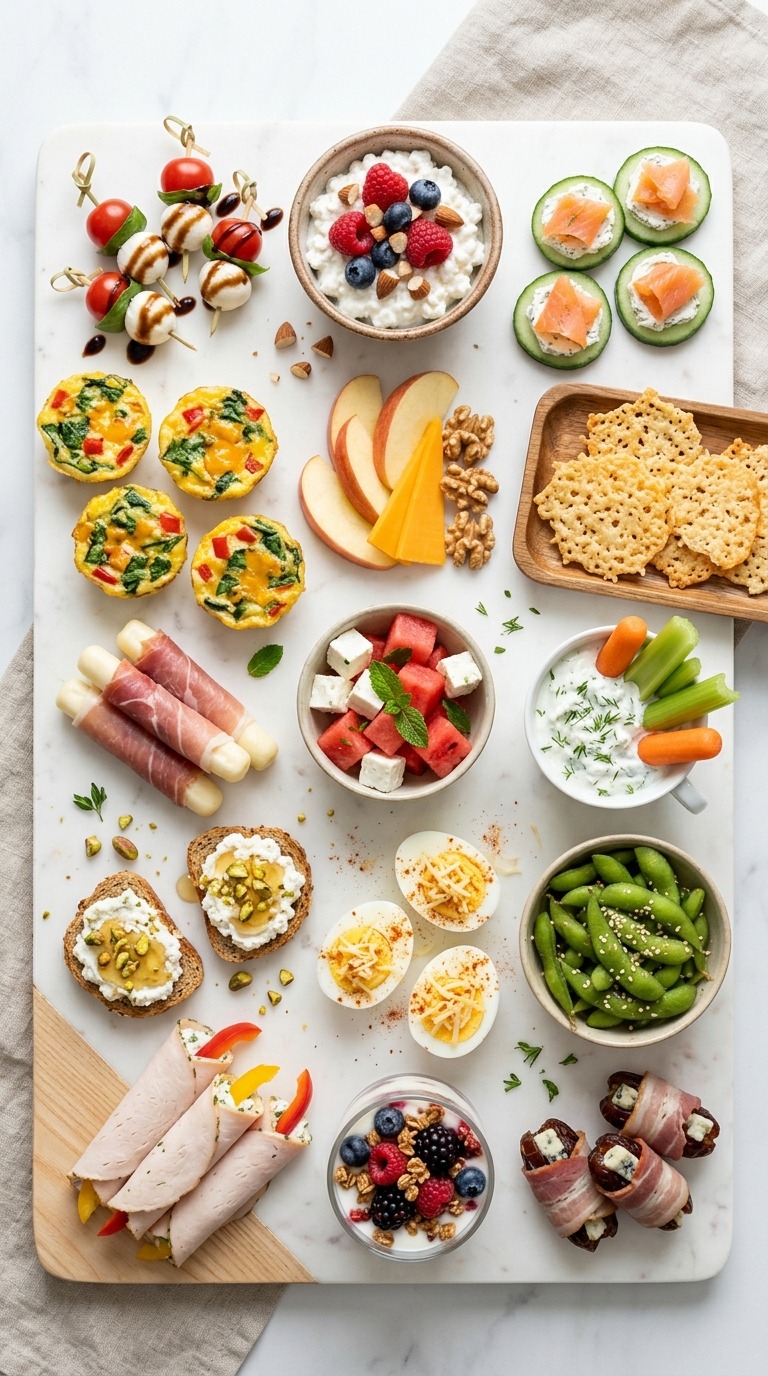
About two ounces of smoked salmon on sliced cucumber rounds with a light smear of non-fat cream cheese. Fancy enough that you feel like you’re doing well, practical enough that you’ll actually make it. Smoked salmon vs. canned tuna — both are excellent protein sources, but salmon adds omega-3s that support cardiovascular health as a bonus.
Non-Fat Ricotta with Cinnamon and Apple
Half a cup of non-fat ricotta with a pinch of cinnamon and a few sliced apple wedges. It tastes like dessert and does not behave like dessert. Ricotta is one of those ingredients that doesn’t get enough credit in the snacking world — it’s smooth, mild, and rich in protein without the tang of Greek yogurt if you want a change.
Roasted Chickpeas (Spiced)
A generous half-cup serving of roasted chickpeas gets you close to 10 grams of protein with a satisfying crunch. Pair with a few tablespoons of non-fat Greek yogurt dip to push toward 20 grams. Roast them yourself with olive oil spray, smoked paprika, and cumin — the store-bought versions are fine but homemade ones are genuinely better.
Chicken-Stuffed Mini Bell Peppers
Mini bell peppers stuffed with shredded chicken mixed with a splash of hot sauce and a tiny bit of Greek yogurt instead of mayo. It’s one of those snacks that looks like you went to effort while actually requiring about seven minutes of your time. Get Full Recipe
String Cheese + Sliced Turkey
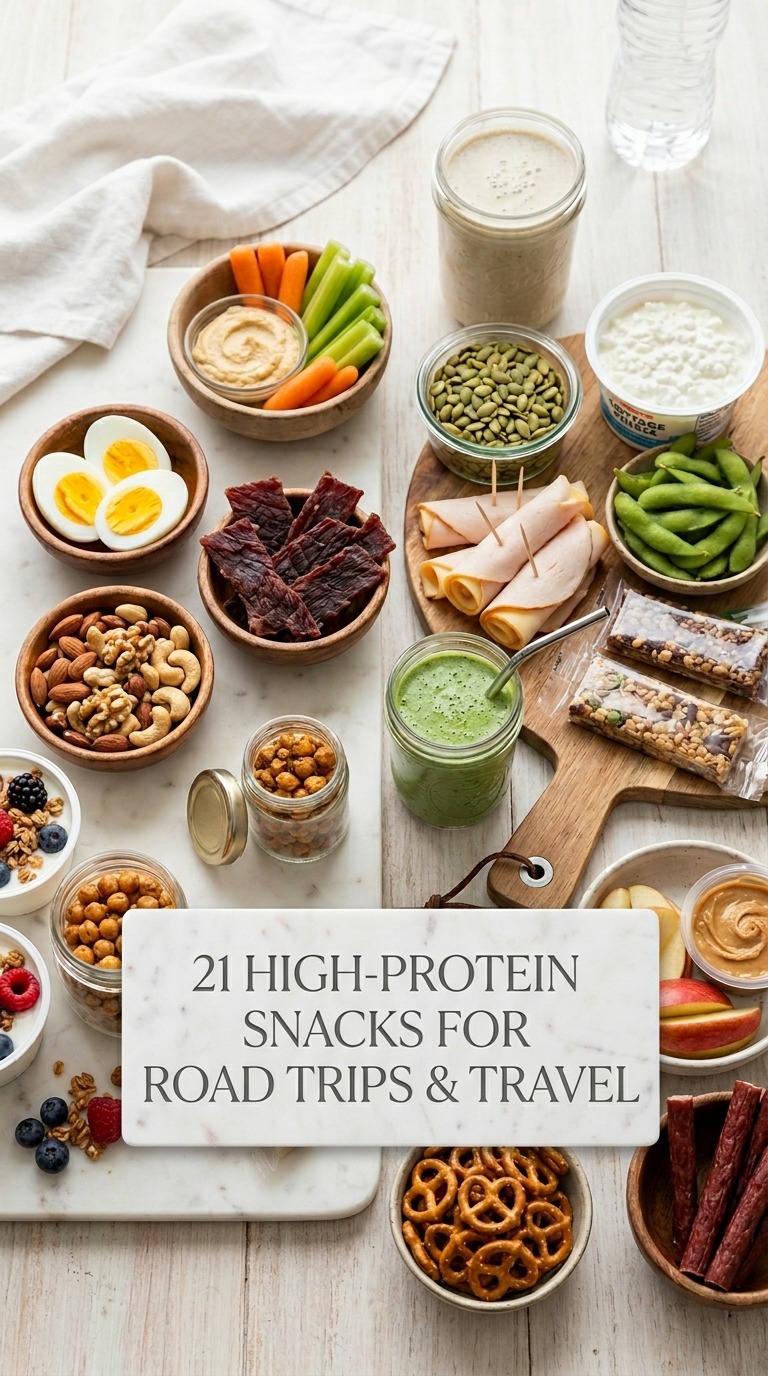
Two pieces of low-fat string cheese paired with two slices of turkey breast. Easy, portable, no prep required, and genuinely filling. This is the snack that makes zero sense on paper but somehow holds you over for two-plus hours every single time. Keep a few in your bag for emergencies.
Chia Pudding Made with Soy Milk
Two tablespoons of chia seeds soaked overnight in a cup of unsweetened soy milk (which adds about 7–8 grams of protein on its own, more than oat or almond milk). Add a scoop of collagen peptides or a tablespoon of hemp seeds to push the protein higher. Top with raspberries for flavor. Prep it in a wide-mouth mason jar the night before and you’re done.
Low-Fat Cottage Cheese Protein Bowl
Half a cup of low-fat cottage cheese with a tablespoon of pumpkin seeds, a few cherry tomatoes, and a crack of black pepper. It sounds oddly savory for a snack bowl but it absolutely works. The cottage cheese acts as the base while the seeds add healthy fat and additional protein. This one fits perfectly alongside any of the high-protein low-calorie breakfast bowls for busy mornings if you want to build it into a morning routine.
High-Protein Overnight Oats
Half a cup of rolled oats, three-quarters cup of non-fat Greek yogurt, a splash of almond milk, and a scoop of vanilla protein powder. Mix, refrigerate overnight, eat the next morning. Or as a snack. This combination is excellent. These overnight oats are a repeat-weekly staple for anyone who wants protein without a lot of morning effort. Get Full Recipe
Turkey and Veggie Roll-Ups
Slices of lean turkey breast wrapped around strips of bell pepper, cucumber, and a sliver of low-fat cheddar. The combination hits about 20 grams of protein and takes under three minutes to assemble. According to Harvard Health, high-protein snacks like turkey roll-ups are especially effective at supporting muscle recovery when eaten within an hour of strength training.
Baked Tofu with Soy Dipping Sauce
Tofu is genuinely underestimated as a snack protein. Three ounces of firm tofu baked until golden contains about 9 grams of protein for 71 calories, meaning a standard 6-oz portion gets you close to 20 grams for 140 calories. The key is the baking — raw tofu is an acquired taste. Baked with soy sauce, garlic, and sesame is not. Use a silicone baking mat for zero sticking and zero scrubbing.
Protein Energy Bites (Peanut Butter & Oat)
Rolled oats, natural peanut butter, protein powder, a drizzle of honey, and a handful of mini chocolate chips rolled into balls. Make a batch on the weekend and keep them in the fridge. Two balls get you close to 20 grams of protein when made with protein powder included. Peanut butter vs. almond butter here is a real choice — almond butter is slightly lower in calories and higher in vitamin E, while peanut butter has a touch more protein. Either works.
Canned Salmon with Crackers
Half a can of wild pink salmon mixed with a squeeze of lemon, capers, and a touch of Dijon served alongside a few whole grain crackers. Salmon brings more omega-3s than tuna in most cases and the flavor is richer. If canned fish is something you’ve always avoided, give wild-caught sockeye or pink salmon a real shot — it’s far better than you expect.
Skyr with Sliced Almonds and Berries
Skyr is Icelandic-style cultured dairy that’s thicker and higher in protein than most Greek yogurts — a five-ounce serving typically contains 17–20 grams of protein. Add a tablespoon of sliced almonds and some fresh berries and you’ve hit your target. If you haven’t tried skyr yet, it’s worth tracking down — Siggi’s plain is the most widely available and consistently good.
Keep three “no-cook” snacks prepped and accessible at all times — hard-boiled eggs, string cheese, and a protein shake mix. When you’re tired and hungry, you will always default to whatever requires the least effort. Win that moment before it happens.
Practical Tips for Actually Hitting 20g in Your Snacks
Knowing the snacks is the easy part. Building the habit of actually eating them is where most people get stuck. A few things that make a real difference in practice:
Anchor snacks to protein first. Before anything else, decide what your protein source is. Greek yogurt, cottage cheese, egg whites, tuna, turkey, chicken, tofu, or a shake — pick one. Everything else (the veggies, the crackers, the fruit) builds around that foundation. This sounds obvious but most people do it backwards, adding a bit of protein to a carb-heavy snack and wondering why they’re hungry an hour later.
Batch prep the harder ones. Roasted chickpeas, energy bites, overnight oats, and shredded chicken all take effort — but only once. Make a big batch on Sunday and you have snacks handled for the week. For a more structured version of this, the high-protein low-calorie meal prep ideas for athletes has a full system for making this genuinely easy.
Watch the dairy-free swaps carefully. If you’re avoiding dairy, plant-based alternatives don’t always match the protein content of their dairy counterparts. Oat milk has about 3 grams of protein per cup versus 8 grams in cow’s milk. Soy milk is the closest plant-based match at 7–8 grams. Coconut yogurt can have almost no protein at all. When you’re building snacks around protein targets, this matters.
Use a good food scale occasionally. Not obsessively, but knowing what 3 ounces of salmon actually looks like compared to what you’ve been eyeballing will save you a lot of macro confusion. I use a compact digital kitchen scale that fits in a drawer and has made my portions far more consistent without feeling like a burden.
“I was skeptical that any snack could keep me full for two hours while staying under 200 calories — but the cottage cheese bowl and turkey roll-ups from this list have completely changed my 3pm routine. I’ve been consistent for about eight weeks and finally stopped snacking mindlessly after dinner.”
— Mia R., community member