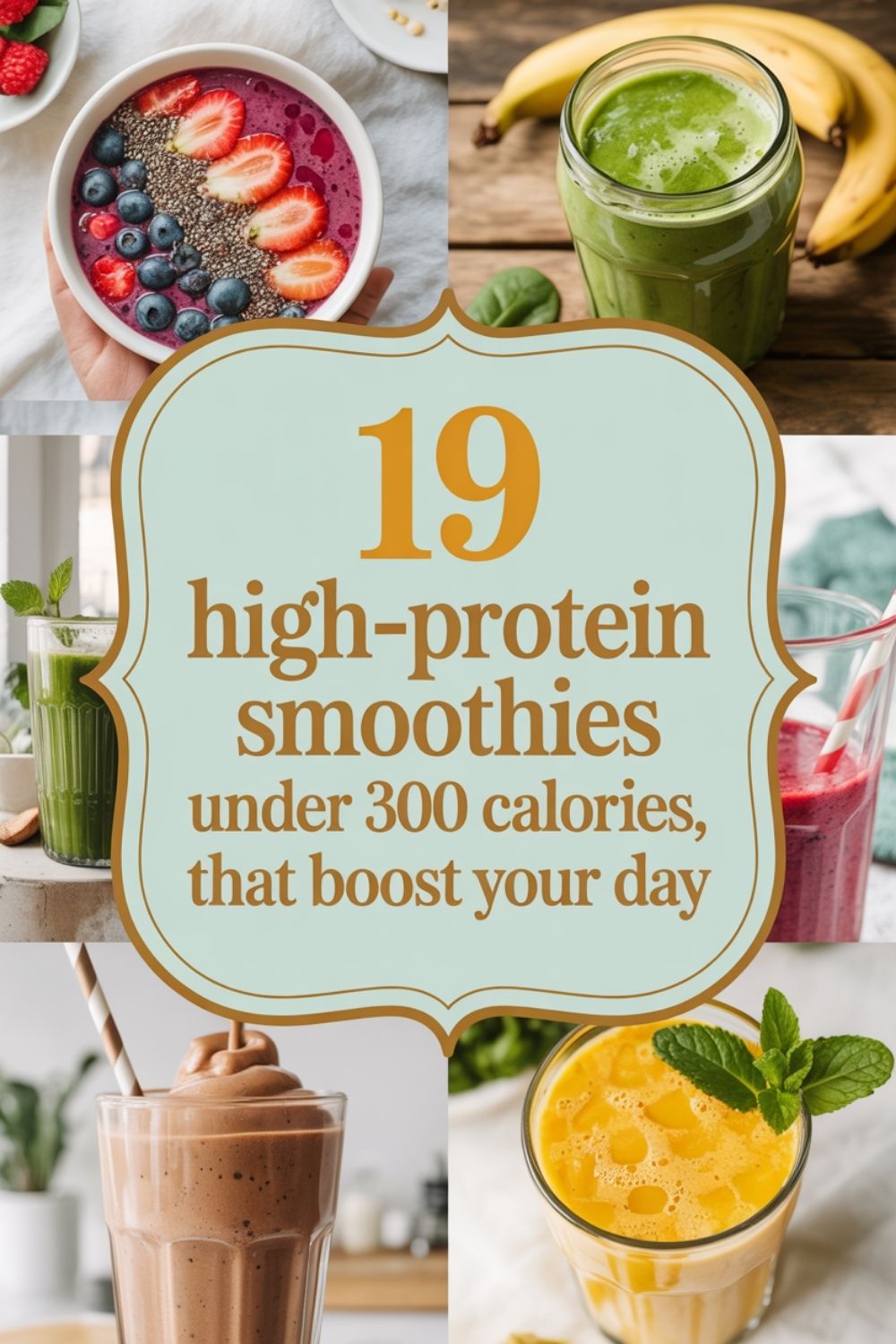
19 High-Protein Smoothies Under 300 Calories
Fast, filling, and genuinely delicious. These blends give you real protein without punishing your calorie budget.
Let’s be real for a second. Most “healthy” smoothie recipes you find online are basically dessert in disguise. A frozen banana, a cup of mango, some honey, oat milk, and a prayer — you’ve just downed 500+ calories and maybe twelve grams of protein if you’re lucky. That’s not a smoothie. That’s a milkshake with a PR team.
These 19 high-protein smoothies under 300 calories operate differently. Every single one is built around actual satiety: enough protein to keep you full, ingredients that pull their weight nutritionally, and a calorie count that doesn’t require you to eat nothing else for the rest of the day. Whether you’re working toward fat loss, trying to hit your daily protein targets, or just need something quick before a morning workout, these blends do the job.
I’ve been making smoothies for meal prep and post-workout recovery for years, and the ones that stuck are the ones that taste good and work. No chalky aftertaste, no protein powder that fights back. Just solid, repeatable recipes you’ll actually want to make again.
Why Most Smoothies Fail the Protein Test
Here’s something that took me longer to figure out than I’d like to admit: protein content in a smoothie doesn’t happen by accident. You can’t just toss in some almond milk and a handful of spinach and expect to hit 20 grams. It requires intentional building — a real protein base, smart supporting ingredients, and a very honest look at what the blender is actually doing for you versus working against you.
The main culprits that bloat smoothie calories without adding meaningful protein? Fruit juice as a liquid base (pure sugar, minimal nutrition per calorie), too much banana (not a bad ingredient, but it’s calorie-dense and low in protein), sweetened nut milks, and flavored yogurts loaded with added sugar. Swap those out and you already win half the battle.
According to research reviewed by Healthline’s registered dietitian team, consuming adequate protein at breakfast supports satiety hormones and reduces overall calorie intake throughout the day. That’s the real reason high-protein smoothies work as a weight management tool — they’re not magic, they’re just keeping you from being ravenous by 10am.
The sweet spot for a satisfying, under-300-calorie smoothie is usually 20 to 30 grams of protein, achieved through a combination of protein powder (whey or plant-based), Greek yogurt, cottage cheese, or silken tofu. Pick one strong base and build from there.
Freeze your Greek yogurt in ice cube trays the night before. It creates a thicker, creamier smoothie without adding a single extra calorie or watering it down.
Building Blocks: What Goes Into a High-Protein, Low-Calorie Smoothie
Before we get into the actual recipes, it’s worth spending a minute on the core ingredients that make these smoothies work. Think of it less like a recipe list and more like a toolkit — you mix and match based on what you have, what you like, and what your macros look like that day.
Protein Sources (Pick One as Your Base)
- – Whey protein isolate — typically 25g protein per scoop, under 120 calories, and blends clean
- – Plain nonfat Greek yogurt — about 17g protein per cup, adds creaminess and a slight tang
- – Nonfat cottage cheese — underused and underrated; blends silky-smooth and hits around 25g protein per cup
- – Silken tofu — an excellent plant-based swap, roughly 8–10g protein per 100g, adds a custard-like texture
- – Pea protein powder — the best dairy-free option IMO; digests cleanly and doesn’t have the gritty texture that some plant blends bring
Low-Calorie Liquid Bases
- – Unsweetened almond milk (30–40 cal per cup)
- – Unsweetened oat milk (80 cal but adds creaminess)
- – Cold brewed black coffee (0 cal, and doubles as a pre-workout boost)
- – Plain water + ice (free calories, no flavor competition)
If you want more ideas in this space, the 12 low-calorie high-protein smoothies to boost metabolism covers some great combinations that overlap well with this list.
The 19 High-Protein Smoothies Under 300 Calories
Alright, here’s what you actually came for. Each recipe below lists the key ingredients, approximate macros, and what makes it worth making. I’ve grouped them loosely so you can find what you need fast — whether that’s a breakfast blend, a post-workout shake, or something for a lazy Sunday that still keeps you on track.
Classic Vanilla Greek Protein Smoothie
The reliable daily driver. Clean flavor, serious protein, and a texture that’s closer to a shake than a green monster. Great as a meal replacement on rushed mornings.
- 1 cup plain nonfat Greek yogurt
- 1/2 scoop vanilla whey isolate
- 3/4 cup unsweetened almond milk
- 1/2 frozen banana
- 1/2 tsp vanilla extract, pinch cinnamon
Wild Blueberry Cottage Cheese Smoothie
Cottage cheese in a smoothie sounds weird until you try it. It blends completely smooth and adds a richness that Greek yogurt doesn’t quite match. Blueberries bring antioxidants and that gorgeous purple color.
- 3/4 cup nonfat cottage cheese
- 1 cup frozen wild blueberries
- 1/2 cup unsweetened almond milk
- 1 tsp lemon zest, 4 drops liquid stevia
Chocolate Peanut Butter Protein Shake
Tastes like a Reese’s cup had a responsible life transformation. The key is using powdered peanut butter (PB2 or similar) instead of regular — you get the flavor for a fraction of the calories.
- 1 scoop chocolate whey isolate
- 2 tbsp powdered peanut butter
- 1 cup unsweetened almond milk
- 1/2 frozen banana, 4 ice cubes
Strawberry Basil Whey Smoothie
A little unexpected. Fresh basil in a smoothie sounds like a food blogger having a moment, but it genuinely works with strawberry — slightly peppery, slightly sweet, very refreshing. A good one for when you’re bored of the same rotation.
- 1 cup frozen strawberries
- 1 scoop vanilla whey isolate
- 6 fresh basil leaves
- 1/2 cup plain nonfat Greek yogurt
- 3/4 cup unsweetened almond milk
Green Mango Pea Protein Smoothie
A great plant-based option that doesn’t taste like lawn clippings. Frozen mango makes it tropical and sweet enough that you forget there’s a full cup of spinach in there. Works brilliantly with pea protein powder.
- 1 scoop unflavored pea protein
- 1 cup frozen mango chunks
- 1 cup fresh spinach
- 3/4 cup unsweetened coconut water
- Juice of half a lime
Cinnamon Roll Protein Smoothie
Breakfast that tastes like a treat without being one. The combination of cinnamon, vanilla, and rolled oats (yes, raw oats in a smoothie — trust the process) hits that warm, bakery-style note without going over budget calorically.
- 1/2 cup plain nonfat Greek yogurt
- 1/2 scoop vanilla whey isolate
- 3 tbsp rolled oats
- 1 tsp cinnamon, 1/4 tsp nutmeg
- 1 cup unsweetened almond milk, 4 ice cubes
Post-Workout and Recovery Smoothies
After training, your muscles are essentially putting out a distress signal for amino acids. The window isn’t quite as narrow as gym folklore suggests, but getting protein in within an hour or two of a tough workout genuinely accelerates recovery. These six smoothies hit that target efficiently — high protein, moderate carbs from fruit (which helps replenish glycogen), and low enough calories that they work as a snack rather than a second meal.
For more along these lines, check out these 12 high-protein low-calorie recipes for post-workout recovery which go beyond smoothies into solid food options that serve the same purpose.
Tart Cherry Recovery Shake
Tart cherries have real, documented anti-inflammatory properties — they’re not just a trendy ingredient. Combined with whey protein and a splash of coconut water for electrolytes, this one is built for recovery.
- 1 cup frozen tart cherries
- 1 scoop vanilla whey isolate
- 1/2 cup coconut water
- 1/2 cup unsweetened almond milk
- 1/2 tsp turmeric (optional but effective)
Banana Walnut Post-Workout Protein Blend
Walnuts are the alpha nut for recovery smoothies — omega-3 fatty acids for inflammation reduction, plus a slightly toasty flavor that pairs beautifully with banana. A small amount goes a long way.
- 1 frozen banana
- 1 scoop chocolate whey protein
- 1 tbsp raw walnuts
- 1 cup unsweetened almond milk
- 1/2 cup plain nonfat Greek yogurt
Espresso Mocha Protein Smoothie
Your pre-workout and post-workout smoothie combined. Cold espresso or cold brew adds a caffeine hit and a depth of flavor that makes this taste significantly more indulgent than it is. FYI — this one also works as a mid-afternoon energy fix.
- 1 shot cold espresso (or 1/2 cup cold brew)
- 1 scoop chocolate whey isolate
- 3/4 cup unsweetened oat milk
- 1/2 frozen banana, 5 ice cubes
Pineapple Ginger Collagen Smoothie
Light, tropical, and aggressively refreshing. Collagen peptides blend invisibly into any smoothie — no flavor, no texture change — and you get an extra protein boost plus joint support. The ginger adds warmth without heat.
- 1 cup frozen pineapple
- 1.5 tbsp collagen peptides powder
- 1/2 tsp fresh grated ginger
- 3/4 cup unsweetened coconut water
- 1/3 cup plain nonfat Greek yogurt
Blackberry Spinach Recovery Shake
Deep color, deep flavor. Blackberries are genuinely underused in smoothies — they’re lower in sugar than blueberries, packed with anthocyanins, and give a rich, slightly tart edge that plays well against the creaminess of Greek yogurt.
- 1 cup frozen blackberries
- 1 cup fresh spinach
- 3/4 cup plain nonfat Greek yogurt
- 1/2 scoop vanilla whey isolate
- 1/2 cup unsweetened almond milk
Peach Cardamom Protein Smoothie
Cardamom might be the most underrated smoothie spice in existence. It adds this warm, slightly floral quality to frozen peach that reads as genuinely sophisticated — which is a compliment I never thought I’d give a blender drink.
- 1.5 cups frozen peach slices
- 1/4 tsp ground cardamom
- 3/4 cup plain nonfat Greek yogurt
- 1/2 scoop vanilla whey isolate
- 1/2 cup unsweetened almond milk
Batch your dry smoothie ingredients into individual zip-lock bags or small containers every Sunday. On busy mornings, just dump the bag in the blender, add your liquid, and blend. Total time: under two minutes. You’re welcome.
I started making the cottage cheese blueberry smoothie from this list every morning before my 6am workouts. After about six weeks I noticed I wasn’t reaching for snacks mid-morning anymore at all. Down 11 pounds, and I genuinely look forward to it every day now.
Plant-Based High-Protein Smoothies That Actually Deliver
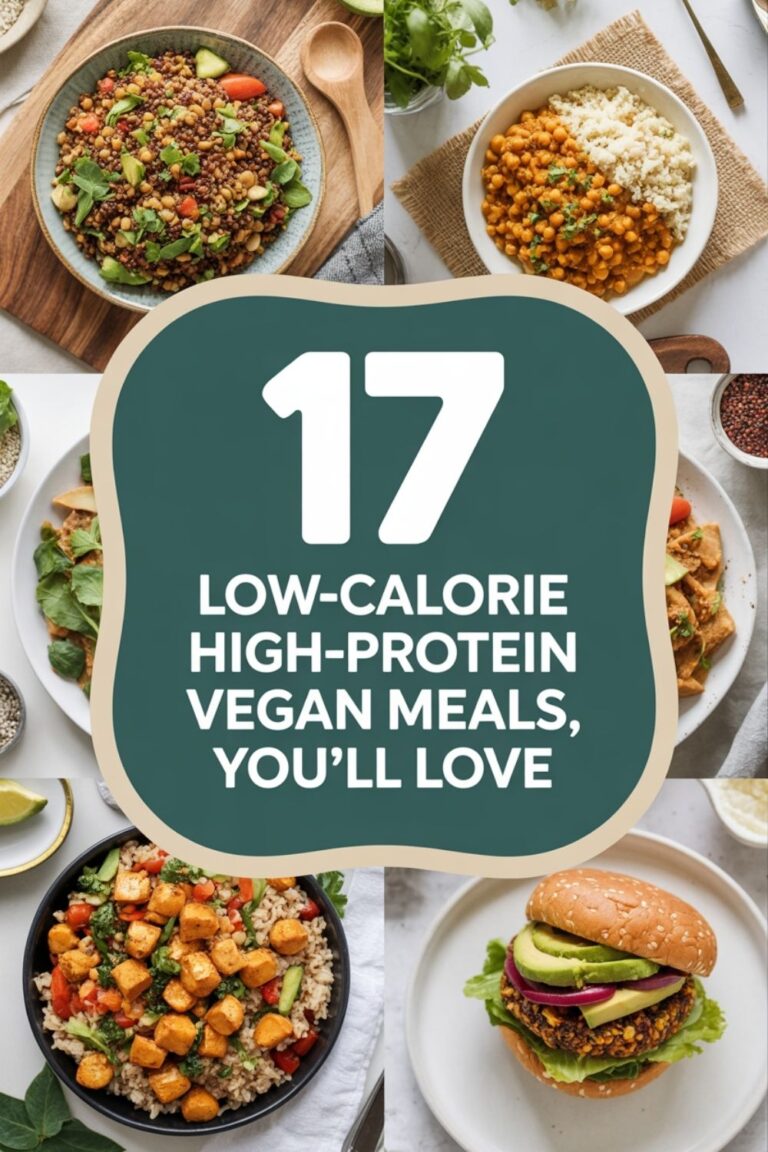
There’s a persistent myth that plant-based smoothies can’t hit meaningful protein numbers without going over 300 calories. That myth is wrong, and these four recipes prove it. The key is stacking protein sources — a combination of pea protein, silken tofu, hemp seeds, or fortified plant milks will get you to 20+ grams without loading up on calories.
Worth noting: if you’re comparing pea protein vs. whey, the gap in muscle-building effectiveness has essentially closed. Research suggests pea protein is just as effective as whey for supporting muscle growth and satiety, which is genuinely great news for anyone avoiding dairy. For a broader range of plant-based eating strategies, these 25 high-protein low-calorie vegan meals are worth exploring.
Silken Tofu Raspberry Smoothie
Silken tofu blends into a custard-like smoothie base that’s remarkably creamy. It’s completely flavor-neutral, so the raspberries and vanilla take center stage. This is also the lowest-ingredient recipe on the list.
- 100g silken tofu (firm variety)
- 1 cup frozen raspberries
- 1/2 scoop vanilla pea protein
- 3/4 cup unsweetened soy milk
- 1/2 tsp vanilla extract
Hemp Seed Matcha Protein Smoothie
Matcha brings a gentle caffeine lift and antioxidant density. Hemp seeds add 10 grams of protein per three tablespoons, plus omega-3 and omega-6 fatty acids in a near-ideal ratio. This one earns its place on the list purely on nutritional merit.
- 1 tsp ceremonial-grade matcha powder
- 3 tbsp hemp seeds
- 1/2 scoop vanilla pea protein
- 1/2 frozen banana
- 1 cup unsweetened oat milk
Black Bean Chocolate Protein Smoothie
Before you close this page — hear me out. Canned black beans, drained and rinsed, blend completely smooth in a chocolate smoothie and you genuinely cannot tell they’re there. You get 7–8g extra protein, extra fiber, and zero beany flavor. It’s one of those tricks that sounds ridiculous until it becomes a staple.
- 1/3 cup canned black beans, drained
- 1 scoop chocolate pea protein
- 1 tbsp raw cacao powder
- 1/2 frozen banana
- 1 cup unsweetened almond milk
Lemon Tahini Protein Smoothie
Unusual, intentional, and very good. Tahini brings a creamy sesame richness, lemon adds brightness, and together they create a flavor profile that sits somewhere between a smoothie and a liquid halva. Use a high-quality tahini — it makes a real difference.
- 1.5 tbsp tahini
- 1/2 scoop vanilla pea protein
- Juice of 1 lemon + zest
- 1/2 cup nondairy yogurt (soy or coconut)
- 3/4 cup unsweetened almond milk, ice
Smoothies Specifically Built for Weight Loss Goals
These last three recipes skew toward the lower end of the calorie range while maximizing protein and volume. The idea is to give your body as much satiety signal as possible per calorie consumed. Fiber, protein, water content, and physical bulk in the blender all contribute to this — which is why some of these recipes include ingredients like chia seeds, cauliflower rice (don’t worry, it’s completely tasteless blended), and extra spinach.
Johns Hopkins Medicine notes that protein in smoothies builds and maintains muscle mass while helping keep you full and satisfied — which is exactly the dual benefit that makes these recipes useful as a consistent weight loss tool rather than a one-week experiment.
Cucumber Mint Protein Smoothie
The lightest smoothie on the list and one of the most refreshing. Cucumber adds volume and water content for near-zero calories. Fresh mint makes the whole thing taste clean and intentional rather than like diet food.
- 1/2 English cucumber, roughly chopped
- 1 scoop unflavored or vanilla whey isolate
- 10 fresh mint leaves
- 1/2 cup plain nonfat Greek yogurt
- Juice of half a lime, 1 cup water + ice
Chia Seed Berry Protein Smoothie
Chia seeds expand in liquid and slow digestion — practically speaking, this keeps you full for hours. Blend immediately after adding them (rather than letting them sit) for a smooth texture. The mixed berries keep it bright and easy.
- 1 cup frozen mixed berries
- 1 tbsp chia seeds
- 3/4 cup plain nonfat Greek yogurt
- 1/2 scoop vanilla whey isolate
- 3/4 cup unsweetened almond milk
Cauliflower Vanilla Protein Smoothie
Frozen riced cauliflower is the secret weapon of low-calorie smoothie making. You get a thick, creamy, shake-like texture for about 25 calories per cup, and you taste absolutely none of it. The vanilla and cinnamon handle all the flavor. This is the one I send people to when they’re skeptical that healthy smoothies can taste good.
- 3/4 cup frozen riced cauliflower
- 1 scoop vanilla whey isolate
- 1/2 cup plain nonfat Greek yogurt
- 1 cup unsweetened almond milk
- 1/2 tsp cinnamon, 1/4 tsp vanilla extract
Frozen cauliflower and frozen zucchini are interchangeable “stealth thickeners” in any vanilla, chocolate, or berry smoothie. Both add zero detectable flavor and cost a fraction of protein powder per serving. Use them to stretch your recipes or reduce overall calorie density without sacrificing volume.
The cauliflower vanilla smoothie sounded absolutely terrible when I first saw it. My husband laughed at me. I made it anyway, and now we both have it three or four times a week. It honestly tastes like a vanilla milkshake. Couldn’t recommend it more.
Kitchen Tools That Make These Smoothies Easier
You don’t need much to make great smoothies, but a few well-chosen tools take the whole process from slightly annoying to genuinely enjoyable. Here’s what I actually use and recommend.
High-Speed Personal Blender
A compact personal blender with a travel cup is the single best investment for daily smoothie making. Single-serve cups mean no over-blending and no wasted smoothie. Look for 1000+ watts for frozen ingredients.
Wide-Mouth Glass Mason Jars (16oz)
I store prepped smoothie ingredient packs in these, and I also drink out of them. A set of wide-mouth 16oz glass jars with lids is the most versatile kitchen purchase you’ll make this year. No plastic aftertaste, dishwasher safe.
Reusable Silicone Freezer Bags
Pre-portion all your smoothie ingredients into reusable silicone freezer bags on Sunday. Each bag is one smoothie. Grab, dump, blend, done. Eliminates any excuse on a rushed morning.
Macro-Friendly Meal Tracker App
A premium macro tracking app subscription (Cronometer Pro or similar) helps you actually verify that your smoothie hits your protein targets. The free versions work, but the premium barcode scanning and recipe builder features save significant time.
30-Day Smoothie Meal Plan PDF
A structured 30-day low-calorie high-protein smoothie plan takes all the daily decision-making off your plate. Everything mapped out, shopping lists included, macros pre-calculated.
High-Protein Smoothie Recipe Bundle
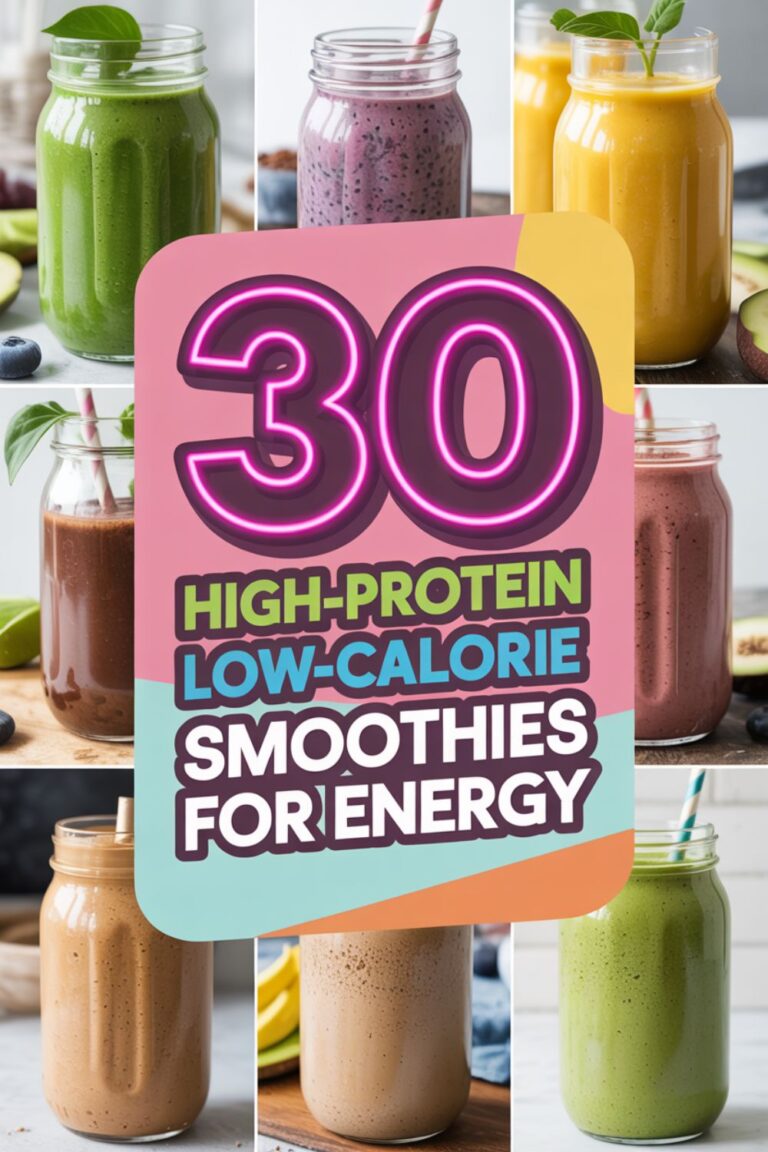
If you want more beyond this list, the 30 high-protein low-calorie smoothies for energy collection is a natural next stop. Over 30 recipes formatted for meal prep, organized by calorie range and protein content.
Frequently Asked Questions
Can I use these smoothies as a full meal replacement?
For most of these recipes, yes — particularly the ones with 25g or more of protein. The key is ensuring you’re getting enough total calories for your needs that day. A 240-calorie smoothie works as a meal replacement if you’re not doing intense exercise, but pair it with a snack if you have a heavy training day.
Which protein powder works best for under-300-calorie smoothies?
Whey protein isolate is the most efficient choice — typically 25g protein per scoop at around 100–120 calories. For dairy-free, pea protein isolate is the closest equivalent in terms of protein density per calorie. Avoid protein powders with lots of added sugars or fats, which quickly push the calorie count up.
Can I prep these smoothies the night before?
You can, but most smoothies taste best within about 24 hours of blending. Store them in a sealed jar or bottle in the fridge and give them a good shake before drinking. Smoothies with chia seeds or avocado should be consumed the same day for best texture.
How do I hit 300 calories or less without using protein powder?
It’s doable with a base of nonfat Greek yogurt (3/4 to 1 cup), a modest amount of frozen fruit (1 cup), and a low-calorie liquid. You’ll hit roughly 20–22g protein and stay under 280 calories. Cottage cheese works equally well as a protein base if you don’t want powder at all.
Are high-protein smoothies good for muscle gain?
They’re a useful tool, yes — but they work best as part of a broader eating plan that meets your total daily protein and calorie needs for muscle growth. A smoothie with 25g protein supports muscle protein synthesis, especially post-workout. For a complete approach, a structured meal plan helps significantly.
The Only Rule Worth Remembering
The best high-protein smoothie under 300 calories is the one you actually make. Not the fanciest one, not the one with four different powders and a chia seed soaking ceremony — the one that’s fast enough to become a habit.
Pick two or three from this list that genuinely appeal to you, stock the ingredients, and make them on repeat for a couple of weeks. Once they become automatic, rotate in a few more. That’s genuinely how the habit sticks. The smoothies do their job — keep you full, hit your protein targets, and stay in your calorie budget — as long as you keep showing up to the blender.
Start with the vanilla Greek yogurt smoothie or the cauliflower vanilla if you’re skeptical. Both are weekday-friendly, hard to mess up, and reliably delicious. The rest will follow when you’re ready for them.
30-Day High-Protein
Low-Calorie Meal Plan
Every breakfast, lunch, dinner & snack — all 30 days fully mapped out. Just follow the plan.
- ✓50+ complete recipes with ingredients & step-by-step instructions
- ✓4-week day-by-day plans — every meal for all 30 days
- ✓4 weekly shopping lists organised by store section
- ✓Printable habit & progress tracker — 30 full days
- ✓100g+ protein per day — scientifically optimised macros
Instant PDF · Print at home
Results guaranteed with consistency